Congress leader Sonia Gandhi has described the
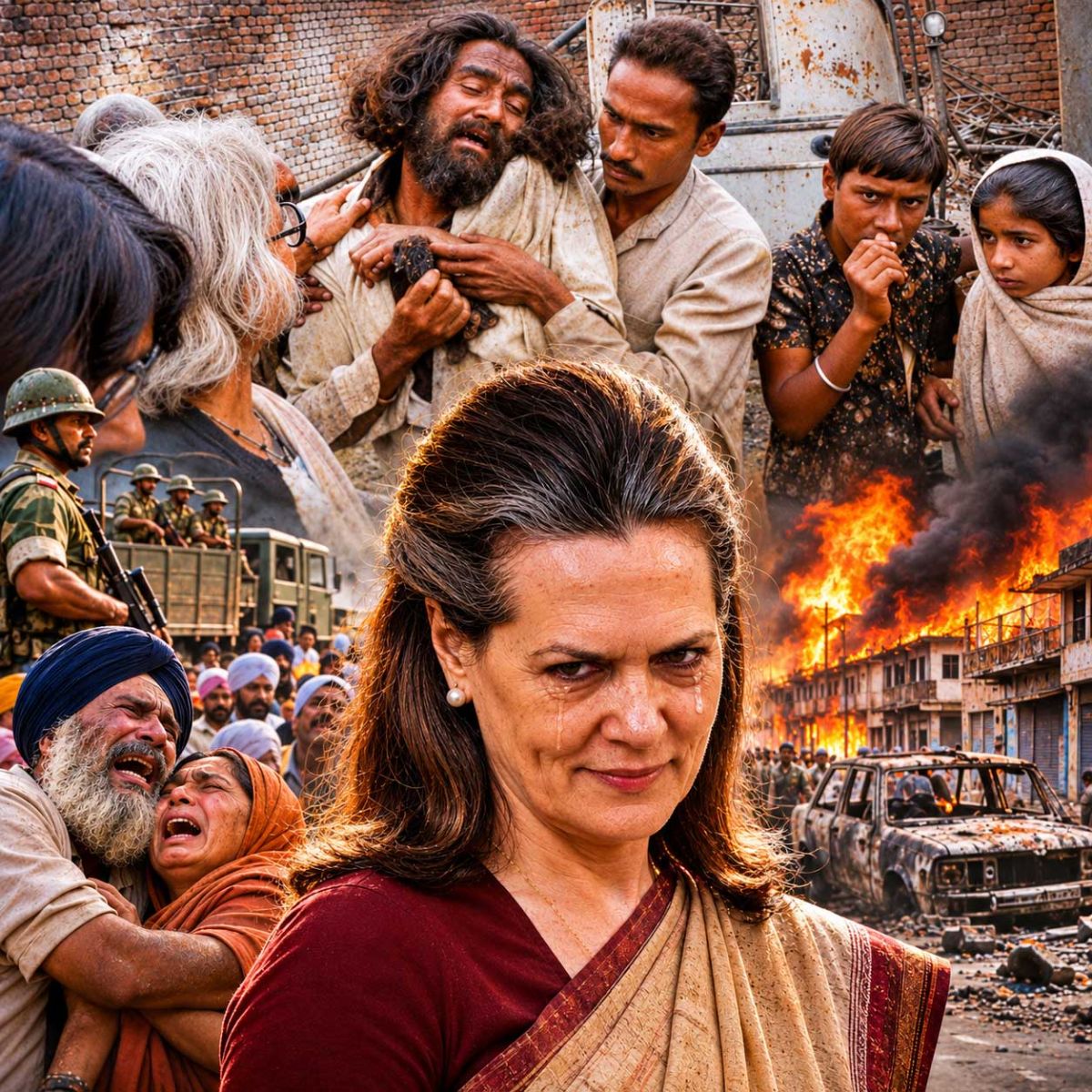
1984 anti-Sikh riots in India as a “tragic and shameful” chapter in the
country's history in her recently published book. Meanwhile, India's ruling
Bharatiya Janata Party (BJP) has accused her of attempting to cover up the
Congress party's historical mistakes in her new publication. According to the
Reuters news agency, Sonia Gandhi's memoir, titled Belonging, was
published on November 10. Its release has triggered a fresh political
controversy between the BJP and the Congress party, coming at a time when
elections in several key Indian states are approaching. The book has also
become a subject of debate on social media, with both supportive and critical
reactions reflecting India's political divisions. Newspapers have also given
the publication extensive coverage, publishing several excerpts dealing with
major events of the past five decades.
How Did Sonia Gandhi Describe the 1984 Riots?
In her book, Sonia Gandhi recounts her journey
from her birth in Italy and student years in England to becoming part of the
Nehru-Gandhi family. She also writes about meeting her husband, Rajiv Gandhi,
who belonged to the prominent political dynasty. Three Indian prime ministers have
come from this family. According to Reuters, Sonia Gandhi describes the 1984
riots in her memoir as a “tragic and shameful” chapter. She says that some
government officials either ignored the violence or played a role in fuelling
it. She has also defended her husband, former Prime Minister Rajiv Gandhi,
rejecting allegations that he was involved in the riots. However, Sonia Gandhi
has acknowledged the government's failures and the delays in delivering justice
to the victims. In her book, Sonia Gandhi writes: “Before the Emergency was
imposed, Indira Gandhi felt politically isolated and under pressure. She was
never entirely comfortable with the decision, but the political circumstances
and tensions at the time compelled her to continue with the Emergency.” According
to Reuters, the 21-month Emergency imposed in India in 1975 resulted in the
suspension of civil liberties, censorship of newspapers and the imprisonment of
opposition leaders. It is regarded as one of the most controversial periods in
Indian history.
BJP Criticises Sonia Gandhi
According to Reuters, BJP spokesperson C.R.
Kesavan said in a video statement: “Sonia Gandhi could have titled her memoir Whitewashing
instead of Belonging, because the apparent purpose of this book is to
present the historical mistakes of the Nehru-Gandhi family in a favourable
light and cover up the Congress party's most serious failures.” The BJP
spokesperson referred to the 1984 anti-Sikh riots, which erupted following the
assassination of then Prime Minister Indira Gandhi, Sonia Gandhi's
mother-in-law, by her Sikh bodyguards. Approximately 3,000 people were killed
in the violence. The BJP spokesperson also accused Sonia Gandhi of attempting
to normalise and justify the Emergency imposed by her mother-in-law and former
Prime Minister Indira Gandhi.
Congress Says Personal Memoirs Should Not Be
Politicised
Sonia Gandhi has not yet responded to these
allegations. However, in the introduction to her book, she describes it as a
personal memoir in which politics serves only as a backdrop or framework. Congress
leaders have rejected the BJP's accusations, saying that Prime Minister
Narendra Modi's party is turning a personal memoir into a political controversy
and attempting to politicise its contents. According to Reuters, as of
Wednesday, the book was ranked number one on Amazon India's list of
best-selling books, despite its price of 1,299 Indian rupees (approximately
$14). Sonia Gandhi's book has been published at a time when Congress leader
Rahul Gandhi is leading protests against Prime Minister Narendra Modi's
government over the revision of electoral rolls. The issue has emerged as a
major political challenge for the Modi government since it came to power in
2014. Elections are also expected to take place early next year in Uttar
Pradesh and the Sikh-majority state of Punjab.