According to a detailed report by the US
newspaper The Washington Post, US Vice President JD Vance has offered
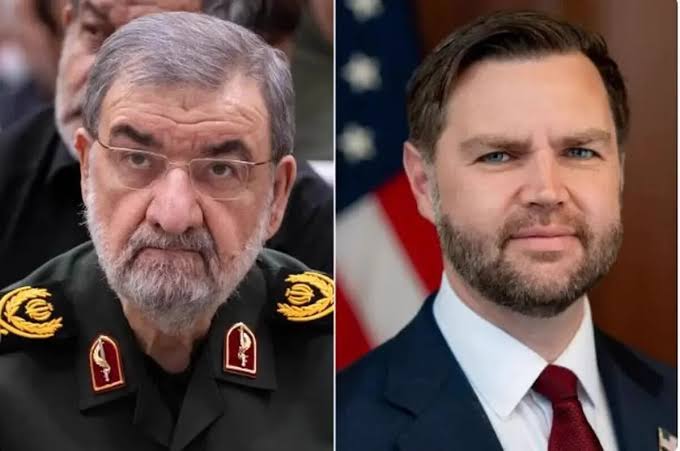
to hold direct talks with Iranian National Security Chief Mohsen Rezaei as part
of efforts to ease tensions with Iran. Citing a US official familiar with the
matter, the newspaper revealed that the Trump administration considers Rezaei a
highly influential and key figure in reaching a consensus on any potential
bilateral agreement. US intelligence officials strongly believe that Rezaei is
very close to Iran’s Supreme Leader. The proposed meeting could take place in
Istanbul, Turkey, or Doha, the capital of Qatar.
The report further stated that Vice President JD
Vance had formally sent a letter to Rezaei last week regarding the proposed
meeting. According to The Washington Post, the letter emphasized that
the mutual national interests of both countries should serve as the foundation
for negotiations. It also made clear that Washington’s foremost priority is to
prevent Iran from acquiring nuclear weapons at any cost. The report further
revealed that if Iran agrees to halt its controversial nuclear program, the
United States would lift the stringent economic sanctions imposed on the country.
Meanwhile, Qatar is playing an important and active mediating role in the
process and remains in continuous contact with the Iranian leadership.
Meanwhile, Qatari mediators have once again
arrived in Tehran in an effort to pave the way for a final agreement between
Washington and Tehran, while US officials have claimed that the two countries
are “very close” to reaching a deal. A senior official familiar with the
negotiations told the international news agency Reuters that the Qatari
mediators’ visit was taking place with the approval and consultation of US
officials. Earlier, Qatar had presented Iran with a draft peace proposal.
However, a senior Iranian official described the initial proposals as
unacceptable and made it clear that Tehran would not back down from its
position.
The priorities of the two sides remain different.
Washington insists on including the reopening of the Strait of Hormuz in the
negotiations, while Tehran’s primary demand is that the United States first
lift its blockade of Iranian ports and remove all restrictions on Iranian oil
exports. Iranian Foreign Minister Seyed Abbas Araghchi said that Tehran was in
continuous contact with mediators to ensure the implementation of their
proposal, which aims to end the war in the region. Meanwhile, US President
Donald Trump confirmed that Vice President JD Vance’s recent communications
with Iran were related to medical assistance and humanitarian issues.
Separately, US Ambassador to Turkey and President
Donald Trump’s special envoy for Syria and Iraq, Tom Barrack, expressed hope
during an interview with CNN that significant and tangible steps would be taken
over the next two weeks to reduce the intensity of military clashes. Barrack
said, “We are so close that we can say, ‘let’s take a pause and de-escalate. He
noted that an immediate comprehensive or final agreement might not be possible.
However, a pause in hostilities and attacks could pave the way for further
negotiations and new regional arrangements.
Speaking about diplomatic progress, US envoy Tom
Barrack specifically acknowledged the efforts of Qatar, Pakistan and other
allied countries. He said these countries had undoubtedly played a key role in
building consensus on a political process and dialogue between Washington and
Tehran. Barrack further stated that the use of military force was an extreme
measure that President Donald Trump and the US government took seriously.
However, he emphasized that all diplomatic and alternative avenues were
currently being pursued to avoid war and the use of force.