An exhibition titled “Hope of Return: The Story
of the Al-Awda Olive Tree” has opened at the ongoing COP31 international
climate conference in Antalya, Türkiye, highlighting the humanitarian and
environmental devastation in Gaza. The exhibition has been jointly organized by
the Confederation of Public Employees’ Trade Unions of Türkiye and the
International Labour Confederation (ILC). It will remain open to visitors from
November 9 to 20 in the hall of the COP31 Green Zone Congress Centre. The
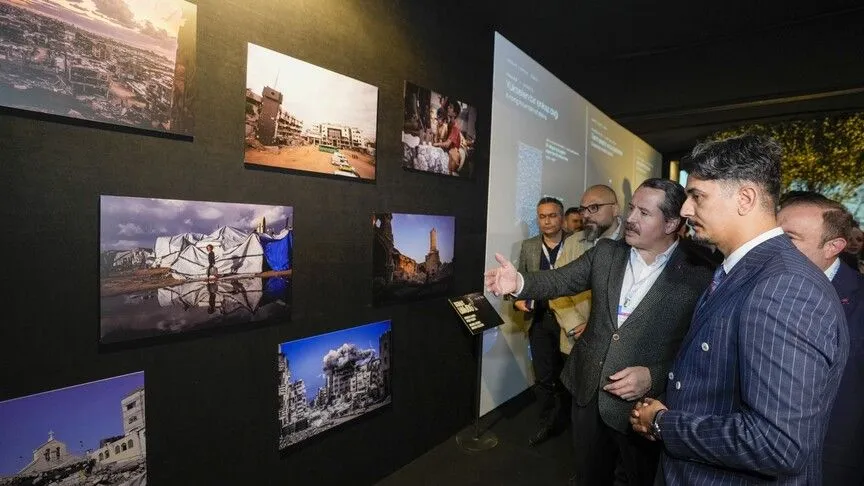
exhibition features 63 photographs taken by Anadolu Agency photojournalists in
Gaza.
Speaking at the opening ceremony, Memur-Sen
Chairman and ILC President Ali Yalçın said the exhibition offers a glimpse into
a nation's love for its homeland and the hope it has kept alive despite all the
hardships. Referring to the olive tree as the central focus of the exhibition,
Yalçın said, “We will look at this tree not only with our eyes but also with
our hearts. This is because, in Palestine, an olive tree is not merely a tree;
it symbolises a family's past, a father's hard work, a mother's labour and a
child's future.”
Through interactive installations, visitors are
taken on a journey from Gaza's once-vibrant streets to the devastation caused
by what the exhibition describes as Israel's genocidal war. The displays also
include personal reflections and testimonies recorded amid piles of rubble.
Everyday objects brought from Palestine have been presented as silent witnesses
to lives interrupted by the war. At the center of the exhibition stands a wounded
yet firmly rooted olive tree, symbolising the Palestinian people's enduring
attachment to their homeland. With its roots in the past and branches reaching
towards the future, the tree represents hope for peace, solidarity and life
despite widespread destruction.
A map of Palestine made from keys representing
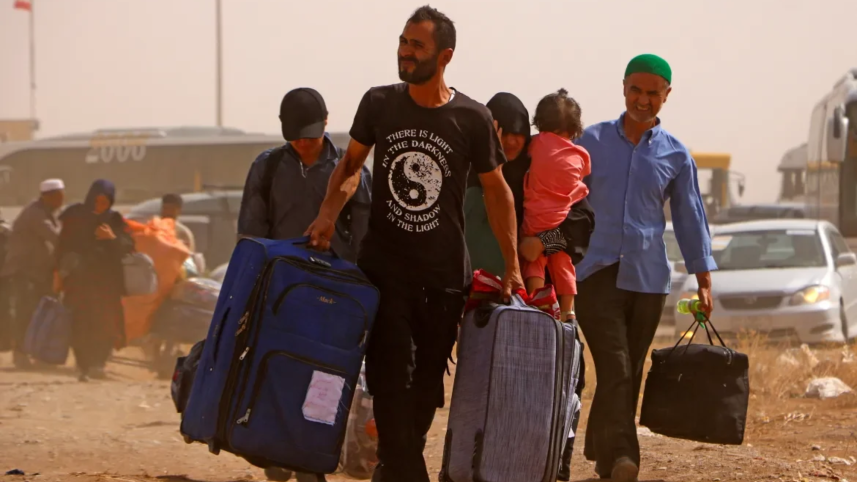
homes in Gaza also highlights the plight of displaced Palestinian families.
Many Palestinian families forcibly expelled from their homes in 1948 took their
house keys with them, believing they would eventually return. They passed these
keys down through generations. Since then, the keys have become a powerful
symbol of the Palestinians' right of return. The exhibition also features
selected photographs by Anadolu Agency photojournalists who worked in Gaza,
alongside artworks by Palestinian painters and graphic artists. Images
comparing Gaza before and after the destruction further illustrate the
consequences of the war.
The exhibition also draws attention to the scale
of environmental destruction in Gaza, presenting data on explosive munitions,
carbon emissions, damaged infrastructure, agricultural losses and cultural
heritage. According to the figures displayed, the explosive power of the
munitions dropped on Gaza is approximately 13 times greater than that of the
atomic bomb dropped on Hiroshima in 1945. The exhibition also states that
carbon emissions generated during the first 60 days of the war exceeded the
annual emissions of 20 countries. Agricultural devastation is another major
theme of the exhibition. The figures presented indicate that Gaza had
approximately two million olive trees before the attacks, but their number has
now fallen to just 150,000.
The exhibition report further states that
approximately 81 per cent of Gaza's buildings have been damaged, generating
more than 61 million tonnes of rubble. Meanwhile, 97 per cent of agricultural
land has become unusable, and 45 of Gaza's 54 water facilities are no longer
operational. The destruction has also extended to Gaza's historical and cultural
heritage, with 208 of the territory's 325 historical and cultural sites
reportedly damaged or destroyed. Through these figures, the organizers seek to
demonstrate that the attacks have not only affected buildings and
infrastructure but have also inflicted severe damage on Gaza's soil, water
resources, air quality and historical heritage. At the exit of the exhibition,
a screen allows visitors to leave digital messages of hope and solidarity for
Gaza and humanity.