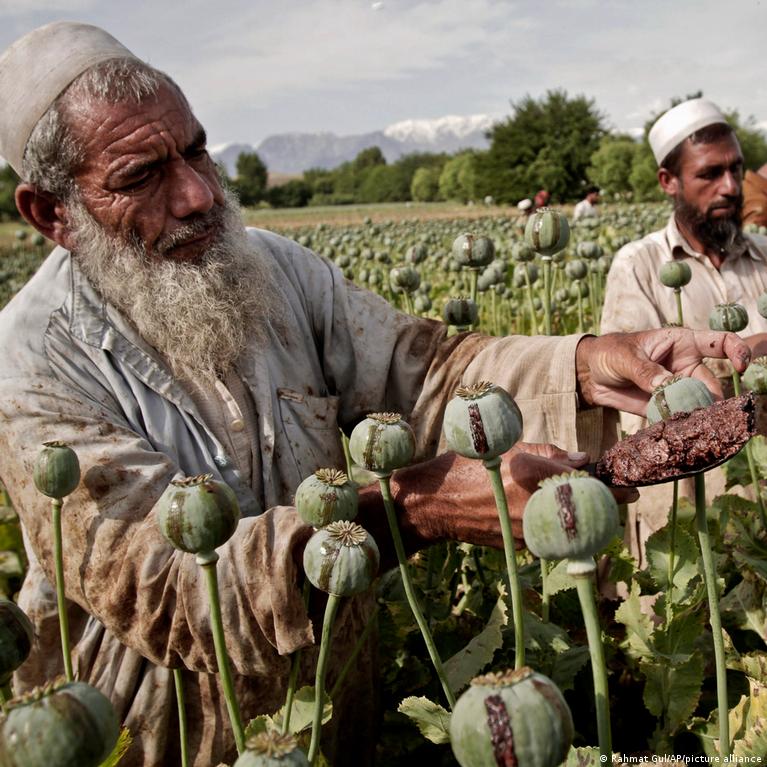
Despite the Taliban’s ban on opium poppy
cultivation, the area under cultivation in Afghanistan expanded to 43,000
hectares in 2026. Opium production also increased fivefold compared with the
previous year, reaching 1,500 tones. The United Nations has warned that
sustaining a reduction in poppy cultivation will be difficult unless farmers
are provided with alternative livelihoods and economic support.
According to a report by the United Nations
Office on Drugs and Crime (UNODC), the Taliban imposed a ban on opium poppy
cultivation in Afghanistan in 2022. However, the latest figures show a
significant increase in cultivation. The area under poppy cultivation rose from
10,000 hectares in 2025 to 43,000 hectares in 2026. Over the same period, opium
production climbed from 300 tones to 1,500 tones.
Afghanistan was the world’s largest opium poppy
producer for many years, but Myanmar overtook it following the ban. The report
says poverty and difficulties in meeting basic needs are pushing Afghan farmers
back towards poppy cultivation. Badakhshan province has now become a major center
of poppy cultivation in Afghanistan. According to one farmer in the province,
it is difficult to afford even basic necessities, such as food, without income
from opium. Farmers say the income generated by growing wheat is insufficient
to cover their expenses.
UN figures show that in 2023, farmers earned
slightly more than $770 per hectare from wheat cultivation, compared with
approximately $10,000 per hectare from poppy cultivation. Taliban authorities
claim to have destroyed poppy crops across more than 22,000 hectares. However,
the UN says that in some areas, poppies are cultivated among grain crops or
hidden behind walls, making them difficult to detect. The report also notes
that the price of opium fell from $570 per kilogram to $500 in 2026.
Nevertheless, it remains far above the pre-ban price of approximately $100 per
kilogram.
The UN has stressed that farmers must be given
access to markets for alternative crops, as well as roads, irrigation systems
and storage facilities. Polic Ok Srey, the UNODC representative in Afghanistan,
said that approximately $500 million had been estimated as necessary for
sustainable alternative-livelihood program for farmers, but only 10 percent of
that amount had been provided. Since the Taliban returned to power in 2021,
Afghanistan has faced a range of challenges, including banking isolation,
declining foreign aid, climate-related disasters and the return of 6.6 million
Afghan nationals since 2023. According to the UN, international cooperation and
strategies to reduce demand for drugs are also essential to curbing drug
production. Afghan opium remains a major source of heroin in the European
Union.