The International
Criminal Court (ICC) has made public formal arrest warrants for four Taliban
leaders, including Supreme Leader Hibatullah Akhundzada, over alleged
atrocities and serious violations of fundamental human rights against women,
girls and other people in Afghanistan. Reuters, citing the
International Criminal Court, reported that arrest warrants for Taliban Supreme
Leader Hibatullah Akhundzada and Chief Justice Abdul Hakim Haqqani were issued
on July 8, 2025, while warrants for Education Minister Habibullah Agha and
Higher Education Minister Nida Mohammad Nadim were issued on September 9, 2025.
According to ICC officials
and judges, there is evidence that the four individuals were directly
responsible for ordering and implementing serious crimes against humanity on
gender and political grounds, including murder, imprisonment, torture, enforced
disappearance and the deprivation of fundamental freedoms. ICC judges have
pointed out that policies implemented in Afghanistan since the Taliban
established their government on August 15, 2021, and continuing until at least
January 20, 2025, had a severe impact on the lives and freedoms of the general
population, particularly women.
Supporters of Women and Girls Also Targeted
According to the court,
Afghan women and girls were effectively deprived of fundamental rights,
including access to education, employment, freedom of movement, freedom of
expression, and religious and intellectual freedoms. People perceived to be
supporters of women and girls were also targeted. Former ICC Prosecutor Karim
Khan requested the warrants last year, arguing that Afghan women, girls and
people who do not conform to traditional gender norms were facing persecution
by the Taliban, which constitutes a crime against humanity under international
law.
The ICC's action has drawn a
strong reaction from the Afghan government.
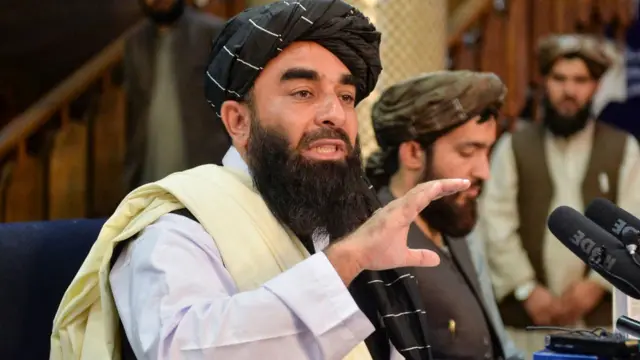
Afghan government chief
spokesman Zabihullah Mujahid strongly condemned the court's decision and the
arrest warrants in a statement posted on X, making clear that Afghanistan does
not recognize any institution or court established under the name of an
international court and does not attach any importance to its positions or
decisions. He further emphasized that Afghanistan is bound only by Islamic
Sharia and the decisions of its own Afghan courts, and not by orders from any
foreign or so-called international institutions or intelligence agencies.