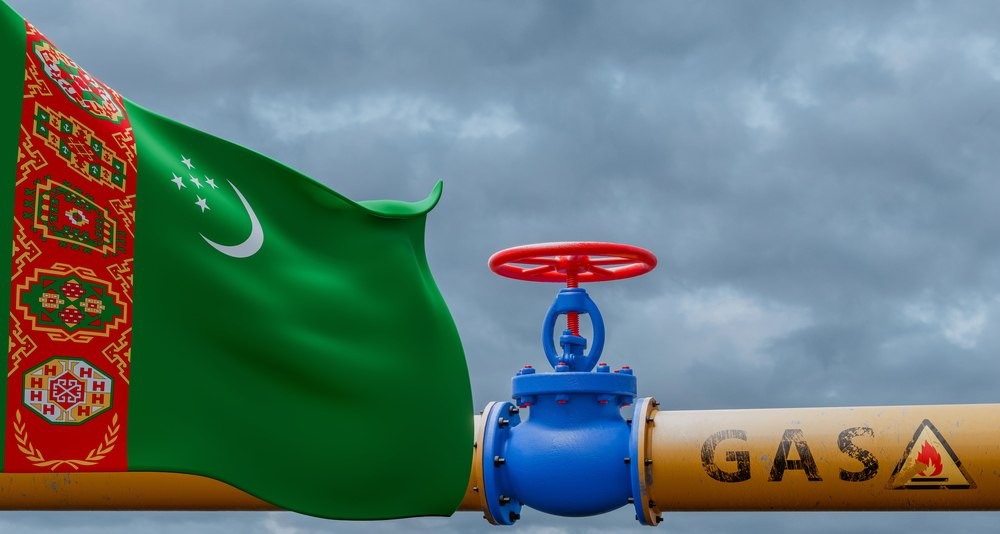
The Turkmenistan-Afghanistan-Pakistan-India
(TAPI) gas pipeline project is raising hopes of expanding energy supplies
across South Asia. Turkmen officials have told Reuters that gas deliveries
through the section of the pipeline currently under construction are expected
to begin reaching Herat, Afghanistan’s third-largest city, in early 2027.
Construction of this section began in 2024. The officials expressed hope that the development
would pave the way for international financial assistance and allow plans to
extend the pipeline to India to move forward despite security challenges.
According to Afghan media reports, this section of the pipeline is expected to
cost approximately $600 million. The construction of the pipeline to Herat is
part of a much larger project designed to have an annual capacity of 33 billion
cubic meters of natural gas. According to Turkmen officials, this is 66 times
more than the 500 million cubic meters of gas Afghanistan is initially expected
to purchase annually.
This would leave sufficient capacity to supply
major markets such as Pakistan and India. The two countries collectively import
approximately 45 billion to 50 billion cubic metres of natural gas annually,
almost all of which comes in the form of liquefied natural gas (LNG)
transported by sea. Analysts,
investors and energy industry experts have long regarded the
Turkmenistan-Afghanistan-Pakistan-India gas pipeline project, commonly known as
TAPI, as unrealistic. They cite the conflict in Afghanistan and tensions
between India and Pakistan as major obstacles to its implementation. So far,
Turkmenistan has borne the costs of the project itself. Analysts estimate the overall cost of the TAPI
project at approximately $10 billion. They say investors are likely to hesitate
because the international community, including Turkmenistan, has not formally recognized
the Taliban government in Afghanistan. However, officials say Turkmenistan hopes that
rising energy prices resulting from the US-Israeli war against Iran, coupled
with growing demand for alternative energy supplies from the Middle East, could
revive interest in projects aimed at diversifying energy imports.
Hopes for Financial Institution Support
Turkmenistan, which holds the world's
fourth-largest proven natural gas reserves, relies almost entirely on China for
its gas exports. Extending the pipeline would give the country access to new
markets. Mohammed Murat Amanov,
head of the Turkmen state-owned company responsible for the pipeline project,
told Reuters that the section reaching Herat would "provide initial
revenue streams and help build confidence among lenders." He identified the Asian Development Bank (ADB)
and the Islamic Development Bank (IsDB) as potential sources of financial
support. The Islamic Development
Bank did not respond to a request for comment, while the Asian Development Bank
made no firm commitment regarding financial assistance. The ADB told Reuters that it had suspended its
regular assistance to Afghanistan following the Taliban's return to power in
2021, although it remained engaged with the TAPI project. "Any decision by ADB to provide technical
assistance or financing would be subject to prevailing circumstances, due
diligence and the bank's relevant approvals," the bank said.
Challenges Remain
Security conditions have improved across much of
Afghanistan since the Taliban returned to power in 2021. Although Ashgabat has
not formally recognized the Taliban government, it maintains relatively
friendly relations with Kabul. However, longstanding hostility between
Pakistan and India, as well as Pakistan's current dispute with the Taliban
government in Afghanistan, remain obstacles to completing the wider project. In addition, the
intensification of a decades-long separatist insurgency in Balochistan is
creating further challenges, as the proposed pipeline route will pass through
the Pakistani province.
Pakistan's Ambassador to Turkmenistan, Faryal
Laghari, told Reuters that Islamabad remained interested in the TAPI gas
pipeline project. She
added that an additional project was also under consideration to transport gas
from Turkmenistan to Pakistan's ports of Gwadar and Karachi. From there, the
gas could be converted into LNG and exported to other countries by sea. India's Ministry of
External Affairs did not immediately respond to a request for comment. A Western diplomat based
in Ashgabat said securing international financial support would be extremely
difficult. Nevertheless, Turkmenistan has not abandoned its efforts to advance
the project.