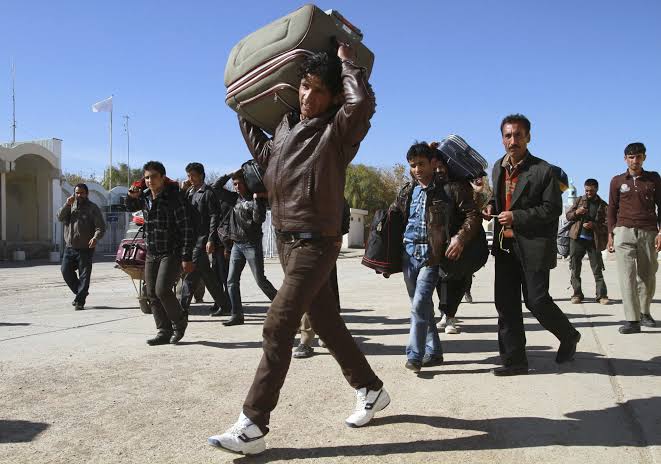
The International Organization for Migration
(IOM) has reported that thousands of Afghans, frustrated by the deteriorating
conditions in their home country, are struggling to reach Europe after
undertaking journeys lasting several months and spending substantial amounts of
money. Between January and August this year, authorities in various Western
Balkan countries registered 3,941 Afghan migrants, accounting for 17 percent of
all migrants registered during this period.
A report issued by the organization on the issue stated that Afghans
have been among the largest groups travelling along this route since 2020,
accounting for an annual average of 21 percent of total registrations during
this period. IOM Chief of Mission in
Afghanistan, Mihyung Park, said that migration is often viewed from a single
perspective, whereas the movement of Afghans has become increasingly complex.
Many families are rebuilding their lives in Afghanistan, while others are
living in neighbouring countries or travelling elsewhere due to economic
pressures, the effects of climate change and uncertainty.
Factors Driving Migration
The IOM interviewed more than 1,000 Afghans who
had travelled through the Western Balkans via Albania, Bosnia and Herzegovina,
Montenegro, North Macedonia, Serbia and Kosovo.
The survey found that the average journey along this migration route
lasted 209 days, meaning that half of those interviewed had been travelling for
even longer. They spent an average of €7,541 on their journeys, a considerably
higher amount than migrants from other countries. According to the organization, more than 20
percent of the Afghans had spent over €10,000 on their journeys, while 37
percent were still in debt because they had borrowed money to finance their
travel. The Afghans interviewed cited
various reasons for leaving their country. Economic pressures, a lack of
livelihood opportunities and limited employment prospects were among the main
factors influencing their decisions to migrate.
Changing Migration Trends
Most Afghans included in the survey said they
intended to continue their journeys. All of them expressed a desire to reach other
European countries, with Italy emerging as the most popular destination: 37
percent identified it as their preferred choice, followed by Germany at 22
percent and France at 20 percent. Existing
family connections in these countries were also an important factor in their
choice of destination. More than
two-thirds of those interviewed said they had no intention of returning to
Afghanistan. The report comes at a time
when migration patterns from Afghanistan are undergoing further changes. So far
this year, 1.4 million Afghans have returned from Iran and Pakistan, increasing
pressure on local communities that are already struggling with economic
difficulties. The IOM report provides reliable information to support better
policymaking and humanitarian responses in countries of origin, transit
destinations and the countries where migrants hope to settle.