The
United Kingdom and the European Union have concluded key negotiations on a new
agreement covering several important issues, including youth mobility, food
trade, carbon emissions and migration. However, further discussions will
continue to resolve certain outstanding issues before a final agreement can be
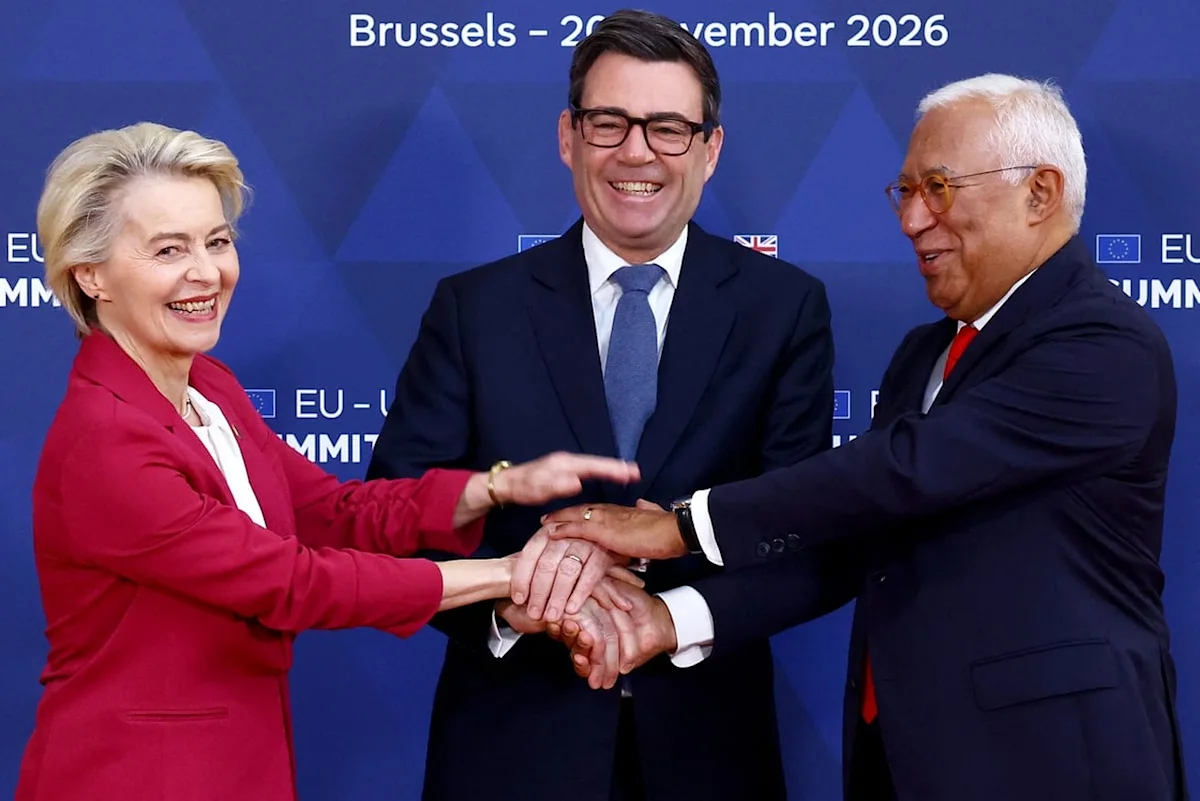
reached. Following a UK-EU summit held in Brussels on Friday, British Prime
Minister Andy Burnham’s office announced that the main negotiations aimed at
rebuilding relations between the two sides after Brexit had been completed.
According
to the announcement, the negotiations resulted in agreements on several areas,
including regulations governing agricultural and food products, trade schemes
and youth mobility. Timetables for implementing these arrangements have also
been established, with some measures scheduled to take effect over the coming
years. However, the European Union has adopted a cautious approach towards
finalising the agreements, making the implementation of the package conditional
on resolving a dispute over university tuition fees for European students in
the UK. Following Brexit, European citizens lost access to the home-fee
arrangement at British universities and are generally required to pay higher
tuition fees equivalent to those charged to international students. The
European Union is demanding that European students receive the same treatment
as British students or be offered substantial discounts for undergraduate
education.
Meanwhile,
British universities have warned that extending home-fee arrangements to
European students without an alternative funding mechanism could place
additional pressure on already constrained budgets. Discussions on tuition fees
are continuing separately alongside broader negotiations concerning industrial regulations,
energy and future relations. Addressing the summit, European Council President
Antonio Costa said that the UK and the European Union were deepening
cooperation to improve their relationship. He said the objective of the summit
was to translate the renewed partnership into practical benefits for citizens,
businesses and the security of the continent. European Commission President
Ursula von der Leyen also said that both sides had made a political decision to
strengthen their partnership. Expressing satisfaction with the progress
achieved, she described providing young people with opportunities to work,
study and travel across Europe as an important step forward.