Russia Extends Ban on Western Food Imports Until 2028
Russian President Vladimir Putin has extended until the end of 2028 a ban on imports of certain food products from Western countries.
- Reading time
- 2 min read
- Published
- 20 Sept 2026, 11:55


Russian President Vladimir Putin has extended until the end of 2028 a ban on imports of certain food products from Western countries.
Russian President Vladimir Putin has extended until the end of 2028 a ban on imports of certain food products from Western countries. The ban was first imposed more than a decade ago in response to sanctions imposed on Russia. The relevant decree was published on the Kremlin’s website on Thursday. The restrictions were introduced in August 2014 after several Western countries imposed sanctions on Russia, refusing to recognize the referendum on Crimea’s accession to the Russian Federation. The Black Sea region, where the majority of the population speaks Russian, had voted earlier that year to secede from Ukraine following a Western-backed uprising in Kyiv.
Russia’s restrictions apply to imports from the United States, the European Union, the United Kingdom, Canada, Australia, New Zealand, Norway, Ukraine, Albania, Montenegro, Iceland and Liechtenstein. The measures cover meat, seafood, dairy products, fruits and vegetables. Most of the countries affected are officially classified as “unfriendly” by the Russian government. Moscow maintains that the ban has helped boost domestic production while also attracting more brands from non-Western and friendly countries, such as Serbia.
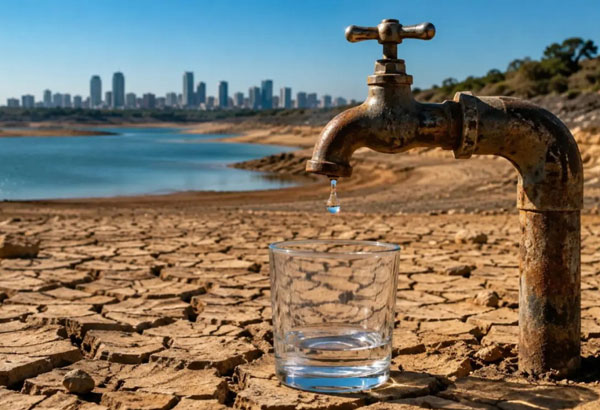
The extension comes at a time when agricultural producers on both sides of the Atlantic are facing unusually hot and dry conditions. According to the National Oceanic and Atmospheric Administration (NOAA), drought conditions remain widespread across the United States following the country’s hottest summer on record. According to the European Union’s Copernicus Climate Change Service, Europe has also experienced its hottest summer on record. Following prolonged heat waves and drought, estimates for the production of the European Union’s key summer crops have fallen by as much as 14 percent below their five-year average, according to the European Commission’s Joint Research Centre.
The UK-based Energy and Climate Intelligence Unit reported on Thursday that potato crops in the United Kingdom, Germany, France, Belgium and the Netherlands could suffer losses of between €498 million and €818 million ($572 million to $940 million) due to severe weather conditions.