Elizabeth Holmes, once regarded as a bright
future prospect in the technology industry, claimed to have invented a
revolutionary medical device. However, after her claims were exposed as false,
she ended up in prison. A new documentary has reignited debate about her
personality, claims, and conduct. Once considered a symbol of extraordinary
success in the American technology industry, Holmes is now known for a fraud
scandal that shook investors, the medical sector, and public trust. She claimed
that her company had developed an advanced device capable of diagnosing
multiple diseases using just a single drop of blood. However, her claims were
later proven false, and she was convicted of defrauding investors.
Holmes, who once gained fame as a billionaire
entrepreneur, is now back in the spotlight. A new documentary titled You
Can See Everything offers a closer look at her life, personality, and
controversial claims, attracting attention from filmmakers and critics alike. According
to director Nathan Fielder, he initially had no intention of making a
documentary about Holmes. He was simply interested in meeting her and
understanding her personality. However, that meeting became the foundation for
a film that has once again raised a question: What is it about Holmes that has
kept people fascinated by her for more than a decade?
From Billionaire to Prison
Elizabeth Holmes gained worldwide attention in
2014, when she was presented as the founder of her company, Theranos, and a
self-made billionaire entrepreneur. The company claimed to have developed
technology capable of diagnosing multiple diseases using only a few drops of
blood. Had the technology worked as promised, it could have transformed the
medical industry by making it possible to conduct multiple tests using much
smaller blood samples than traditional methods required. Holmes also cultivated
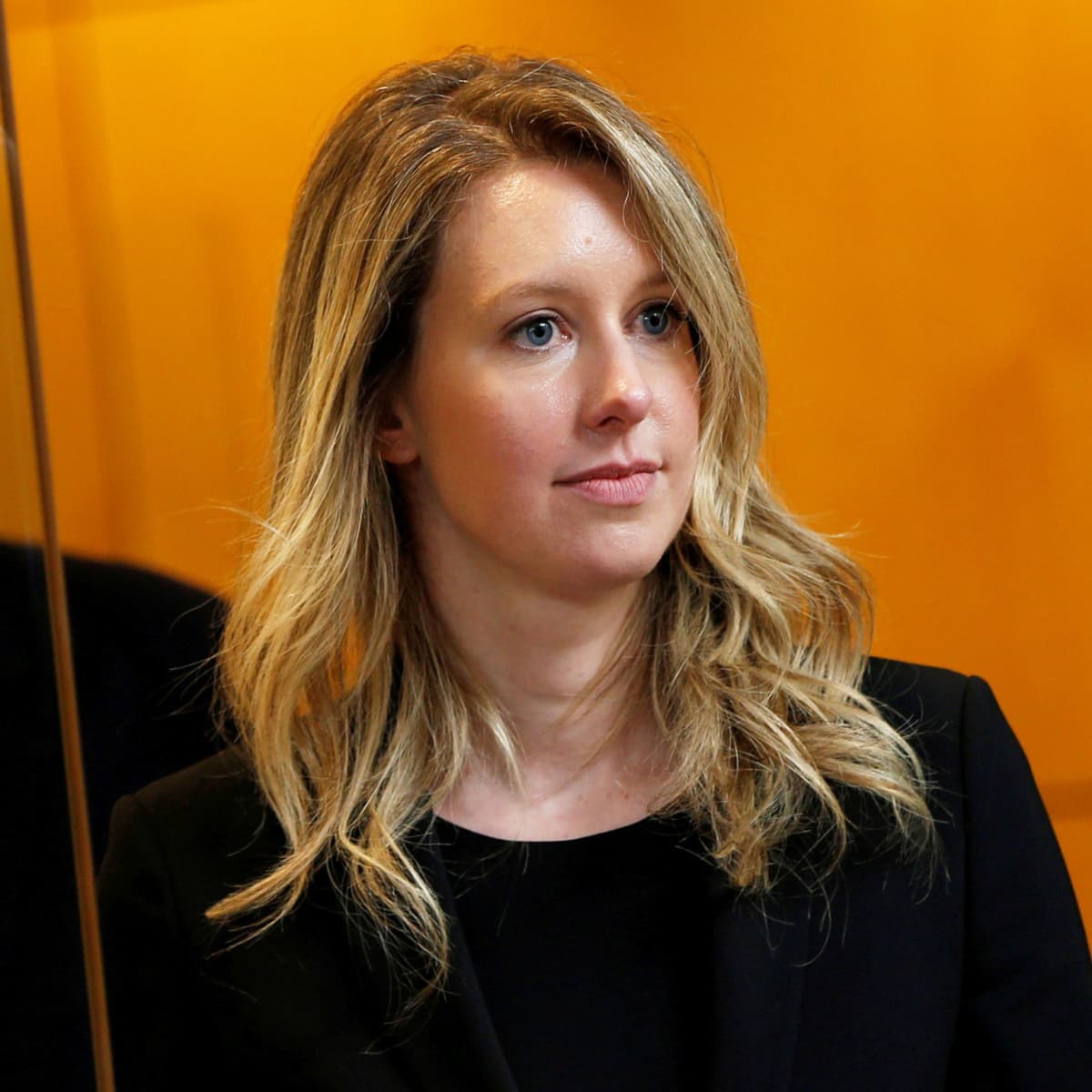
a distinctive public image. Her large eyes, dark red lipstick, and black
high-neck shirts reminiscent of those worn by renowned technology entrepreneur
Steve Jobs became her trademarks. She was even featured on the cover of Fortune
magazine.
However, subsequent revelations showed that the
company's device did not function accurately and sometimes produced incorrect
results. Despite these problems, the company continued making ambitious claims
about its technology. After being convicted of defrauding investors, Holmes
entered federal prison in May 2023. Her story is considered particularly
extraordinary because she was once portrayed as an entrepreneur who could
change the world through technology, only to become a prominent example of
fraud and exaggerated claims within the same industry.
What Does the New Documentary Reveal?
Nathan Fielder and his co-director, Lance
Oppenheim, spent time with Holmes, her partner Billy Evans, and their two young
children in the weeks before she went to prison. They filmed aspects of her
private life. Holmes's decision to allow the filmmakers such intimate access to
her life has also been interpreted as an attempt to improve her public image
and present herself as innocent. Shortly before entering prison, Holmes gave an
extensive interview to The New York Times, which highlighted a softer,
more domestic side of her personality. The interview portrayed her as a mother
who loves her children and volunteers to support survivors of sexual violence. However,
the interview also attracted criticism, with some arguing that it was overly
accepting of her new, more sympathetic public image.
According to Lance Oppenheim, the filmmakers
learned that Holmes had been approaching various production companies and had
also spoken with the well-known film company A24. The two directors
subsequently met her and decided to make the documentary. Interestingly,
Fielder himself was surprised that Holmes had agreed to let him make the film.
He said he had not expected her to choose him for the project. Fielder is known
for his satirical and unconventional television series, while Oppenheim has
also established a distinctive style in documentary filmmaking.
Holmes's Behaviour in Front of the Camera
The documentary presents the same personality
that once fascinated and astonished the public, although her appearance has
changed. In some scenes, Holmes is shown barefoot, holding her child in her
arms while talking with Fielder. Her signature red lipstick and meticulously
polished appearance are no longer as prominent. However, her habit of
maintaining direct eye contact and blinking infrequently remains noticeable. Throughout
the film, Holmes repeatedly insists that she never lied, that her medical
technology worked, and that she was treated unfairly. She also becomes
emotional when discussing the damage to her reputation and public standing. Fielder
appears surprised by and sceptical of her claims. At one point, he asks whether
she has ever told a lie. Holmes answers no. During the film's screening, this
scene prompted a strong reaction from the audience, with laughter heard on
several occasions.
Does Holmes Believe Her Own Claims?
One of the documentary's major turning points
comes after Holmes goes to prison, when Fielder introduces another person into
the conversation. This individual brings a new perspective to the film and
raises questions about Holmes's behavior that viewers may also be considering. The
documentary explores whether Holmes genuinely believes she is innocent or
whether she is trying to persuade others through her personality and the way
she presents her story.
Fielder is also asked whether he himself may have
become influenced by Holmes's personality and started accepting her claims. The
film does not provide a definitive answer, but it presents two possible
explanations. One is that Holmes possesses an extraordinary ability to
influence others and draw them into her way of thinking. The other is that she
may be unable to distinguish between her own perception of events and reality. This
ambiguity is one of the documentary's defining features. It leaves viewers
wondering how much of what Holmes says is true and how she herself understands
the story she continues to tell.
Holmes's Future and the Questions Surrounding
Her Personality
Elizabeth Holmes has continued to attract public
attention despite her imprisonment. According to reports, she is expected to be
transferred to a residential re-entry facility in 2027, while her full release
is anticipated in 2030. She also maintains an active account on the social
media platform X. In one of her prominent posts, she says she is continuing to
fight to prove her innocence and return to her children and partner. Several
documentaries and dramatic productions have previously explored her life. These
include Alex Gibney's documentary The Inventor, the podcast The
Dropout, and the television series of the same name, all of which have
presented her story from different perspectives. Amanda Seyfried, who portrayed
Holmes in the television series, won an Emmy Award for her performance.
The new documentary has received considerable
attention for its distinctive style, humour, and exploration of the gap between
reality and public perception. Some critics have described it as a masterpiece,
while speculation has also emerged that it could receive an Academy Award
nomination for Best Picture, an unusual distinction for a documentary. Fielder
says he is still trying to understand what he witnessed and experienced while
working with Holmes.
According to Oppenheim, the filming process left
the team grappling with psychological uncertainty almost every day. Even the
filmmakers and members of their own team held differing views about how to
interpret Holmes's personality. Perhaps this very contradiction is what
continues to make Elizabeth Holmes's story so compelling. A woman once regarded
as a symbol of the technological future continues to deny wrongdoing and insist
on her innocence. The persistent gap between her claims and the established
facts has once again drawn public attention to her extraordinary rise and fall.