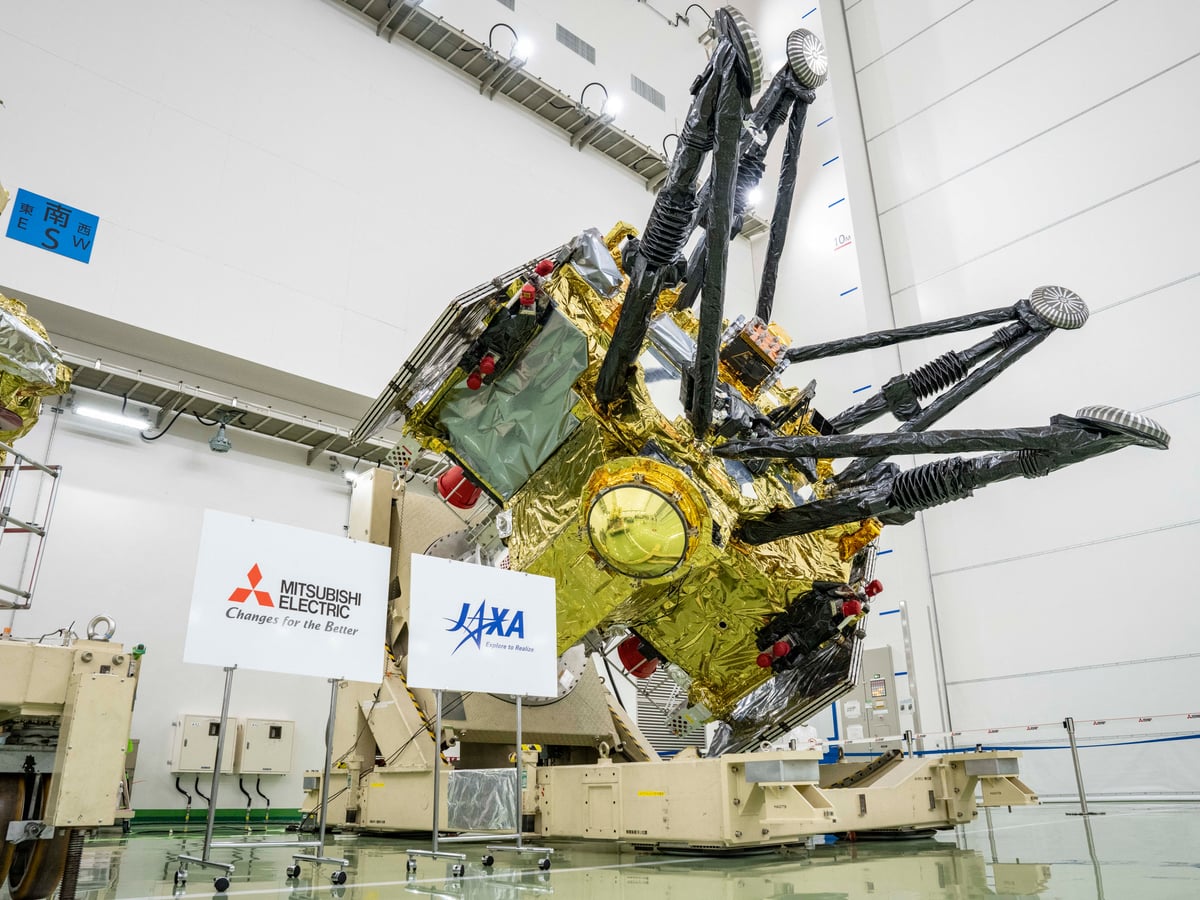
Japanese scientists are preparing to collect soil
and rock samples from Phobos, one of Mars’s two moons, and bring them back to
Earth. The mission aims to obtain important information about the formation of
the solar system and the origins of life on Earth. It is also expected to help
pave the way for future human missions to Mars. According to media reports, the
uncrewed spacecraft mission, known as Martian Moons eXploration (MMX),
is being developed by the Japan Aerospace Exploration Agency (JAXA) in
cooperation with several universities, technology companies and international
space agencies, including those from the United States and Europe.
Under the plan, a Japanese H3 rocket carrying the
MMX spacecraft will launch from the Tanegashima Space Center. The spacecraft is
expected to reach the vicinity of Mars approximately one year after launch. It
will then spend three years’ operating around Phobos and collecting at least 10
grams of soil and rock samples from its surface. Before the sample collection
begins, a small exploration rover named IDEFIX will examine
the surface of Phobos to help identify a suitable and safe landing site. The
mission will also observe Deimos, Mars’s other moon, although it will not
attempt to land there.
According to mission leader Yasuhiro Kawakatsu,
collecting samples from Phobos will be a world-first undertaking and represent
a significant milestone for a mission travelling to the Martian region and
returning to Earth. JAXA hopes the mission will help answer questions about the
formation of Mars and its two moons. One theory suggests that the moons formed
from debris ejected when a large celestial body collided with Mars. Another theory
proposes that they are asteroids captured by Mars’s gravitational pull.
According to experts, determining which theory is
correct could help scientists understand how conditions suitable for life
developed on rocky planets, including Earth, and how water and organic
compounds reached these environments. Several international institutions are
participating in the mission, including organizations from France, Germany and
the United States, as well as the European Space Agency. However, Phobos’s
extremely weak gravity and the technical demands of travelling to the Martian
region and returning to Earth present major challenges for scientists and
engineers.
China Also Plans a Mars Sample-Return Mission
Meanwhile, China aims to launch its Tianwen-3
mission around 2028 and return samples from Mars to Earth by 2031. Japanese
scientists believe that the sand and rocks of Phobos could provide evidence
about the formation of Mars and potentially the origins of life. The findings
could help researchers develop a better understanding of the history and
evolution of the solar system.