Traffic overpasses and interchanges can be found in many
countries around the world, but a unique interchange in Japan has amazed
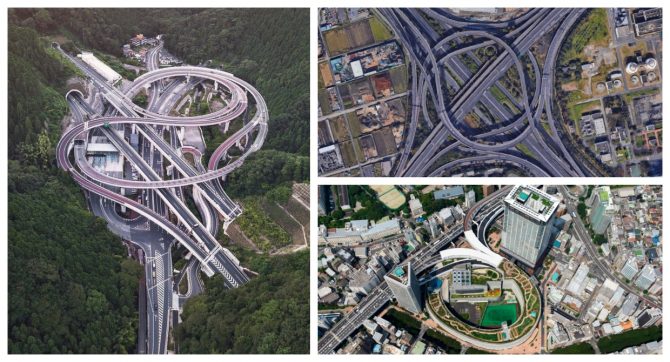
visitors with its complex structure and extraordinary design. Located in Tokyo, Japan, the Takaosan Highway
Interchange is often mistaken at first glance for a computer-generated image or
a work of art. However, the interchange is real, and large numbers of vehicles
pass through its various routes every day. The unique interchange is part of
the Ken-O Expressway and has been designed to provide vehicles approaching from
different directions with access to multiple routes. Its intricate, spiral-like
design makes it completely different from conventional highway interchanges.
According to reports, the interchange provides routes
leading to 12 different directions. Its structure includes numerous turns, elevated
and lower-level roads, and routes extending in different directions, making it
look like a modern architectural masterpiece when viewed from a distance. The
Takaosan Highway Interchange was built in a mountainous area. Due to the
region’s natural geography and challenging terrain, engineers had to adopt an
unusual design to connect multiple highways.
The construction was also planned to avoid extensive
leveling or excavation of the surrounding mountains. For this purpose,
different routes were connected through elevated and winding sections,
resulting in the complex yet efficient structure seen today. The interchange
also has entrances to six separate tunnels, which are connected to highways
leading in different directions. Its complicated layout can be particularly
surprising for drivers passing through it for the first time, although the
highway system has been carefully designed and planned.
The Takaosan Interchange was opened to the public in 2012. Since then, it
has not only become an important route for traffic but has also been recognized
as one of Japan’s fascinating examples of highway engineering because of its
distinctive structure. Due to Japan’s limited land area and mountainous
terrain, modern and unconventional engineering methods are often used to
construct highways. The Takaosan Highway Interchange is an example of this
approach, combining multiple highways into a single system while minimizing the
impact on the surrounding natural environment.