Defeat is often said to be an orphan, while
victory has many claimants. A similar situation is now confronting Pakistan
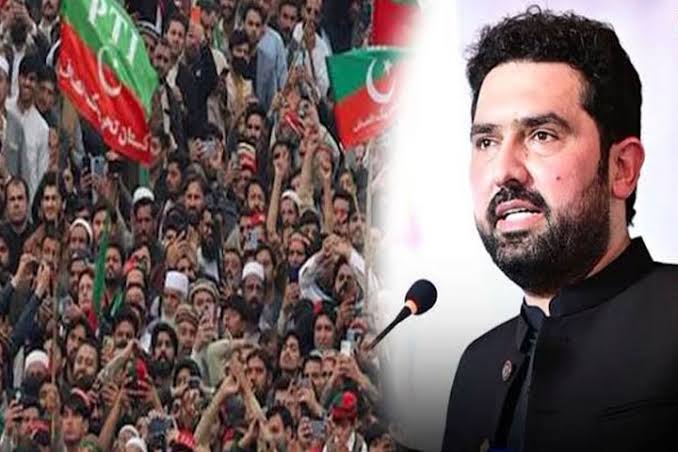
Tehreek-e-Insaf (PTI), where attempts are being made to hold Khyber Pakhtunkhwa
Chief Minister Sohail Afridi and leaders considered close to him responsible
for the collapse of the provincial government and the imposition of governor’s
rule in the province. Following meetings of PTI’s Political Committee on
October 17 and 18, the party’s Core Committee also met. During discussions
about the reasons behind the imposition of governor’s rule and the provincial
government’s downfall, Sohail Afridi, Shafi Jan, Shahid Khattak and Meena Khan
came under criticism.
During the Core Committee’s two-day online
meeting, PTI Secretary-General Salman Akram Raja questioned the planning for
the long march, saying he had observed the march closely. According to him,
barely 2,000 people were present in Charsadda, while preparations for the long
march in Swabi were almost nonexistent. He also said that no plans had been
shared with the party’s district-level organizations.
Addressing PTI provincial General Secretary Ali
Asghar Khan, Salman Akram Raja asked what preparations the provincial
leadership had made in view of the possibility of governor’s rule. Ali Asghar
Khan responded that he had asked Chief Minister Sohail Afridi about the matter
several times, but Afridi repeatedly told him, “I will let you know when the
time comes.” Commenting on this response, Salman Akram Raja said it meant that
no planning had been done.
PTI Senator Mushtaq Yousafzai also criticised
Chief Minister Sohail Afridi’s strategy during the Core Committee meeting,
saying that he had not only failed to prepare Plan A but had no Plans B, C or D
either. According to her, only three people were involved in planning, while a
fourth was responsible for implementing it. Several participants reportedly
supported Mushtaq Yousafzai’s position and demanded that Sohail Afridi be held
accountable.
Former provincial minister Taimur Saleem Jhagra
also criticized the chief minister’s conduct, saying that Afridi’s biggest
mistake was his failure to answer phone calls from members of the provincial
assembly, ministers and other party leaders. However, Jhagra said that Afridi
remained on the protest container alongside Junaid Akbar until the very end. He
questioned where Salman Akram Raja, Barrister Gohar, Atif Khan, Asad Qaiser and
other party leaders had been during the protest.
Questions Also Raised over Mahmood Khan
Achakzai’s Role
During the Core Committee meeting, Mushtaq
Yousafzai also criticised the role of Opposition Leader Mahmood Khan Achakzai.
According to a senior PTI leader, she argued that Achakzai was doing nothing to
secure the release of PTI founder Imran Khan. Another member of the National
Assembly who attended the meeting also questioned Achakzai’s role, saying that
he had merely assumed the position and was not sincere with PTI. The member
argued that he should therefore be removed from office. At this point, PTI
Chairman Barrister Gohar clarified that Mahmood Khan Achakzai had been
appointed opposition leader on Imran Khan’s instructions and that only Imran
Khan had the authority to remove him from the position.
Complaints That the Party Lost Its Government
Instead of Protecting It
During the Core Committee meeting, several
lawmakers and party leaders once again strongly criticised Sohail Afridi. They
argued that PTI had taken to the streets to secure Imran Khan’s release but
ended up losing its own provincial government in the course of that struggle. The
criticism voiced during the meeting indicates that, following the imposition of
governor’s rule in Khyber Pakhtunkhwa, internal disagreements within PTI are no
longer limited to strategy. Questions are also being raised about leadership,
coordination and decision-making. The debate within the party now appears to
centre on who should bear political responsibility for the collapse of the
provincial government and who should answer for the alleged failure to plan the
long march effectively.