The African National Congress (ANC), led by South
African President Cyril Ramaphosa, has secured the highest number of votes in
the country’s municipal elections. However, a sharp decline in its support
means the party will need coalition partners to form governments in several
major cities. Announcing the results on Sunday, the Independent Electoral
Commission (IEC) said the ANC had secured 30.76% of the vote and 3,246 council
seats, compared with 45.59% of the vote in 2021. The Democratic Alliance (DA)
received 24.64% of the vote and won 1,695 seats, while former President Jacob
Zuma’s party, uMkhonto weSizwe (MK), came third with 9.76% of the vote and 785
seats. Of the 29.2 million registered voters, approximately 14.9 million cast
their ballots on November 4. According to the commission, voter turnout stood
at 52%, up 6.1 percentage points from 2021. The commission described the
elections as free and fair.
ANC Secretary-General Fikile Mbalula described
the outcome as an extremely devastating result for the party. The ANC accepted
the results, calling them an opportunity for honest reflection and renewal. The
DA retained a clear majority in Cape Town and emerged as the largest party in
Johannesburg, Tshwane, Ekurhuleni and Nelson Mandela Bay. However, it does not
have enough seats to govern any of these four cities on its own. Zuma’s party
led in the municipality covering the eastern port city of Durban, but it will
also need coalition partners to form an administration.
Political parties have 14 days to hold the first
meetings of their councils and elect office-bearers. Mbalula said the ANC would
consider sitting in opposition rather than entering into unsuitable coalitions.
The party said it would negotiate in good faith, guided by the Constitution and
the interests of local communities. The DA’s Federal Executive authorised
coalition negotiations on Saturday, saying that potential partners would have
to support accountable governance, reliable service delivery and the fight
against corruption. ActionSA leader Herman Mashaba said on Sunday that his
party would not support a DA-led administration in Johannesburg if Helen Zille
became mayor. ActionSA secured approximately 16% of the vote in the city,
compared with around 35% for the DA and 20% for the ANC. Meanwhile, Mbalula
said in a post on X that the ANC and ActionSA had begun preliminary discussions
about possible negotiations to prevent a governance vacuum in local
municipalities.
Economic Freedom Fighters (EFF) leader Julius
Malema urged the ANC on Saturday to reconsider cooperation with the DA and
instead work with his party, Zuma’s political group and the South African
Communist Party. Mbalula said the ANC had not yet taken a position on the
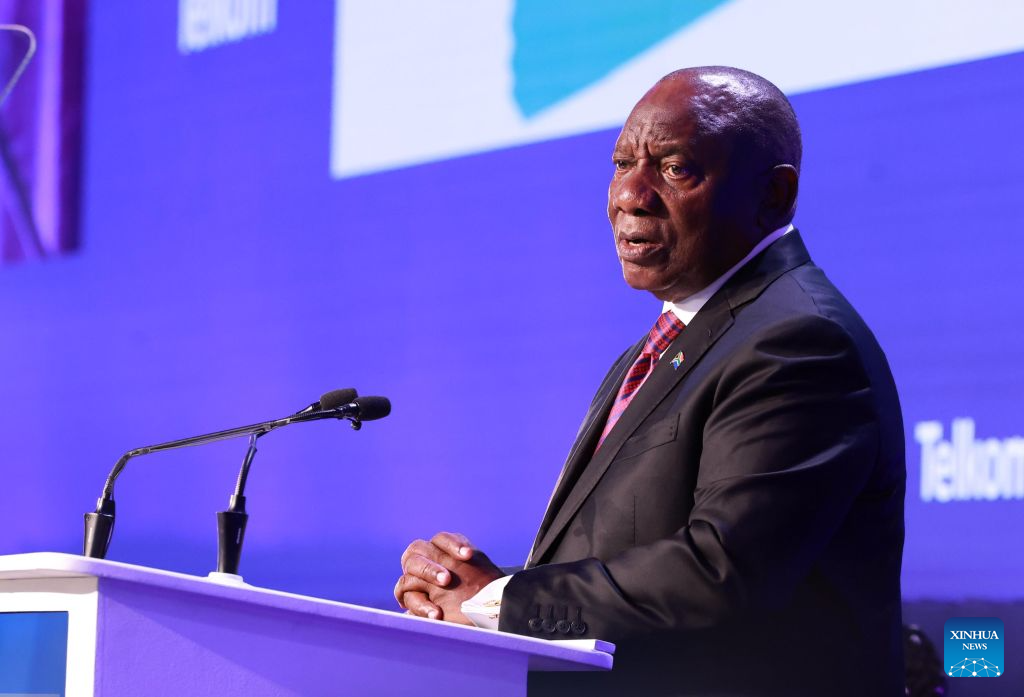
proposal. Addressing the results announcement ceremony on Sunday, President
Ramaphosa warned that the delivery of essential services must not become
hostage to political differences. Water shortages, power cuts and corruption
were among the dominant issues during the election campaign. After three
decades in power, the ANC lost its parliamentary majority in 2024. A 10-party
Government of National Unity, which includes the DA, is now leading the
country. The ANC’s next leadership contest is scheduled for 2027, while the
next national elections are due in 2029. The party has pledged to address poor
governance and strengthen oversight.