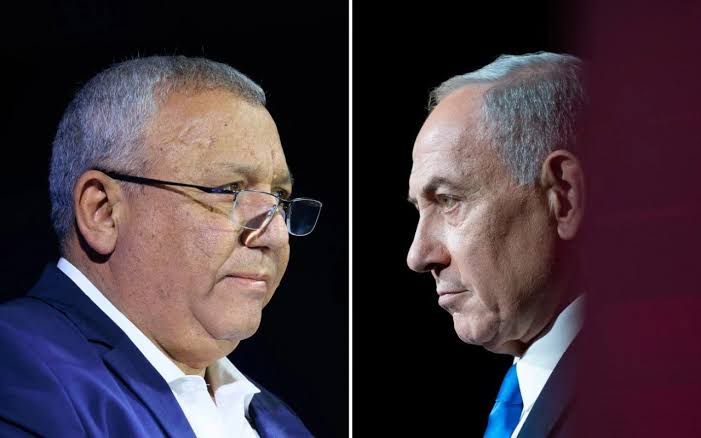
Israeli Prime Minister Benjamin Netanyahu, who
has long been a dominant figure in the country’s politics, is now facing a
major challenge from former military chief Gadi Eisenkot. Eisenkot is
contesting the October 27 elections with his party, Yashar, and opinion polls
suggest that his party is ahead of Netanyahu’s Likud party. Eisenkot’s
political style is markedly different from Netanyahu’s. He is reserved, keeps a
low profile in the media and has centred his election campaign on his 41 years
of military service, including his tenure as army chief from 2015 to 2019. His
popularity has also been influenced by personal tragedy: one of his sons and
two of his nephews have been killed during the fighting in Gaza.
According to British news agency Reuters, Eisenkot’s
emergence does not necessarily guarantee any major shift towards more moderate
Israeli policies. Although he is a strong critic of Netanyahu’s leadership and
his far-right allies, including Itamar Ben-Gvir and Bezalel Smotrich, Eisenkot
also maintains a hard-line position on the establishment of a Palestinian state
and on Hamas. Following Hamas’s October 7, 2023, attack, Eisenkot joined
Netanyahu’s war cabinet as an observer. However, he left the cabinet eight
months later because of disagreements over the government’s strategy. He has
argued that, despite more than three years of conflict, Israel has failed to
achieve its objective of completely dismantling Hamas’s military and governing
capabilities.
On security and foreign policy, Eisenkot’s
priorities include eliminating Hamas’s military capabilities and preventing
Iran from acquiring nuclear weapons. He supports pursuing these objectives
through military action or a diplomatic agreement backed by the United States. Despite
his opposition to Netanyahu, Eisenkot does not support the establishment of a
Palestinian state. He maintains that Israel should retain ultimate authority
over all security matters in the territory between the Jordan River and the
Mediterranean Sea. Eisenkot comes from a Jewish family that emigrated from
Morocco. If elected prime minister, he would become Israel’s first prime
minister from the Mizrahi Jewish community. However, even if he wins the
election, forming a coalition government and securing a parliamentary majority
could prove difficult, as he opposes forming an alliance with Arab Israeli
parties.