Bangladesh’s International
Crimes Tribunal has sentenced seven people, including Awami League
General Secretary Obaidul Quader, to death in a case involving crimes
against humanity committed during the July 2024 uprising.
A three-member International
Crimes Tribunal-2 sentenced Awami League General Secretary Obaidul Quader and
six other accused to death. The verdict was delivered by Tribunal Chairman
Justice Nazrul Islam Chowdhury. The other members of the tribunal were Justice
Mohammad Manzoor-ul-Basit and Justice Noor Mohammad Shahriar Kabir. The other defendants sentenced to death
include former Awami League State Minister for Information Mohammad Ali
Arafat; Awami League Joint General Secretary A.F.M. Bahauddin Nasim; Jubo
League Chairman Sheikh Fazle Shams Parash; Jubo League General Secretary Mainul
Hossain Khan Nikhil; Chhatra League President Saddam Hussain; and the
organization’s General Secretary Sheikh Wali Asif Anan. The tribunal also ordered the confiscation of
half of the assets belonging to Obaidul Quader, Bahauddin Nasim, Mohammad Ali
Arafat, Sheikh Fazle Shams Parash and Mainul Hossain Khan Nikhil.
The court ordered that the
confiscated assets be sold and the proceeds used as compensation for the
families of those killed and people injured during the July uprising. According
to the tribunal, the compensation will be provided through the July Foundation
or another legally authorized institution.
According to the prosecution, Obaidul Quader, in his capacity as Awami
League General Secretary and a cabinet minister, exercised command and control
over law enforcement agencies as well as armed activists of the Awami League,
Jubo League and Chhatra League to violently suppress the quota reform movement
that began on July 1, 2024. The prosecution alleged that, with the knowledge
and involvement of the accused, large-scale, systematic and targeted attacks
were carried out against civilians, resulting in the deaths of more than 1,400
protesters and serious injuries to more than 25,000 people.
According to the prosecution,
Bahauddin Nasim helped organize and facilitate the Awami League’s response,
while Mohammad Ali Arafat played a role in controlling the media and suppressing
reports about the deaths and violence. The prosecution accused Sheikh Fazle
Shams Parash and Mainul Hossain Khan Nikhil of mobilizing Jubo League
activists. According to the prosecution, Mainul Hossain Khan Nikhil also
personally opened fire on protesters.
Chhatra League leaders Saddam Hussain and Sheikh Wali Asif Anan were
accused of mobilizing armed activists and coordinating the attacks.
What Happened When in the
Case?
The investigation into the
case began on June 18, 2025. The investigation agency submitted its report to
the prosecution on December 7. The tribunal took cognizance of seven charges on
December 18, while seven charges were formally brought against the accused on
January 22, 2026. The formal trial began
on February 17, during which 29 prosecution witnesses recorded their statements
before the court. The prosecution and
defense completed their final arguments over nine days of hearings between
August 4 and 17. The tribunal then delivered its verdict against all seven
accused today, sentencing them to death.
Sheikh Hasina Announces Plan
to Return Home
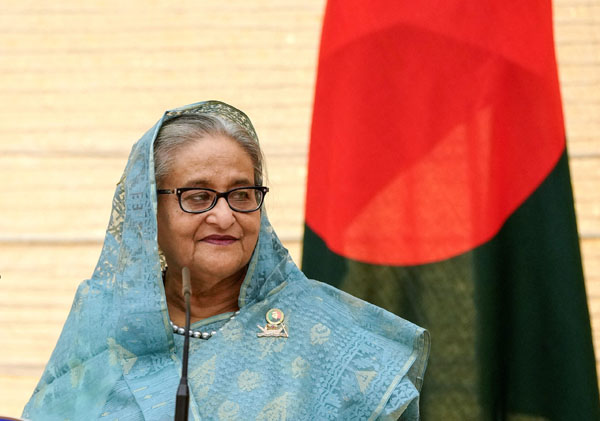
Bangladesh’s ousted Prime
Minister Sheikh Hasina has announced that she plans to return to her home
country from India around December this year, despite saying, “They could
arrest me upon my return, or even kill me.”
In a telephone interview with international news agency Reuters,
78-year-old Sheikh Hasina said that despite fears of arrest and “killing,” “I
have to go back to my country.” “The
leaders and activists of my party, the Awami League, are facing severe pressure
and difficulties. If I have to die, I want to embrace death on my homeland,
where my parents are buried and where their blood was shed.”
Sheikh Hasina left Bangladesh
for India following nationwide protests in 2024. Later, a Bangladeshi court
sentenced her to death in absentia over allegations that she ordered a
crackdown on the protest movement. Her
possible return could further increase political tensions in Bangladesh.
However, some analysts believe it could also improve relations between India
and Bangladesh, which have been strained since her exile. Sheikh Hasina said she was making the
decision to return without consulting any foreign government. “The authorities
in Dhaka want to bring me back. They have repeatedly written to the Indian
government asking for my return, but I will go back on my own,” she said. She further said, “Cases have been filed
against almost all of my party’s leaders and activists, and many of them are
fugitives. So I told them that this time I am going back home, and one day all
of you should return as well. We will surrender before the court together.”
Sheikh Hasina was
Bangladesh’s longest-serving leader. However, during her tenure, her government
faced repeated allegations of cracking down on the opposition and undermining
democratic values. Rejecting the
allegations against her, she said she believed in justice and that the people
would ultimately decide how her government had performed. “No government is above mistakes. Whenever a
government remains in power for a long time, mistakes are bound to happen. But
it is the people’s right and responsibility to judge what is right and wrong
and to weigh the good and bad of governments. I leave that judgment to the
people.”