More than a year remains before the 2028 U.S.
presidential election, but political manoeuvring and preparations surrounding
potential candidates for the next occupant of the White House have already
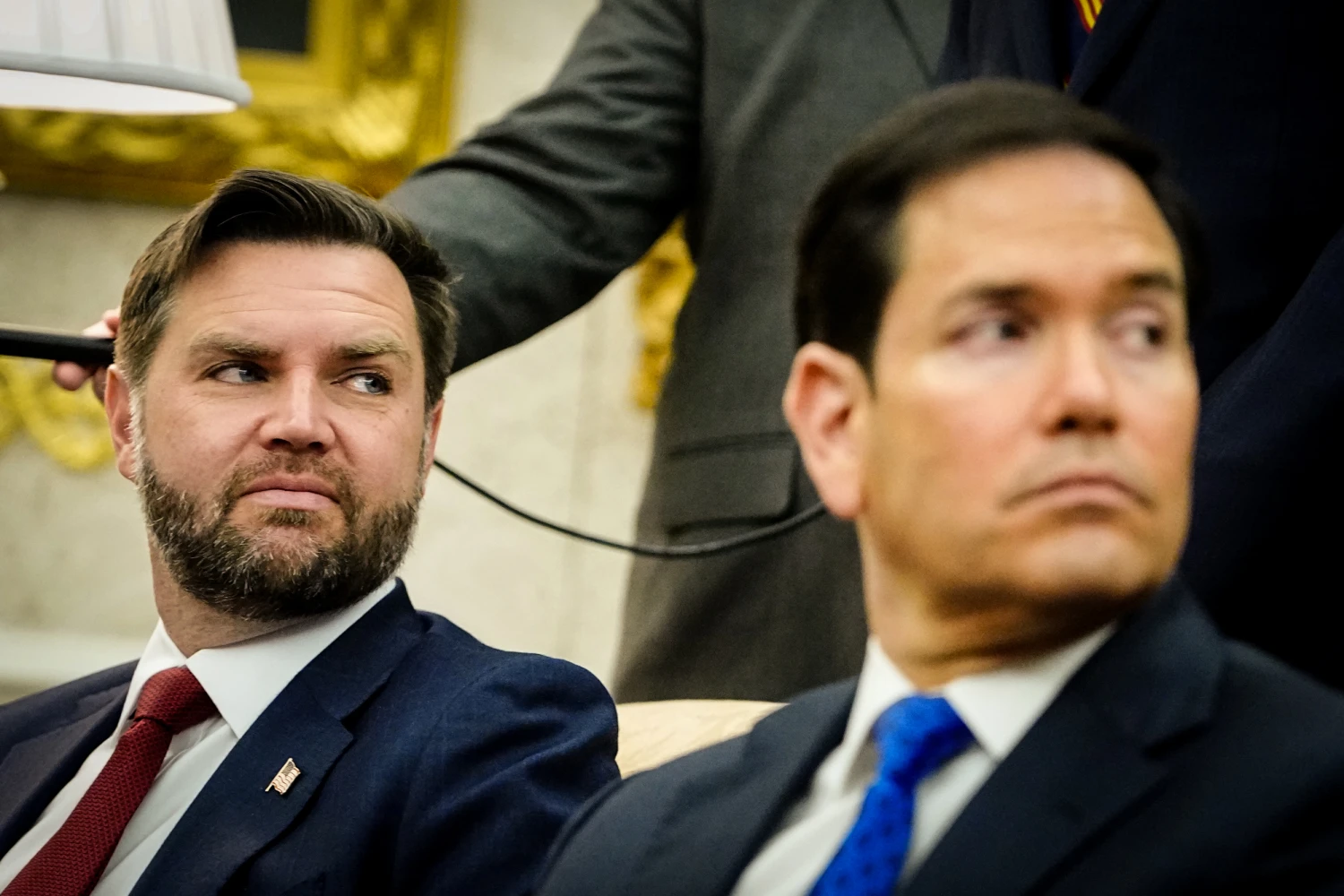
begun. In a recent Reuters and Ipsos poll, Republican Party figures Marco Rubio
and J.D. Vance, along with Democratic Party figures Jon Ossoff and Pete
Buttigieg, emerged as prominent potential candidates. According to the survey,
45 percent of Republican voters considered U.S. Secretary of State Marco Rubio
the best presidential candidate, while Vice President J.D. Vance received the
support of 43 percent.
In the U.S. midterm elections, President Donald
Trump’s Republican Party suffered a defeat at the hands of the Democrats. The
Democrats won 255 seats, while the Republicans secured 168. The results suggest
growing public dissatisfaction with Trump’s policies and indicate that voters
could deliver a major surprise in the 2028 election. According to a Reuters
report, the survey was conducted to assess the popularity of potential
presidential candidates from both major political parties. A majority of Republican
voters identified current Secretary of State Marco Rubio and Vice President
J.D. Vance as their preferred candidates. Meanwhile, Democratic voters
expressed significant support for Georgia Senator Jon Ossoff and former
Transportation Secretary Pete Buttigieg.
Marco Rubio Holds a Narrow Lead in the
Republican Party
According to the survey, 45 percent of Republican
voters considered U.S. Secretary of State Marco Rubio the best presidential
candidate, while 43 percent believed Vice President J.D. Vance was the most
suitable choice. Rubio therefore secured a two-percentage-point lead over Vance
in this early assessment of potential candidates. Voters supporting Rubio
believe that he has a balanced personality and tries to avoid unnecessary
controversies while carrying out his government responsibilities. Barbara
Reisner, a Florida-based lawyer who voted for Donald Trump in all three
previous presidential elections, preferred Rubio over Vance in the survey.
According to her, Vance’s political outlook leans too far to the right, and he
is too closely aligned with President Trump. Rubio, by contrast, has performed
his responsibilities relatively well.
J.D. Vance Also Among the Strong Republican
Contenders
U.S. Vice President J.D. Vance is also considered
one of the Republican Party’s leading potential presidential candidates. In the
survey, 43 percent of Republican voters identified him as the best candidate. However,
according to the report, some Republican voters are dissatisfied with President
Trump’s policies, particularly the war with Iran and the resulting increase in
fuel prices. Vance has also occasionally indicated that he differs from certain
policies of the Trump administration. He previously said that the war with Iran
was one of the reasons behind the Republican Party’s poor performance in the
November midterm elections.
President Trump has also asked some of his close
political associates whether they prefer J.D. Vance or Marco Rubio. However, in
an interview, Trump indicated that he would not necessarily announce his
endorsement of any particular candidate in the Republican presidential primary.
Rubio and Vance are not the only potential contenders within the Republican
Party. Florida Governor Ron DeSantis has also emerged as an important possible candidate.
According to the survey, 32 percent of Republican voters considered DeSantis
the best presidential candidate. In addition, the names of President Trump’s
eldest son, Donald Trump Jr., and Texas Senator Ted Cruz have also been
discussed in connection with the 2028 presidential race. However, voters remain
divided in their opinions of these figures.
Jon Ossoff and Pete Buttigieg Lead Among
Potential Democratic Candidates
Georgia Senator Jon Ossoff and former
Transportation Secretary Pete Buttigieg have emerged as prominent potential
candidates within the Democratic Party. In the Reuters and Ipsos survey, both
politicians received support from 29 percent of Democratic voters, who
considered them the best presidential candidates. Ossoff has attracted considerable
attention in recent months through his strong criticism of President Donald
Trump. He has made sharp statements describing Trump as corrupt and unfit for
office. According to the report, Ossoff also won last week’s special election
in Georgia by a substantial margin of 18 percentage points. Interestingly,
Donald Trump had won the same state by just two percentage points in the 2024
presidential election.
Meanwhile, Pete Buttigieg previously campaigned
for the Democratic Party’s presidential nomination in the 2020 election, giving
him greater national recognition than Jon Ossoff. An interesting finding of the
survey was that approximately one in five Democratic voters knew little about
Pete Buttigieg, while nearly one in three were also unfamiliar with Jon Ossoff.
Experts say national recognition and public visibility play an important role
in presidential elections because candidates who are already well known
generally need to spend fewer resources on publicity and campaigning. However,
American political history also offers examples of relatively unknown
candidates who gained extraordinary popularity during their election campaigns
and went on to win, as was the case with former President Bill Clinton.
Kamala Harris and Gavin Newsom’s Positions Among
Democrats
Other potential Democratic presidential
candidates include former Vice President Kamala Harris and California Governor
Gavin Newsom. According to the survey, both politicians received support from
23 percent of Democratic voters, who considered them the best presidential
candidates. Harris lost the 2024 presidential election to Donald Trump, but she
continues to hold political significance within the Democratic Party. Gavin
Newsom is also regarded as one of the party’s leading figures and is viewed as
a potential presidential contender in the future. Alexandria Ocasio-Cortez, a
congresswoman from New York, was considered the best presidential candidate by
just 15 percent of Democratic voters. She is widely regarded as a prominent
voice of the Democratic Party’s progressive wing.
Preference for Moderate Candidates Among
Democrats
The survey also indicated that some Democratic
voters favour candidates with moderate political views. Jon Ossoff and Pete
Buttigieg are both considered relatively moderate figures within the party. Kashan
Ed Blair, a retired farmer from Illinois, identified Pete Buttigieg as the
better candidate in the survey, saying that he preferred moderate and gradual
reforms over more progressive policies.
According to Blair, major changes should not be
introduced in the country all at once. Instead, reforms should be implemented
through smaller steps, allowing the public sufficient time to accept them. In
an interview, Buttigieg also adopted a cautious position on the possibility of
impeaching President Trump, saying that he was not particularly interested in
the issue. Alexandria Ocasio-Cortez, meanwhile, said after the midterm
elections that the option of impeaching Trump should remain under
consideration.
Trump’s Declining Popularity and the Impact of
the War with Iran
According to Reuters, the decline in President
Donald Trump’s popularity has become an important factor in both parties’
strategies for the 2028 election. Within the Republican Party, disagreements
have emerged over whether the next presidential candidate should continue
Trump’s policies or pursue a different political direction. The war with Iran,
rising fuel prices and foreign policy issues has also influenced the views of
Republican voters. Meanwhile, the Democratic Party appears politically
confident following its victory over the Republicans in the recent November 3
congressional elections. However, debate continues within the party over how
aggressively it should challenge President Trump and whether it should demand
his impeachment.
Political Experts’ Views and Key Survey Findings
Elaine Kamarck, an expert associated with
Democratic Party political strategy, has cautioned that considerable time
remains before the 2028 election and that the current survey should not be
treated as a definitive picture of the political landscape. According to
Kamarck, several prominent figures in both parties have yet to decide whether
they will run for president. Although it is possible to identify potential
candidates, predicting who will be leading when the election takes place is not
possible at this stage. The survey’s key findings show that Marco Rubio has the
support of 45 percent of Republican voters, J.D. Vance has 43 percent, and Ron
DeSantis has 32 percent. Among Democratic voters, Jon Ossoff and Pete Buttigieg
each received 29 percent support, followed by Kamala Harris and Gavin Newsom
with 23 percent each, while Alexandria Ocasio-Cortez received 15 percent.
The survey was conducted among 1,705 adults
across the United States, including approximately 500 registered voters from
each of the two major political parties. The poll concluded on Monday, and the
margin of error for the results among Republican and Democratic voters was
reported to be five percentage points. It is important to note that all the
individuals mentioned are currently being discussed as potential candidates for
the 2028 U.S. presidential election. None has officially announced the launch
of a presidential campaign. The political landscape, party nominations and
voter preferences could change significantly before the election.