Gaza’s Ministry of Social
Development has warned that the shelter crisis facing displaced people is
worsening as a large proportion of tents and shelters have deteriorated and
severe shortages of shelter supplies continue. The ministry has called for the
immediate entry of 200,000 new tents and 300,000 weather-resistant plastic
tarpaulins. In a press statement issued on
Monday, the ministry said that between 1.2 million and 1.5 million displaced
people are currently living in open and densely populated shelter camps that
lack basic necessities. It said the estimates were based on data and reports
from UN agencies.
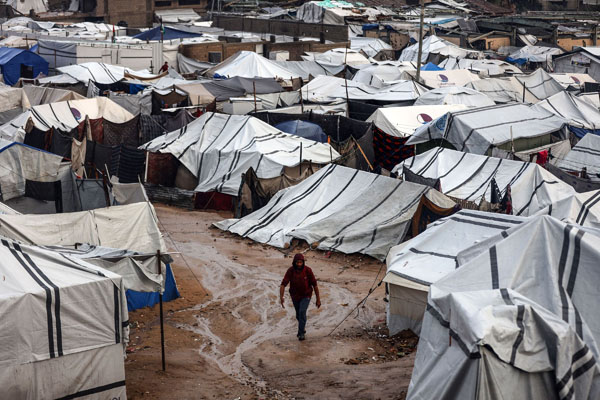
The ministry said that between 70%
and 80% of existing tents and shelters have been destroyed or become
dilapidated due to prolonged use and continued exposure to weather conditions.
This has further worsened the needs of displaced families and reduced their
ability to protect themselves from rain, wind, and changing weather conditions. The Ministry of Social Development
stressed that around 500,000 emergency shelter items are needed to provide an
immediate response to the crisis. These include 200,000 tents and 300,000
tarpaulins to ensure minimum protection for families living in tent and shelter
camps.
The ministry called on the
international community, UN agencies, and humanitarian organizations to
accelerate the delivery of shelter supplies and remove restrictions obstructing
the entry of aid shipments. It warned that continued delays would further
increase the risks facing millions of families. The ministry’s warning is consistent
with recent UN estimates concerning the worsening shelter crisis. The United
Nations Office for the Coordination of Humanitarian Affairs (OCHA), based on
assessments by the shelter sector, reported that around 1.98 million people, or
94% of Gaza’s population, are in need of assistance related to shelter and
non-food items.
Around 58% of the population is
facing needs classified as critical or catastrophic, while 84% of households
are experiencing severe housing constraints, including inadequate protection
from weather conditions. Recent UN assessments of 178,632
housing units in the Gaza Strip found that 107,941 units, or approximately 60%,
have either been destroyed, severely damaged, or rendered uninhabitable.
Meanwhile, basic repair work carried out by humanitarian partners from the
beginning of the year through August covered no more than 627 housing units.
The shelter crisis becomes even more
dangerous when families are forced to remain in damaged buildings because no
alternatives are available. The collapse of a damaged building in Gaza City in
September once again highlighted these risks. The Norwegian Refugee Council said
that hundreds of buildings deemed unsafe remain occupied because safer housing
options are unavailable. It also pointed to continued restrictions on the entry
of some shelter materials.
These facts place the demand for
200,000 tents and 300,000 tarpaulins within a much broader crisis. The problem
is no longer limited to providing temporary shelter for displaced people; it
has expanded to include the deterioration of existing shelters, the large
number of housing units that have become unusable, and the limited capacity of
humanitarian organizations to replace tents and other materials that deteriorate
over time.