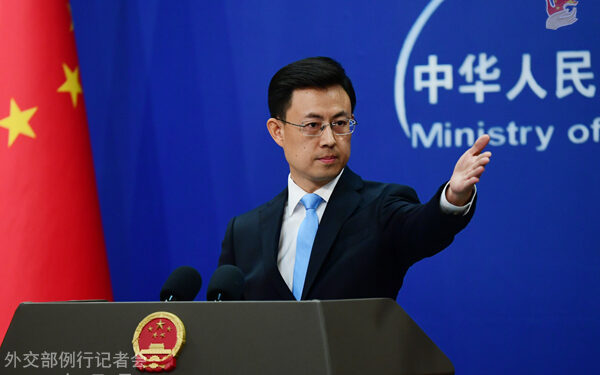
China Foreign Ministry spokesman Guo Jiakun urged the Japanese
authorities to seriously reflect on and correct their wrongdoings and take real
actions to return to the purpose and mission of the four key political
documents shared by China and Japan. Guo Jiakun made the remarks at a daily
news conference in Beijing on Tuesday, the 54th anniversary of the issuance of
the China-Japan Joint Statement in 1972, which marked the normalization of
relations between the two countries.
The four political documents, including the joint statement, laid
the political and legal foundation for China-Japan relations, and established
the rules for properly settling major issues of principle, including history
and Taiwan, Guo Jiakun said. “There should be no distortion or regression,
still less sabotage, regarding these principles,” he said. As for the severe
situation facing China-Japan relations today, he said that the root cause lies
in the political foundation of the bilateral relations being gravely
undermined.
He noted that the incumbent leader of Japan not only refuses to
reflect on the history of aggression, but also claims that a contingency in
Taiwan will constitute a “survival-threatening” situation for Japan. “This is a
blatant challenge to China’s state sovereignty and against the aspiration
demonstrated by the normalization of China-Japan relations and the political
commitments Japan made to China,” Guo Jiakun said.
Japan keeps peddling the “external threat” narrative, using it as
a pretext to speed up remilitarization, the spokesman said, adding that the
move poses a challenge to the postwar international order and threatens
regional peace and stability. Guo Jiakun’s comments served as a fresh call to
Japan to honor its commitments, following Foreign Minister Wang Yi’s meeting on
Monday in Beijing with former Japanese foreign minister Takeshi Iwaya, who is
currently head of the Japanese Association for the Promotion of International
Trade.
During the meeting, Wang underscored that the pressing priority
for Japan is to correct the Japanese leader’s erroneous words and deeds on the
Taiwan question. As next year marks the 55th anniversary of the normalization
of diplomatic relations between China and Japan, Wang stressed that Japan
should adopt a correct attitude on historical issues. Describing the current
state of Japan-China relations as concerning, Iwaya said that Japan should not
forget the lessons of the past, and Japanese politicians must steer the country
in the right direction.