A recent statement attributed to Iran’s Islamic
Revolutionary Guard Corps (IRGC) has raised concerns after reports emerged that
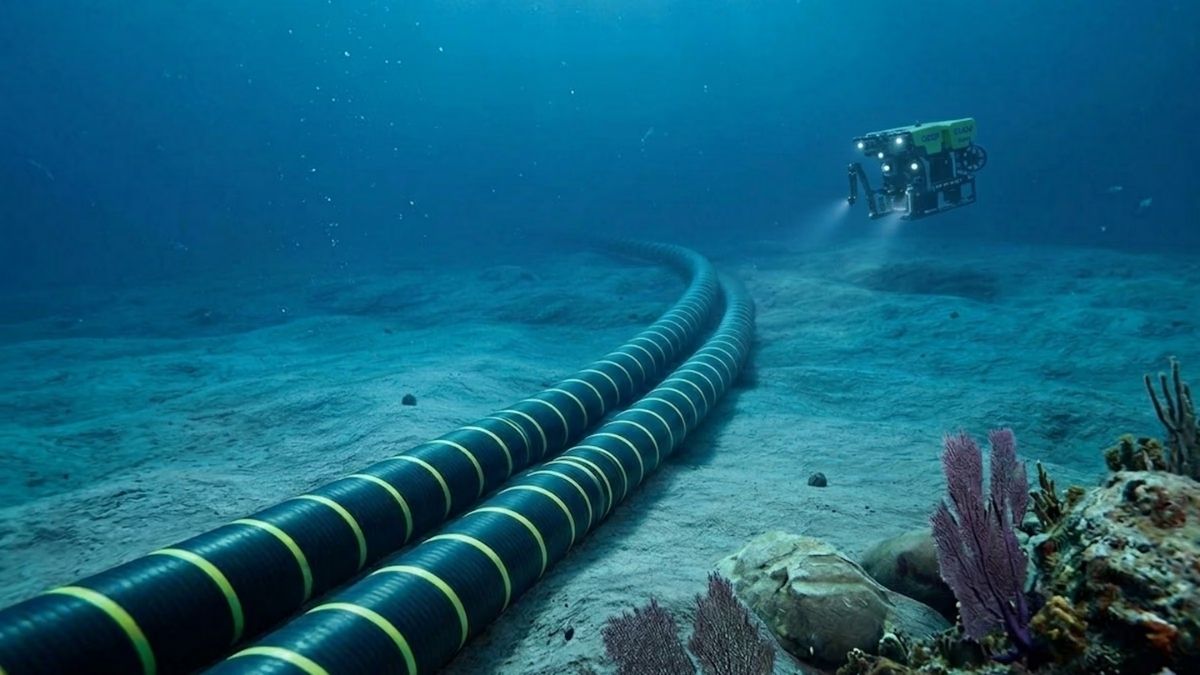
it had threatened to target international internet cables running beneath the
Strait of Hormuz, heightening concerns about the security of digital
communications infrastructure in the Gulf region.
According to a report by Lebanon’s broadcaster
MTV, the IRGC threatened to target undersea internet cables in the Strait of
Hormuz. Meanwhile, a report by JFeed, citing a statement attributed to an IRGC
spokesperson, said that important international communications cables run
beneath the strait. However, the full official statement or original recording
from the IRGC spokesperson could not be obtained, and there has been no
confirmation of a new attack on, or damage to, any internet cable.
Iran Has Previously Warned of Possible Attacks
on Internet Cables
This is not the first warning from Iran
concerning undersea communications cables. On October 12, Iranian security
official Mohsen Rezaei warned that if war with the United States resumed,
undersea communications cables, data centres, and artificial intelligence
facilities in the region could become targets of Iranian attacks. His statement
was considered significant in the context of rising regional tensions and
potential threats to digital infrastructure.
How Important Are the Internet Cables in the
Strait of Hormuz?
The Strait of Hormuz is one of the world’s most
important maritime routes. In addition to facilitating global oil and gas
shipments, it plays a significant role in communications connectivity among
Gulf countries. Fibre-optic cables running beneath this maritime passage carry
internet data between different countries. According to the International Cable
Protection Committee (ICPC), five active submarine cable systems pass through
the Strait of Hormuz. Although a relatively limited share of global internet
traffic travels through this route, these cables are particularly important for
regional connectivity among Gulf countries.
What Could Happen If Internet Cables Are
Damaged?
Damage to undersea fibre-optic cables could
disrupt internet connectivity in affected countries. This could potentially
affect internet speeds, online businesses, banking, digital payments, and other
communications services. However, because alternative communications routes are
available, damage to a single cable would not necessarily result in a complete
internet blackout across the entire Gulf region. At present, no attack on any
cable in the Strait of Hormuz has been confirmed. The latest reports concern an
alleged threat attributed to Iran.
Qatar Says Iran-U.S. Negotiations Are Continuing
Meanwhile, Qatar has stated that negotiations
between Iran and the United States are ongoing and that both sides remain
engaged in diplomatic contacts. However, concerns about a further expansion of
the war persist amid rising regional tensions. According to Al Jazeera, Qatari
Foreign Ministry spokesperson Majed Al Ansari told the Global Security Forum in
Doha that negotiations between Iran and the United States concerning the
nuclear agreement, known as the Joint Comprehensive Plan of Action (JCPOA),
were continuing, with both sides making efforts to achieve progress. Al Ansari
said that the limited amount of news emerging about the negotiations could
indicate that the diplomatic process was being advanced appropriately. He
stressed that maintaining confidentiality was essential to the success of
sensitive negotiations. He also made clear that Qatar would continue supporting
diplomatic efforts to resolve the dispute through negotiations and prevent
further escalation in the region.
Qatar Expresses Support for Saudi Arabia
The Qatari Foreign Ministry spokesperson also
expressed support for Saudi Arabia in the context of the escalating regional
conflict. He said Qatar stood alongside its brotherly neighbour in defending
Saudi Arabia’s sovereignty. Qatar’s statement comes at a time when tensions
across the Middle East are increasing concerns about regional security and
energy supplies. Doha has previously played a diplomatic role in efforts to
reduce differences between Iran and the United States and revive negotiations.
However, Qatari officials did not announce a date for the next round of talks
or provide a definitive timeline for a possible agreement.