New
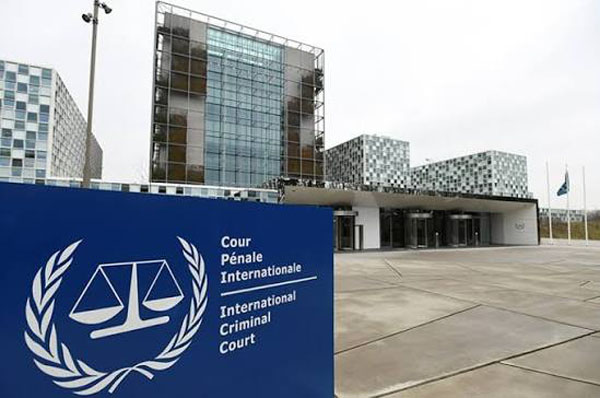
evidence has been submitted to the International Criminal Court (ICC) to
support efforts to hold those responsible for alleged crimes against
Palestinian prisoners accountable. A delegation of lawyers representing
Palestinian victims in cases involving war crimes and crimes against humanity
presented new information and evidence to the Office of the Prosecutor of the
International Criminal Court in The Hague. The material is intended to support
ongoing investigations concerning Palestinian prisoners and detainees held in
Israeli detention facilities.
According
to Al Jazeera correspondent Abdullah Al-Shami in The Hague, the delegation
handed the court documentation of what it described as serious violations of
international humanitarian law. The lawyers said the evidence forms part of
efforts to seek accountability for alleged abuses faced by Palestinian prisoners
and detainees. Al-Shami
explained that the visit also included a meeting with the new prosecutor and
his team, who are advancing the investigation into the situation in the
occupied Palestinian territory. He added that members of the legal team sensed
during the meeting a strong willingness by the court to continue investigating
the Palestinian file, which was initiated by former Prosecutor Karim Khan.
He
said the delegation submitted credible evidence and testimonies to the new
prosecutor’s office that were not limited to the families of prisoners and
detainees. They also included testimonies from Palestinian relatives who were
killed during Israel’s war in the Gaza Strip. He further said the documents
included statements from relatives of victims whose bodies had been recovered
and buried in the Gaza Strip in recent weeks, as well as testimonies collected
by the legal team through field visits to victims and the families of
detainees. The
legal initiative has received support from several European institutions that
have agreed to provide representation on the legal team, as well as backing
from Palestinian organizations working in the fields of prisoners’ affairs and
human rights.
The
move comes within the broader context of international legal proceedings
concerning the Palestinian file, particularly after the International Criminal
Court issued an arrest warrant for Israeli Prime Minister Benjamin Netanyahu on
November 21, 2024, over allegations of war crimes and crimes against humanity
committed against Palestinians in the Gaza Strip. The submission of the evidence comes alongside
new testimonies from Palestinian prisoners released by the Israeli authorities,
who have spoken openly about conditions inside detention facilities and the
deteriorating situation of prisoners. After spending two years in administrative
detention without charge or trial based on a secret file, Israeli authorities
released Louay Arar last Sunday. Arar is from the town of Qarawat Bani Zeid,
northwest of Ramallah. He described detention conditions that, according to
him, were harsher than the hardships he had experienced during the 10 years he
had spent in Israeli prisons.
Speaking
to Al Jazeera, Arar said the conditions faced by prisoners could be summed up
in one sentence: there is neither adequate food nor medical treatment. The
released prisoner recalled an incident, in which another detainee sharing his
room suffered a severe medical crisis, began vomiting blood and called for
help. According to Arar, when
the prisoners knocked on the door and asked the prison administration to
provide medical treatment, they were told: “Tell us after he dies, and when he
dies, we will call a doctor.” According to Palestinian human rights reports,
approximately 9,500 Palestinian prisoners are currently being held in Israeli
prisons, including 94 women and more than 350 children. Since taking office at the end of 2022,
Israel’s National Security Minister Itamar Ben-Gvir has implemented measures
aimed at further tightening detention conditions for Palestinian prisoners,
including reducing their standard of living and the services provided to them.
Human rights organizations have accused Israeli authorities of policies
involving starvation, medical neglect, solitary confinement and torture.