The
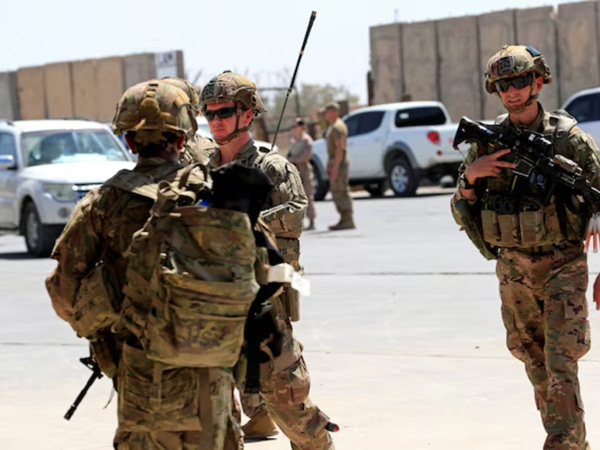
withdrawal of U.S. forces from Iraq has been completed after more than two
decades, with American troops handing over control of the last U.S. military
bases to Iraqi forces. The current withdrawal was carried out under an
agreement reached in 2024 during the administration of former U.S. President
Joe Biden, while its implementation took place under the administration of
current President Donald Trump.
Following the U.S. withdrawal, Iraq will have to
take greater responsibility for its internal security. According to a Reuters
report, Iraqi security experts have warned that the end of the U.S. military
presence could increase the influence of Iran-aligned armed groups in the
country and provide ISIS with an opportunity to regroup.
Iraqi security analyst Jassim al-Bahadli said the
U.S. withdrawal would provide Iran with a strategic advantage because the
presence of U.S. forces had for years been a major obstacle to Tehran’s
influence in Iraq. He said Iran-aligned militia groups would portray the U.S.
withdrawal as a victory for their movement and would seek to use it to expand
their influence over security and political decisions.
Meanwhile, Abu Mujtaba al-Yasiri, a commander of
the Iran-aligned armed group alliance known as the Islamic Resistance in Iraq,
described the U.S. withdrawal as a historic victory for Iraqi Islamic
resistance groups and the Iraqi people. He said September 30 would be
celebrated as the end of a dark chapter in Iraq’s history. According to him,
Iraq has demonstrated that its sovereignty can be protected not by foreign
forces but through resistance and the will of its people.
Although the final withdrawal of U.S. forces is
generally considered popular among the Iraqi public, groups concerned about the
power of Iran-aligned factions argue that the withdrawal is premature.
Abdulrahman al-Zubaie, a tribal leader from the Iraqi city of Fallujah, said
Iraq is not yet ready to assume full responsibility for its security.
“All Iraqis want complete sovereignty, and no
Iraqi would disagree with that,” he said. “But the withdrawal of the U.S.-led
coalition in this manner and the resulting security vacuum are precisely what
all Iraqis fear.”
U.S. Military Returns to Iraq
The United States invaded Iraq in 2003 and
overthrew the government of then-President Saddam Hussein. The U.S. military
remained in Iraq for several years and conducted operations against armed
resistance groups. American forces withdrew from Iraq at the end of 2011. However,
U.S. forces returned to Iraq in 2014 following the rise of ISIS. American
military operations against the group continued from 2014 to 2017.
In 2020, the United States killed Iranian General
Qassem Soleimani in a drone strike near Baghdad International Airport.
Following the strike, Iran-aligned armed groups carried out several attacks on
the U.S. Embassy in Iraq, prompting American retaliatory operations. During
more than two decades of war in Iraq, approximately 4,500 U.S. service members
were killed. American troops stationed in Iraq also suffered casualties during
the recent Iran-U.S. war. Of the 18 U.S. service members killed, seven died in
Iraq, including the most recent fatality in July, when an American sergeant was
killed while attempting to disable a drone near a military base close to Erbil.