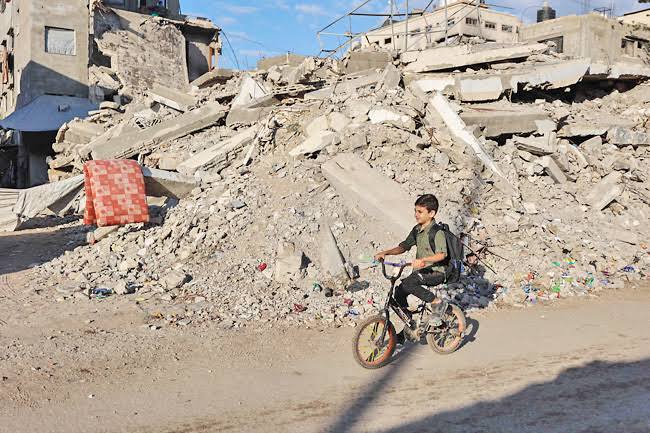
Amid
dilapidated tents and damaged homes, displaced people across the Gaza Strip are
facing another winter without safe shelter, while Israeli violations of the
ceasefire agreement and restrictions on the entry of aid and reconstruction
materials continue. The Government Media Office warned on Tuesday that the
situation has turned into a humanitarian crisis, with more than 1.5 million
displaced people living in tents and hundreds of buildings at risk of collapse.
In a press statement, the office accused Israel of failing to fulfill its
obligations under the agreement. It said that 5,147 violations had been
documented, resulting in the deaths of 1,421 Palestinians and injuries to 4,983
others, while 198 civilians had also been arrested.
The
office said that the continued restrictions on the delivery of aid and the
movement of people were deepening the humanitarian crisis across various
sectors. The figures cited in the statement highlight the connection between
the lack of protection at displacement sites and the risk of being targeted, as
finding a tent or returning to a damaged home is no longer enough to guarantee
shelter. The scale of structural deterioration and cracks has expanded, while
materials needed for repairs and housing remain unavailable. According to the
Government Media Office, there are a total of 270,000 tents in the Gaza Strip,
of which 162,000 are worn out and no longer usable, accounting for 60 percent
of all tents. More than 1.5 million displaced people are living in conditions
that provide inadequate protection from cold weather and rain.
The
shelter crisis also extends to thousands of civilians living in damaged
buildings that offer little or no safety. The media office warned that more
than 255 buildings are at risk of collapsing at any moment, potentially causing
further casualties and raising fears of a repeat of the tragedy involving the
collapse of the Al-Saada building in Gaza City. The situation has left families
facing an extremely difficult choice: either remain in tents that have lost
their usefulness or seek shelter in damaged buildings that could collapse on
their occupants. With the arrival of the rainy season, the need to provide safe
alternatives and allow winter shelter supplies to enter has become increasingly
urgent, while supplies remain far below the level of need outlined in the
statement.
Regarding
food, aid and reconstruction needs, the office said that Israel had allowed
only 72,826 trucks to enter out of the 210,600 trucks that were supposed to
enter under the agreement, representing a compliance rate of less than 35
percent. According to the figures in the statement, the gap between the number
of trucks stipulated under the agreement and the number actually allowed to
enter has exceeded 137,000. The office rejected Israeli claims regarding the
delivery of supplies and blamed restrictions at the crossings for worsening the
deprivation of basic necessities.
The
shelter crisis is closely linked to this shortage, as the continued obstruction
of aid and reconstruction materials limits families’ ability to repair what
remains of their homes and prolongs their stay in displacement sites that are
becoming increasingly deteriorated over time. Regarding movement, the office
said that 13,785 people had been allowed to travel, while 35,000 people should
have been permitted to enter and leave the Gaza Strip. It called for
restrictions on the movement of patients and wounded people to be lifted,
particularly given the deteriorating condition of the healthcare system.
The
Government Media Office held Israel responsible for the destruction of the
basic elements of life in Gaza, including attacks on the health and education
systems and critical infrastructure, as well as what it described as a systematic
policy of starvation and restrictions affecting various aspects of civilian
life. It called on the international community, the United Nations and
international organizations to intervene immediately and exert effective
pressure to stop attacks on civilians, fully open the crossings allow basic
necessities and winter relief supplies to enter, and facilitate the travel of
patients and wounded people. In Gaza, where casualties continue despite the
ceasefire agreement, the arrival of winter adds another threat to the lives of
displaced people. For families living under worn-out tarpaulins or damaged
roofs, continued delays in aid mean remaining completely exposed to rain, cold
and the risk of building collapses.