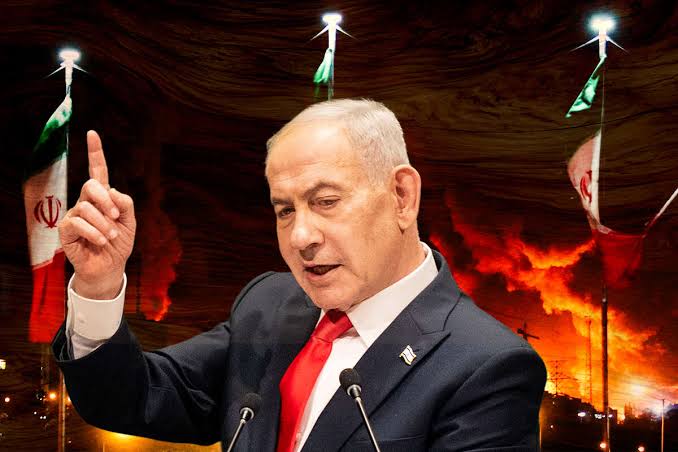
Israeli Prime Minister Benjamin Netanyahu has
said that Israel is prepared to attack Iran without U.S. involvement if
necessary. He reaffirmed his determination to overthrow the government in
Tehran and described striking first as a central principle of Israel’s security
doctrine. The announcement comes as indirect negotiations continue over the war
launched by the United States and Israel in February. Israel, a major recipient
of U.S. military aid and weapons, justifies its operations on security grounds,
even as the conflict has spread across the region, disrupted shipping through
the Strait of Hormuz, and driven up global energy prices. Speaking on Sunday
about his security doctrine, Netanyahu argued that as long as the Iranian
government remains in power, it will rebuild its nuclear and military
capabilities. He made clear that Israel is prepared to launch further attacks
without waiting for U.S. participation. “If we have to act alone, we will act
alone,” he said.
Netanyahu cited Israel’s previous campaign
against Iran as a model, saying he had told U.S. President Donald Trump that
Israel would attack Tehran regardless and had invited him to participate in the
strike on the Fordow nuclear facility. He described further action against Iran
as unfinished business and explicitly identified overthrowing the Iranian
government as the ultimate objective. “We are working on it, and we will get it
done,” he said.
Tehran has repeatedly insisted that its nuclear
program is peaceful and denied seeking to acquire nuclear weapons.
Nevertheless, Netanyahu again claimed that U.S.-Israeli strikes had prevented
Iran from obtaining an atomic bomb intended to destroy Israel. He presented the
latest attacks as part of a broader doctrine that prioritises striking before
an adversary can act. Comparing a pre-emptive strike to gaining the upper hand
in childhood street fights, he said Israel could establish bases far beyond its
borders. According to Netanyahu, Israel would have to rely on “its sword” to
survive for many years.
He also discussed plans to seize and destroy
sites in the occupied West Bank that he described as centres of threat,
identified preventing the establishment of a Palestinian state as a fundamental
principle, and included disrupting military and civilian systems as part of
Israel’s deterrence strategy. Negotiations between the United States and Iran
are already deadlocked. Last month, Trump rejected Tehran’s proposal as
unacceptable and insisted that Iran was losing badly because of the U.S.
blockade, while demanding that Tehran reach an agreement on Washington’s terms.
Iranian Foreign Minister Abbas Araghchi
reiterated on Saturday that normal shipping through the Strait of Hormuz could
resume within seven days if Washington accepted Tehran’s conditions. These
include ending the naval blockade, easing restrictions on oil exports,
releasing frozen assets, and ending hostilities on all fronts, including
Israeli operations in Gaza and Lebanon. Despite these diplomatic efforts, Trump
has threatened renewed bombing. Axios recently reported that U.S. officials
expect major military operations could resume after the November midterm
elections. Tehran has warned that another attack would trigger a broader
retaliatory campaign, potentially targeting U.S. technological infrastructure
across the Gulf.