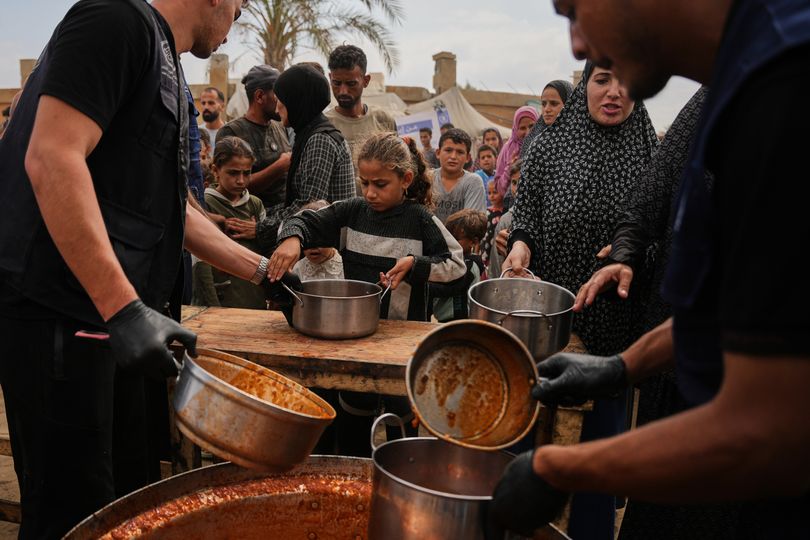
The World Food Program has reduced the number of
aid recipients from 1.6 million to 1.1 million and cut daily hot meal
distributions from 250,000 to 150,000. Around 1.4 million people are facing
acute food shortages.
The United Nations World Food Program (WFP) has
significantly reduced food assistance for Palestinians in Gaza because of a
severe funding shortfall, leaving 500,000 people without monthly food aid.
According to the agency, the number of beneficiaries has been reduced from 1.6
million to 1.1 million, while food rations have also been cut by 50%. Millions
of people in the war-ravaged territory are already facing severe food
shortages.
According to media reports, the WFP has made
clear that a lack of financial resources has forced it to scale back relief
operations in Gaza. Families receiving assistance will now be provided with
less food than before, while the number of prepared meals distributed daily has
been reduced from 250,000 to 150,000. According to the WFP, some families in
hard-to-reach areas of Gaza are receiving a meal only once every two days. The
agency has warned that these cuts are being implemented at a time when
humanitarian needs remain critical and large numbers of Palestinians depend on
relief program to meet their basic needs.
The WFP’s latest assessments indicate that
approximately 1.4 million people in Gaza, equivalent to around two-thirds of
the population, are facing acute food shortages and require humanitarian
assistance to survive. Sean Hughes, the WFP’s country director, told the AFP
news agency at the organization’s office in East Jerusalem that people in Gaza
are not safe, with daily airstrikes continuing and civilians still being
displaced. He said that almost the entire population had been deprived of
permanent housing and that the humanitarian situation remained extremely
serious. Sean Hughes said the WFP’s relief operations had played an important
role in mitigating the effects of famine-like conditions in Gaza last year.
However, he stressed that the current situation was still too critical for
humanitarian assistance to be discontinued.
According to the WFP, families receiving food
assistance will now receive only one food parcel instead of the two previously
provided. The quantity of wheat flour distributed to them will also be reduced.
Monthly cash assistance for 75,000 families will be cut from 1,250 Israeli
shekels to 750 shekels. According to the report, this represents a reduction
from approximately $400 to $240. The agency requires approximately $450 million
to sustain its humanitarian operations in Gaza and the occupied West Bank over
the next six months. However, during 2026, it has received only half of the
regular funding normally allocated for the Palestinian territories.
According to the WFP, the primary reason for the
reduction in assistance is not a lack of access to food deliveries but a
shortage of financial resources, which has forced the agency to scale back its
operations. Reports indicate that in September, the number of people receiving
assistance in the West Bank was also reduced from fewer than 400,000 to
200,000.
The agency has warned that although conditions in
Gaza have improved somewhat, humanitarian needs could rise again with the
arrival of winter. The WFP has urged the international community not to lose
sight of the ongoing humanitarian crisis in the Palestinian territories and to
provide the funding needed to support affected populations. The Integrated Food
Security Phase Classification (IPC), the UN-backed initiative for assessing
food insecurity, confirmed famine conditions in Gaza in August last year. The
famine classification was subsequently lifted in December, nearly two months
after a ceasefire was announced. However, reports indicate that Israeli attacks
continued even after the ceasefire.
Following the ceasefire, the WFP had managed to
expand its relief operations, reaching between 1.5 million and 1.8 million
people each month. However, the current funding shortfall has forced the agency
to scale back assistance rather than expand it, further intensifying concerns
over food security in Gaza and other Palestinian territories.