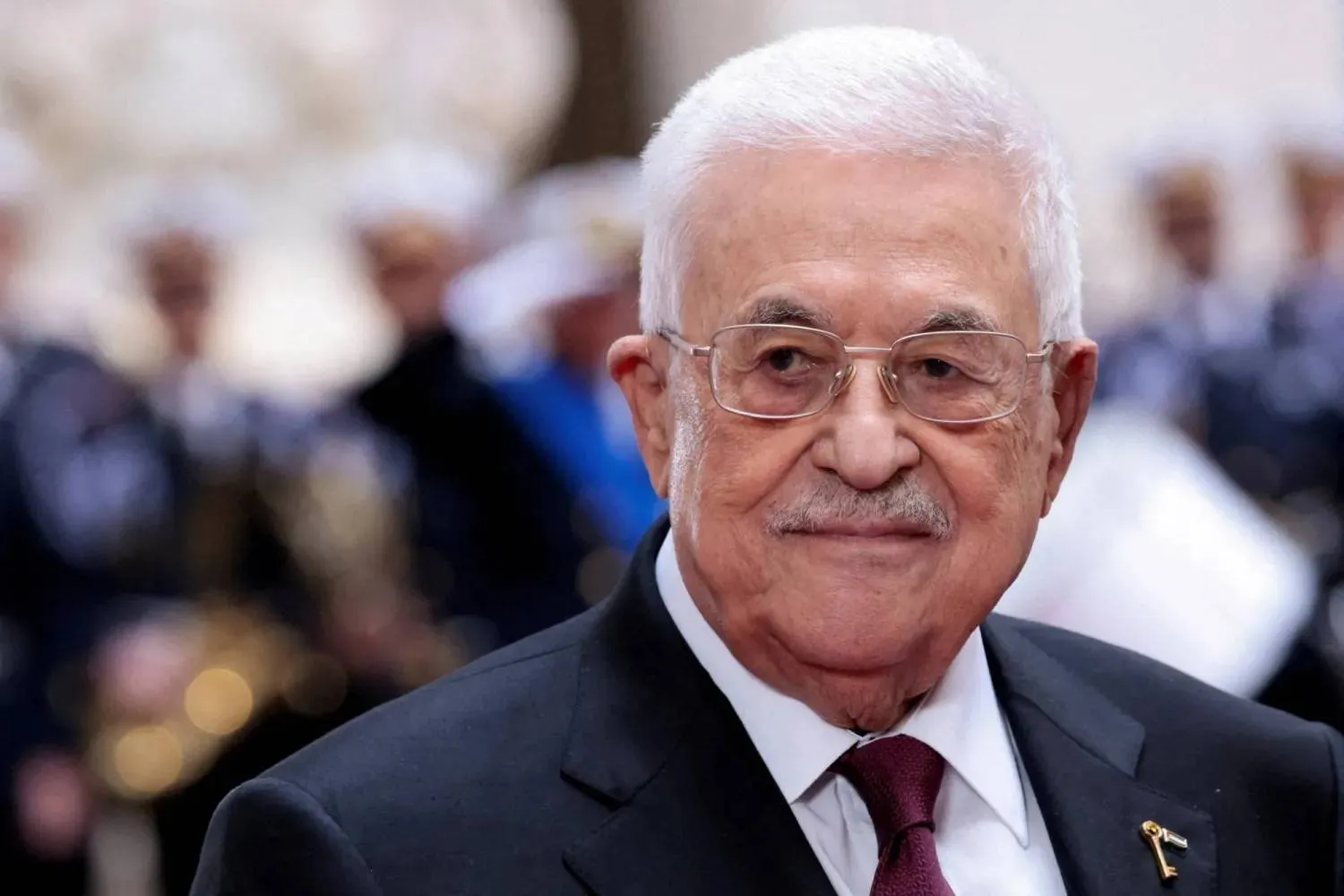
Palestinian President Mahmoud Abbas has said that
the future of the Palestinian people cannot be determined without their consent
and the involvement of their sole legitimate representative organization, the
Palestine Liberation Organization (PLO). According to the
Palestinian news agency WAFA, Abbas delivered his message on the occasion of
the International Day of Solidarity with the Palestinian People through Riyad
Mansour, Palestine's Permanent Observer to the United Nations. In his address on November 23, Abbas said the
Palestinian people would remain on their land and would not accept forced
displacement under any circumstances. He stressed that there would be no room
for another Nakba.
Expressing concern over the situation in Gaza,
Abbas said its people were suffering the devastating consequences of war and
destruction. Large numbers of Palestinians had been deprived of their homes,
shelters, essential services and basic necessities of life. He added that attacks, Israeli settlement
expansion, settler terrorism, land confiscation and forced displacement were
also continuing in the West Bank, including East Jerusalem. He said the international community must not
become accustomed to the suffering of Palestinians or accept the continued
violation of their rights as normal. Abbas called on the international community to
take practical measures to secure a complete and permanent ceasefire in Gaza,
ensure the uninterrupted delivery of humanitarian assistance, open all border
crossings and secure the full withdrawal of Israeli forces from the territory.
He said reconstruction and rehabilitation efforts
must also begin immediately, but without displacing the Palestinian population. Abbas also called for the
implementation of the second phase of the ceasefire plan, the deployment of
international forces to maintain stability in accordance with international
legitimacy, and the empowerment of Palestinian police and institutions to carry
out their responsibilities. The Palestinian president stressed that Gaza was
an inseparable part of the Palestinian state and could not be separated from
the West Bank, including East Jerusalem. He said Palestinian territories must
remain united under the principles of one state, one government, one law and
one legitimate authority over weapons. He made it clear that
the humanitarian catastrophe in Gaza could not be brought to an end without
stopping attacks against Palestinians in the West Bank and East Jerusalem. Abbas described Israeli
settlement expansion, the E1 project, attempts to isolate Jerusalem, military
raids and checkpoints as obstacles to the territorial unity of Palestine and
the establishment of an independent state. Abbas also called for the protection of
Islamic and Christian holy sites in East Jerusalem and the preservation of the
city's historical and cultural identity.
He urged concrete measures to halt Israeli
settlement expansion, annexation and the forced displacement of Palestinians,
provide international protection to the Palestinian people and hold those
responsible for alleged crimes accountable. He called for the implementation of UN
Security Council Resolution 2334 and progress towards measures to declare the
Israeli occupation illegal and bring it to an end, in accordance with the
International Court of Justice's advisory opinion.
The Palestinian president also demanded the
immediate and full transfer of Palestinian tax revenues withheld by Israel,
saying the funds belonged to the Palestinian people and were essential for
education, healthcare, public services and the functioning of government
institutions. He
said these revenues should be transferred regularly without arbitrary
deductions. He also stressed the need to lift financial restrictions imposed on
Palestinian institutions so they could operate effectively. Abbas welcomed US President Donald Trump's
peace plan and UN Security Council Resolution 2803, while reaffirming his
support for mediation efforts by Egypt, Qatar, Türkiye and the United States. He said that despite more
than a year having passed since the ceasefire was announced, implementation of
the plan's second phase remained stalled. He stressed that merely announcing a ceasefire
or promising reconstruction was not enough while attacks continued and
Palestinians were forced to live amid the rubble of destroyed buildings.
He urged the US administration to use its
influence to ensure the implementation of the peace plan and Resolution 2803,
end unilateral measures secure the release of Palestinian funds and advance
recognition of the Palestinian state. Referring to the formation of a new government
in Israel and political developments there, Abbas said the Palestinian
leadership would assess its relations with any Israeli government on the basis
of whether it was willing to end the occupation, maintain a ceasefire, halt
settlement expansion and annexation policies, and stop settler terrorism. He said Palestine was
prepared to work with any Israeli political party willing to accept a just
peace based on mutual recognition, equal rights to freedom and security, and
the sovereignty of a Palestinian state.
Palestinian Reforms and Elections
Discussing the internal political situation, the
Palestinian president said the Palestinian leadership had completed the process
of institutional reforms, the framework for which was presented at a meeting in
Brussels on July 13. The
reforms aim to strengthen the rule of law, transparency, accountability and the
foundations of a democratic state. He reaffirmed his commitment to holding
simultaneous free and fair presidential and parliamentary elections under
international supervision in the West Bank, East Jerusalem and Gaza. According to Abbas,
following national consultations and negotiations with Palestinian factions,
September 2027 has been set as the proposed date for the elections. However, he
said they could also be held in the first half of 2027 if security and other
obstacles on the ground were removed. Abbas also proposed working with the European
Union and other partners to develop a Palestinian-led roadmap incorporating
measurable objectives and a regular review mechanism.
He stressed the need for comprehensive dialogue
to achieve Palestinian national unity, saying the process must take place
within the framework of the PLO, in accordance with its program and
international commitments. He said the will of the Palestinian people
must be respected through democratic and peaceful means. Abbas also praised the efforts of Saudi Arabia
and France, which co-chaired an international conference aimed at resolving the
Palestinian issue and implementing the two-state solution. He also welcomed the
efforts of the Arab-Islamic committee and the international coalition working
towards this objective. The
Palestinian president thanked the countries that had recognized the State of
Palestine and urged other nations to follow suit and support Palestine's full
membership in the United Nations.
He said an independent Palestinian state must be
established within clear political parameters and a defined timetable, based on
the June 4, 1967 borders, with East Jerusalem as its capital. He also highlighted the need for a just and
agreed solution to the Palestinian refugee issue in accordance with UN
Resolution 194, as well as continued political and financial support for the UN
Relief and Works Agency for Palestine Refugees (UNRWA). Concluding his address, the Palestinian
president thanked people, parliaments, universities, trade unions and civil
society organizations around the world that had raised their voices in support
of Palestine. He
said the Palestinian people wanted freedom, life and peace and would never
abandon their right to establish an independent and sovereign state on their
own land. According to Abbas, East
Jerusalem must be the capital of the Palestinian state, and the Palestinian
people would remain firmly attached to their land and national identity.