Washington, Tehran: U.S.
President Donald Trump has warned Iran that the United States may have to
destroy what remains of the country, although he said he did not want to do so
and that a decision would be announced soon. Speaking to reporters in the Oval Office at
the White House, Trump said the United States would decide whether to intensify
its actions against Iran to permanently dismantle its nuclear program. “I would
like not to destroy what remains of Iran, if possible, but I may have to.
You’ll find out soon,” he said. According to Turkey’s Anadolu Agency, Trump
claimed that Iran could take approximately 25 years to rebuild following the
war with the United States and Israel. He also said Iran could not take any
steps concerning its nuclear programme without U.S. approval.
According to a report by U.S. news outlet Axios,
Trump has consulted his senior national security advisers on the situation in
Iran for the first time since the midterm elections. The U.S. president
currently has three options: launching fresh airstrikes against Iran,
maintaining economic pressure on Tehran, or pursuing a diplomatic agreement
that would require both Washington and Tehran to make concessions on certain
issues. The report said U.S. Central Command may be completing preparations to
resume large-scale military operations, although it has not received any new
orders from Washington to launch attacks. Meanwhile, diplomatic contacts are
continuing, with new proposals concerning Iran’s nuclear program under
consideration through mediators.
According to Axios, a proposed agreement under
discussion includes, in its first phase, lifting the U.S. naval blockade and
releasing some of Iran’s frozen assets. In return, Iran would formally invite
the International Atomic Energy Agency (IAEA) to inspect nuclear facilities
that were targeted in the bombing. The second phase would involve reopening the
Strait of Hormuz, followed by negotiations over Iran’s stockpile of enriched
uranium. According to Al Jazeera, Iran has sent a new proposal concerning its
nuclear program to the United States through mediators. However, agreement on
seven conditions put forward by Tehran is also being considered crucial to
making progress in the negotiations. It is worth noting that the United States
and Israel launched their war against Iran in February this year. Despite
subsequent efforts to secure a ceasefire and reach an understanding, major
disagreements between the two sides remain unresolved, particularly over Iran’s
nuclear program, the Strait of Hormuz and the lifting of sanctions. Trump’s
latest remarks have increased concerns that a large-scale war could erupt in
the region once again.
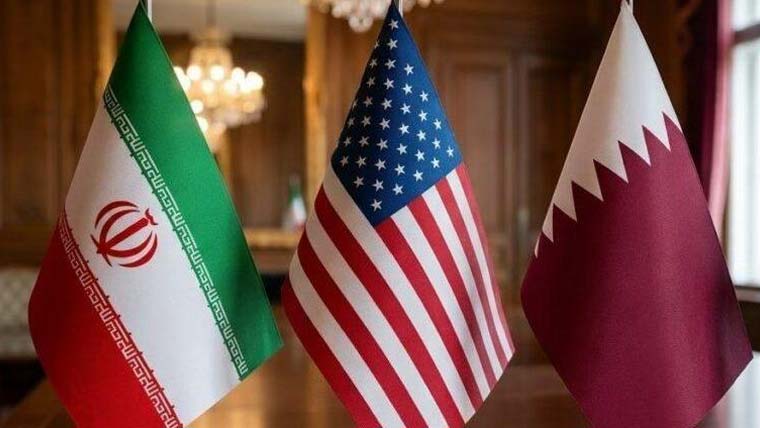
Iran Sends Nuclear Proposal to the US through Qatar
Tehran: Iran has sent a proposal
concerning its nuclear dispute with the United States through Qatar, according
to a report by British news agency Reuters. A senior Iranian official said
discussions on the nuclear proposal would only be possible if Washington
accepted the seven demands put forward by Tehran. The official added that U.S.
authorities were currently reviewing the proposals. Meanwhile, mediators have
stepped up efforts to end the war between the United States and Iran. It is
worth noting that President Donald Trump refused on Tuesday to rule out the
possibility of resuming military operations after the vote, while Iran has also
drawn up plans for a broader retaliatory response should the war resume.
During a visit to Russia on Thursday, senior
Iranian security official Mohsen Rezaei made clear that Tehran had presented
Washington with seven conditions through diplomatic channels. He said the
Strait of Hormuz would not be reopened and no negotiations of any kind would
begin until all seven conditions had been met. It should be recalled that on
February 28 this year, the United States and Israel launched attacks on Iran.
In response, Iran targeted Israel and U.S. military bases in Gulf countries.
The conflict also spread to other parts of the region. Fighting broke out in
Lebanon between Israel and Hezbollah, the Iran-backed group, while Yemen's
Houthi militia also targeted energy facilities, airports and other sites in
Saudi Arabia.