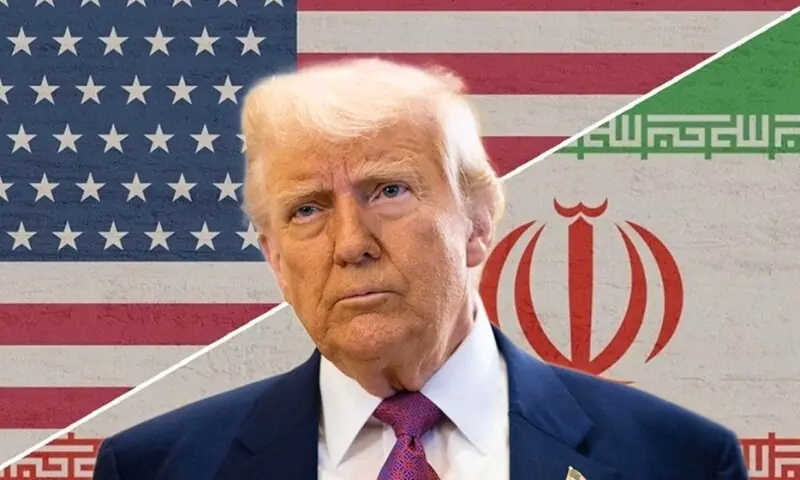
The ongoing war between the United States and Iran is no longer confined to the battlefield. Its effects are increasingly being felt in American politics and in President Donald Trump’s electoral strategy as well. In the November 3 midterm elections, Republicans will have to defend their narrow majorities in both chambers of Congress. Against this backdrop, rising fuel prices, inflation and growing public opposition caused by the war could become a difficult political test for Trump.
In the United States, midterm elections are held every two years between presidential elections, roughly halfway through a president’s four-year term. The president is not elected in these elections. Instead, voters choose representatives to serve in both chambers of Congress: the House of Representatives and the Senate. All 435 members of the House are elected every two years, while senators serve six-year terms, with roughly one-third of the Senate seats contested every two years.
The November 3, 2026 midterm elections will involve all 435 seats in the House of Representatives as well as 35 seats in the Senate. Republicans currently hold a majority in the Senate with 53 seats, while Democrats have 45 seats, along with two independent senators who generally caucus with the Democrats. Given the current balance of power, Republicans are in a position to retain their Senate majority, but several competitive races could alter that balance.
The midterm elections are particularly important because if the president’s party loses its majority in Congress, it can become much harder for the president to pass legislation and secure approval for government spending. Congress has the authority to approve federal spending, pass legislation and oversee the executive branch. As a result, an opposition majority in either the House or the Senate can become a significant obstacle to a president’s policies.
This does not mean that a president loses his powers after suffering a defeat in the midterms. Trump would retain his constitutional executive authority, including the power to issue executive orders. However, those powers remain subject to the law and the courts, while the president must also contend with Congress’s authority over legislation, spending and oversight.
Therefore, if Republicans retain their current majorities in Congress in November, Trump would remain in a relatively strong political position when it comes to legislation, funding and implementing his policies. By contrast, if Democrats take control of either the House or the Senate, Trump would face greater resistance in Congress and could need Democratic support or political compromises to advance his priorities.
The Trump administration has also tightened economic sanctions against Iran alongside its military pressure. In August, sanctions were imposed on 60 entities involved in Iranian oil revenues and related trade, while countries continuing to trade with Iran were also threatened with secondary sanctions.
A US naval blockade around the Strait of Hormuz is also continuing, with the aim of increasing pressure on Iran’s oil exports. At the same time, US attacks on Iran are continuing, while American leaders have indicated that further military action remains an option.
US Vice President JD Vance also said in his latest statement that every possible option—including economic, military, diplomatic and covert pressure—is being considered. He also said he would not describe the current situation as a war and that there is currently no active exchange of fire.
Meanwhile, the effects of the Iran war are becoming increasingly visible in the daily lives of Americans. On Friday, the average price of diesel in the United States reached a record $5.85 per gallon, surpassing the previous record set in June 2022. The average price of regular gasoline also rose to around $4.15 per gallon, compared with approximately $3.20 a year earlier.
The increase in diesel prices is not limited to motorists. Diesel is widely used not only by freight trucks but also in agricultural machinery, rail transport and shipping. As a result, higher fuel prices are also increasing the cost of transporting goods. That additional cost could affect the prices of food, meat and other everyday products. Higher expenses for trucks and agricultural machinery used to move goods from farms to markets and stores could ultimately be passed on to consumers. In this way, the Iran war is no longer simply a military conflict taking place overseas. Its effects are reaching American households through higher fuel prices and rising living costs, potentially creating a major political challenge for Trump and the Republican Party ahead of the November midterm elections.
Why is the war becoming an electoral issue for Trump?
In the midterm elections, Republicans face a tough battle to maintain their narrow majorities in both chambers of Congress. If the Iran war intensifies further before November, not only anti-war voters but also Americans frustrated by inflation could turn against Republicans at the ballot box. According to Qatar-based broadcaster Al Jazeera, a review of a Reuters-Ipsos poll conducted in late August found that only 31 percent of Americans supported the war with Iran, while 63 percent opposed it. During the same period, President Trump’s approval rating had also fallen from around 40 percent before the war to 33 percent.
Trump claimed in the early days of the conflict that the war would last only four or five weeks. However, the conflict has now stretched into its sixth month. Disruptions to shipping through the Strait of Hormuz have increased pressure on global energy markets and pushed fuel prices higher in the United States. This situation is politically difficult for Trump because during his election campaign he promised to significantly reduce energy prices and keep the United States out of unnecessary wars. The economic impact of the war is not limited to gas stations. Rising fuel and transportation costs can push up the prices of food, manufactured goods and other everyday products, potentially adding to inflation that is already putting pressure on American households.
According to a Politico review in August, 61 percent of Americans said the Iran war had made life more expensive for their families. A month earlier, that figure had been 57 percent. The war, therefore, is no longer simply a foreign-policy issue. It has become directly connected to the wallets of American voters—and that could become the biggest political risk for Republicans in the November elections.
Can Trump keep the war limited until November?
Based on the current situation, it appears that the Trump administration wants to prevent the conflict from expanding into a full-scale war, at least until November. Washington has intensified efforts in recent weeks to economically isolate Iran, while maintaining military pressure around the Strait of Hormuz. At the same time, Trump has pursued limited and intermittent strikes in an apparent effort to keep pressure on Iran without allowing the conflict to once again turn into a full-scale war.
However, analysts say this strategy is not without risks. Nigar Mortazavi, an analyst affiliated with the Center for International Policy in Washington, says Iran is unlikely to surrender simply because of economic pressure. She argues that while both sides believe they can keep the escalation under control, every new clash increases the risk of a wider regional war.
In one recent US strike, a civilian home in Koohestak in southern Iran was reportedly hit while a wedding ceremony was taking place. At least four people, including children, were killed and dozens were injured in the incident. Meanwhile, according to The Washington Post, senior officials from the US Army, Navy and Air Force warned Defense Secretary Pete Hugest in a written assessment that continuing the war at its current pace is unsustainable and could affect US military readiness in other parts of the world.
According to US foreign-policy expert Trita Parsi, the recent strikes suggest that Washington’s war strategy remains unclear. He argues that the United States appears to be moving from one policy to another: first imposing extensive economic sanctions in an effort to avoid the need for further military action, and then resuming bombing of Iran only days later.
What options does Iran have?
The period leading up to November is also exceptionally important for Iran. In recent days, US and Iranian attacks have remained relatively limited compared with the early weeks of the war, but the risk of renewed escalation remains. Iran has historically used asymmetric warfare strategies when facing much stronger military powers. Using relatively inexpensive drones to force US defenses to deploy costly resources, targeting American allies in the Gulf and striking strategically important facilities are all elements of this approach. The most important front is the Strait of Hormuz, where Iran has demonstrated its ability to disrupt maritime traffic. A significant portion of the world’s oil and gas supplies passes through the strait, meaning even a limited disruption could have a direct impact on global energy markets and American consumers.
If Iran continues attacks on US or regional military bases, commercial vessels or energy infrastructure, pressure on Washington for a stronger response could increase. The two countries could then become trapped in a cycle of retaliatory attacks that becomes increasingly difficult to stop and could once again develop into a large-scale war. Interestingly, the US effort to economically isolate Iran could itself encourage Tehran to take military action. According to Trita Parsi, Iranian officials may fear that Trump intends to launch another major war after the elections and is currently waiting until November. If Tehran genuinely believes this, it could create an incentive for Iran to increase tensions before the election, because an escalation of the war before November could place greater political and economic pressure on Trump.
What happens after November?
The outcome of the November elections will also be important for the next phase of the Iran war. According to Al Jazeera, senior White House officials are already considering whether to expand military operations against Iran after November 3. However, no final decision has been made to resume a full-scale war. If Republicans perform well in the midterms, Trump could have greater political room to expand military operations. The administration could interpret an electoral victory as evidence of public support for its approach to Iran—or at least as evidence that opposition to the war was not strong enough to cost Republicans control of Congress. But if Republicans lose control of the House or Senate, the situation could become much more complicated.
Congress controls federal spending, so if Democrats gain control of one or both chambers, the Trump administration could face greater difficulty securing funding for military operations. However, experts warn of another possible scenario. If Trump suffers a major defeat in the midterms, he could potentially feel less constrained by the political pressure to keep the war limited. In that situation, a politically weakened president might become more cautious—or, conversely, could choose to respond even more aggressively.
According to Trita Parsi, this calculation could also backfire on Iran. If Trump suffers a severe political defeat and Democrats gain control of both chambers of Congress, Trump could become a president who feels politically cornered and therefore makes more anxious and unpredictable decisions. In this sense, the November 3 election will not simply determine who controls congressional seats. It could also influence whether Washington moves toward limited confrontation, economic pressure or diplomacy in dealing with Iran.
The biggest question, therefore, is whether the United States and Iran can keep the current tensions under control until November—or whether the Strait of Hormuz, rising energy prices and continued retaliatory attacks will push both countries toward a war whose political consequences may begin to be decided on the battlefield before American voters even cast their ballots.