Dubai is preparing for a major
transformation of its aviation sector, with construction underway on a new and
larger airport to accommodate the growing number of air travellers. The
project, estimated to cost $35 billion, is employing more than 100,000 workers
at the construction site.
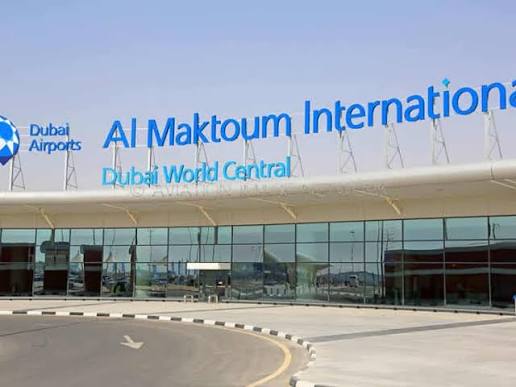
Paul Griffiths, Chief Executive Officer of Dubai
Airports, told the media on Tuesday that expansion work at Al Maktoum
International Airport was progressing rapidly. He said negotiations were
underway for major construction contracts, while land preparation and the
installation of foundation piles for buildings had also begun. With an
estimated cost of AED 128 billion, equivalent to $35 billion, the project has
the potential to transform the future of air travel in Dubai. Once completed,
Al Maktoum International Airport is expected to become one of the world's
largest aviation hubs. Its master plan includes five runways and parking
facilities for hundreds of aircraft.
According to the project plans, the airport will
be capable of handling 260 million passengers annually, while also
accommodating up to 12 million tons of cargo shipments each year. The first
phase is targeted to become operational in 2032, after which its capacity will
gradually expand in response to growing demand for air travel. According to
information provided by Dubai Aviation Engineering Projects in June, more than
17,000 concrete foundation piles had already been installed at the site, while
over 45 million cubic meters of soil had been excavated for construction.
Authorities had also planned to award additional construction contracts worth
more than AED 55 billion during 2026. These contracts include the construction
of new airport terminals, passenger boarding gate areas and other essential
infrastructure.
The number of workers at the construction site
was initially projected to reach approximately 120,000 at the peak of the
project. According to the latest statement by the head of Dubai Airports, more
than 100,000 workers are currently engaged in construction activities. One of the project's major objectives is to
eventually transfer the aviation operations of Dubai International Airport
(DXB) to Al Maktoum International Airport. The two airports are approximately
70 kilometers apart. According to Dubai
Airports CEO Paul Griffiths, the transition will involve much more than simply
replacing one airport with another. It will require extensive urban planning
across a large part of the city. He said residential areas and other facilities
would also need to be developed for employees working at the new airport, as
many currently live in northern parts of Dubai and neighbouring emirates.
Before opening the new airport to passengers, all
its systems will undergo extensive testing. The management plans to operate the
airport without passengers for at least one year to test cargo handling,
check-in procedures, Wi-Fi connectivity and other facilities under real
operating conditions. Griffiths said new technologies would also be tested at
the existing Dubai International Airport to identify and resolve potential
problems before they are transferred to the new facility. He said Dubai's
biggest challenge would be to ensure that operations at the existing airport
continued without disruption while construction of the new airport progressed,
allowing the transfer between the two facilities to take place smoothly. Griffiths
described the project as an unprecedented transition, saying its scale would be
several times larger than the relocation of Hong Kong's main airport in the
1990s.