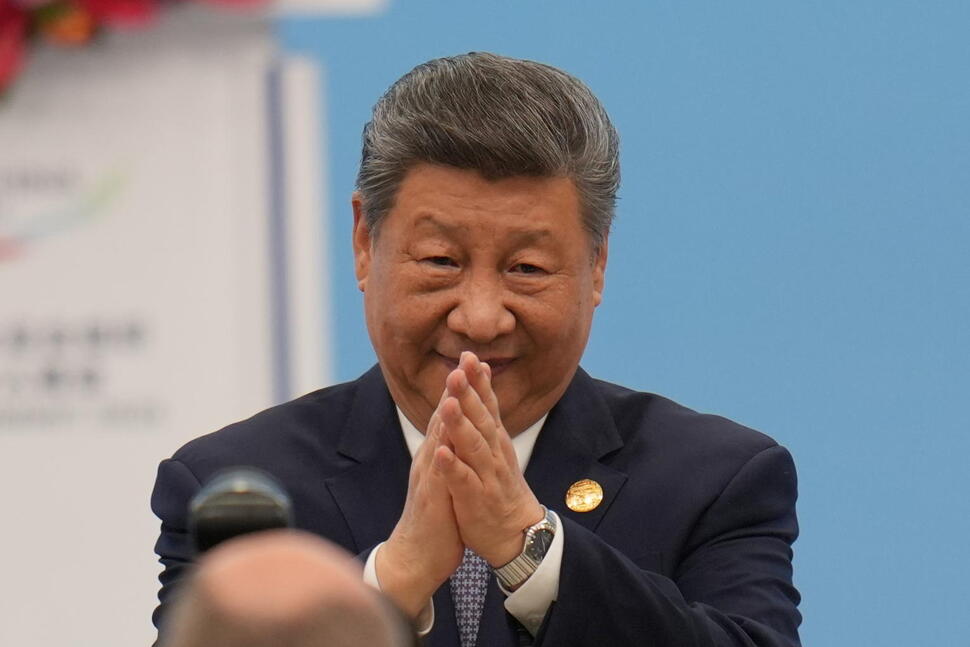
Chinese President Xi Jinping has urged
Asia-Pacific economies to strengthen regional unity, safeguard free and open
trade, and deepen economic cooperation amid growing protectionism,
unilateralism and uncertainty in the global economy. Speaking on Wednesday, Xi
warned that adopting inward-looking and isolationist policies would prove
counterproductive in an increasingly unstable world. Addressing the APEC
CEO Summit 2026 in Shenzhen, Guangdong Province, southern China, Xi
said the region must decide whether to keep its doors open or close them, work
together or confront one another, and embrace changing circumstances or cling
to outdated approaches.
According to the speech transcript released by
China's Xinhua News Agency, Xi, who is hosting the regional forum for the third
time, called on APEC economies to move forward with determination, work
together to build an Asia-Pacific community and pursue shared prosperity. He
noted that global economic growth was slowing while unilateralism and
protectionism were on the rise. Nevertheless, global trade continued to expand,
and rapid technological advances were reshaping the world economy. Xi said
regional cooperation, rather than confrontation or isolation, was essential to
addressing the challenges of the current era. He outlined four priorities for
achieving shared prosperity in the Asia-Pacific: safeguarding peace and
stability, promoting openness and cooperation, harnessing innovation to
accelerate growth, and ensuring that the benefits of development reach all
economies and segments of society.
On regional security, the Chinese president said
prosperity was impossible without security, just as security could not be
sustained without stability. He observed that the relatively stable environment
maintained in the Asia-Pacific over recent decades had enabled sustained
economic growth and transformed the region into a major engine of global
development. He called for upholding the post-World War II international order,
promoting an "equal and orderly multipolar world" and advancing
inclusive economic globalisation. Differences, he said, should be resolved
through dialogue and consultation, while common challenges should be addressed
through solidarity. Highlighting the importance of trade and investment, Xi
urged APEC members to safeguard the rules-based multilateral trading system
under the World Trade Organization (WTO), support free trade and ensure the
stability and uninterrupted operation of global industrial and supply chains.
He also called for advancing the proposed Free
Trade Area of the Asia-Pacific (FTAAP), strengthening regional
connectivity and expanding cooperation in digital trade, cross-border
e-commerce, smart customs systems and industrial supply chains. Describing
innovation in emerging technologies as a key pillar of regional development, Xi
said APEC economies had made significant contributions to global scientific and
technological progress. He noted that unicorn companies, artificial
intelligence (AI) foundation models and new inventions were transforming
industries and increasingly becoming part of everyday life. He urged member
economies to strengthen partnerships in science, technology and innovation,
deepen cooperation in AI and the digital economy, and accelerate the transition
towards environmentally friendly and low-carbon development.
Emphasizing the need for balanced and inclusive
growth, Xi said economies with different histories, cultures and levels of
development could not be expected to follow identical approaches. He called for
removing barriers to trade and investment, providing greater economic and
technological support to developing economies, and expanding cooperation in
transport, public health, energy, food security and anti-corruption efforts. Highlighting
the potential of regional economic hubs, Xi said some of the world's most
important bay areas were located in the Asia-Pacific, distinguished by their
open economies and interconnected markets. He also announced China's support
for the establishment of a World Association for Bay Areas Economic
Cooperation to strengthen links between major bay areas around the
world and explore new avenues for closer economic cooperation across the
region.
Turning to China's economic outlook, Xi said the
country had maintained momentum in high-quality, innovation-driven development,
with its economy expanding by 4.6 per cent during the first three quarters of
the current year. He said new quality productive forces were developing
rapidly, the country's development structure was undergoing transformation, and
the green transition was progressing steadily. He also described the launch of
China's 15th Five-Year Plan as highly positive. According to Xi, the plan would
not only chart China's future development but also create new opportunities for
the Asia-Pacific region and the wider world. Xi identified three major areas in
which China would offer opportunities to the global business community: access
to its vast consumer market, an innovation-driven environment for investment
and development, and a more stable and open business environment.
Describing China as the world's second-largest
consumer market and home to the world's largest middle-income population, he
said rising demand for new-energy vehicles, smart homes, the silver economy and
winter tourism was creating fresh opportunities for foreign businesses. He
announced that China would further increase imports of quality goods and
services and continue initiatives such as "Export to China" to
facilitate international products' access to the Chinese market. On industrial
development, Xi said China was positioning itself as a major testing ground for
emerging technologies. He cited the growing use of robots in factories and
agriculture, autonomous driving and drone-based deliveries as practical
examples.
He said Beijing would modernize its industrial
system, integrate technological and industrial innovation, upgrade traditional
sectors, expand emerging industries and make advance preparations for future
industries. Reaffirming China's commitment to multilateralism, Xi said the country
had honored its commitments since joining the World Trade Organization 25 years
ago and continued to support the multilateral trading system and WTO reforms
despite rising protectionism. He said China would remain committed to mutually
beneficial cooperation, high-quality Belt and Road development, and sharing
economic opportunities with other countries.
He added that China would create a more
favourable environment for foreign investment in manufacturing and services
through tariff reductions, broader market access and reforms to rules and
regulations. Concluding his address, Xi urged Asia-Pacific business leaders to
embrace innovation, pursue high-quality development and expand cooperation. "Asia-Pacific
is our home," he said, adding that regional economies should address
development challenges through openness, generate growth through innovation,
and achieve shared prosperity through cooperation to secure a brighter future
for their people.