A woman sentenced to death
for murder in the US state of Tennessee survived two attempts to administer a
lethal injection and was taken to hospital on Thursday. According to her lawyers,
this was the second failed attempt to carry out an execution in the state
within a few months, prompting Tennessee to suspend executions for the
remainder of the year. Just hours earlier, on Wednesday, the US Supreme Court
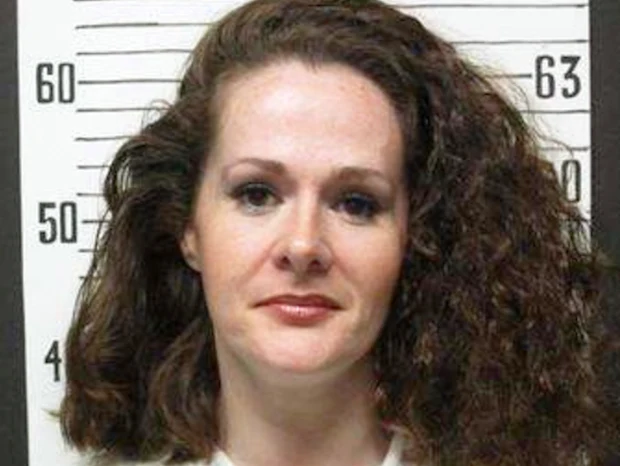
had cleared the way for the execution of 50-year-old Christa Pike. If carried
out, she would have become the first woman executed in Tennessee in more than
200 years. However, the attempt failed.
Robin Maher, executive
director of the Death Penalty Information Center, told The New York Times:
“This is, in our view, the worst execution failure to date and unlike any other
botched execution in modern history. There is no precedent for it.” The
Tennessee Department of Correction said it had followed “every step of the
state’s lawful and prescribed procedures” before Pike was transferred to an
“outside medical facility.” Her lawyers said she was taken to a nearby
hospital, but authorities have not yet provided any information about her
condition. In a statement, her lawyers said: “Tonight, the state of Tennessee
once again failed to lawfully carry out an execution.” Tennessee also halted
the lethal injection execution of Tony Caruthers in May after medical staff was
unable to locate a suitable vein. Following Pike’s failed execution, Governor
Bill Lee ordered a “comprehensive and independent review.” He said: “The
remaining scheduled execution this year will not be carried out.” He was
apparently referring to the scheduled December 3 execution of convicted
murderer Gary Wayne Suttles.
“Loud Snoring”
Pike was scheduled to be
executed at 10 a.m. local time (1500 GMT) at the Riverbend Maximum Security
Institution, where several witnesses, including journalists, were observing the
lethal injection process. Kim Chandler, an Associated Press reporter, told CBS
News that Pike was “clearly awake” when the execution began. She said that when
the curtains of the execution chamber were closed for the final time, Pike was
“loudly snoring and clearly alive,” even as members of the media were later
asked to leave the facility. During a live stream, an ambulance with flashing
lights was seen leaving the site, although it was not immediately clear whether
Pike was being transported in it.
Supreme Court Ruling and Dissent
The execution began after the
US Supreme Court ruled several hours earlier that it could proceed. However,
liberal Justices Sonia Sotomayor, Elena Kagan and Ketanji Brown Jackson
dissented. In their dissent, they wrote: “The Court’s decision unnecessarily
prevents the lower court from properly considering Pike’s claim.” They added:
“Worse still, the Court has granted this extraordinary relief solely to allow
the State to execute Pike while litigation challenging her sentence remains
unresolved in the lower courts.”
Debate over Executing Juvenile Offenders
The case has renewed debate
over the execution of people who committed crimes at a young age. Pike was 18
when she and her boyfriend tortured and murdered 19-year-old Colleen Slemmer at
a training camp for young people. The murder attracted national attention after
Slemmer’s body was found with a pentagram carved into her chest, a symbol often
associated with Satanism. Pike’s lawyers argued that her young age at the time
of the crime and her mental health problems should be taken into consideration
and that she should be granted clemency. In their clemency petition, her
lawyers wrote: “She was just 18 years old at the time of the offense and
suffered from severe mental illness.” The petition was submitted to Governor
Bill Lee, but he declined to intervene.
Human Rights Experts Call for Execution to Be
Halted
The US Supreme Court had also
rejected a request on Tuesday to halt the execution. The petition argued that
Pike’s history of sexual abuse, post-traumatic stress disorder (PTSD), and a
blood disorder would make the lethal injection cause her “unnecessary
suffering.” Independent UN human rights experts had urged the US government and
Tennessee authorities to “immediately halt” the execution and commute her death
sentence. According to the Death Penalty Information Center, only 18 women have
been executed in the United States since 1976. However, at least 1,682 people
have been executed in the US over the past 50 years. Of these, 34 percent were
Black and 8 percent were Latino. Numerous studies and investigations have found
that the death penalty is applied disproportionately along racial lines, with
racial minorities facing the punishment at significantly higher rates. There is
also an enduring risk of judicial errors. According to the United Nations, the
global trend is moving toward abolition of the death penalty. Of the UN’s 193
member states, 170 have either completely abolished capital punishment or
stopped carrying out executions.