Politics
Jamaat-e-Islami’s ‘Super Long March’ Enters Second Day
Jamaat-e-Islami’s “Super Long March” against the petroleum levy and inflation has entered its second day.
- Reading time
- 3 min read
- Published
- 22 Sept 2026, 04:31

Politics
Jamaat-e-Islami’s “Super Long March” against the petroleum levy and inflation has entered its second day.
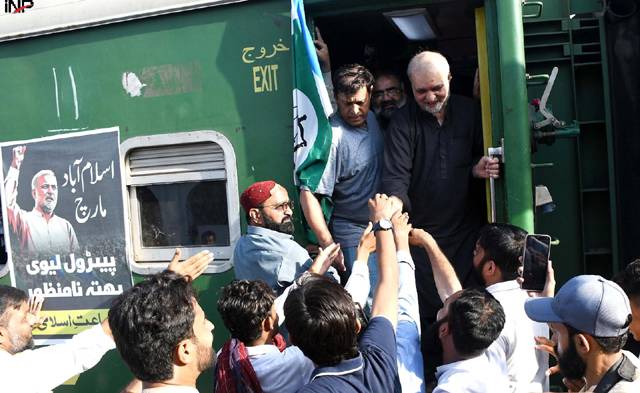
Jamaat-e-Islami’s “Super Long March” against the petroleum levy and inflation has entered its second day. The main train caravan, which departed from Karachi under the leadership of Jamaat-e-Islami Pakistan Emir Hafiz Naeem ur Rehman, is also continuing its journey towards the federal capital with strong enthusiasm. The march began on Sunday, September 20, from Karachi Cantonment Railway Station. Hafiz Naeem ur Rehman, Jamaat-e-Islami Karachi Emir Muneem Zafar, and a large number of party workers departed aboard the Rahman Baba Express. During the journey, the caravan received a warm welcome from party workers at railway stations across Sindh and Punjab, while Hafiz Naeem ur Rehman also addressed workers in Rohri.
According to the schedule released by Jamaat-e-Islami, the train march will reach Multan today, where this stage of the journey will conclude. On September 22, the caravan will travel by road from Multan to Lahore. On September 23, the final major phase of the march will begin from Lahore towards Islamabad via the Grand Trunk Road. Hafiz Naeem ur Rehman has already said that the main participants of the march will reach Islamabad on September 23 and 24.
Meanwhile, Jamaat-e-Islami workers from Khyber Pakhtunkhwa also began their journey towards Islamabad on Sunday from the historic Bab-e-Khyber in Jamrud. The caravan, led by Jamaat-e-Islami Khyber Pakhtunkhwa Emir Abdul Wasee, stayed overnight in Bara and is scheduled to move towards Peshawar today, from where it will continue its journey towards Islamabad. The central caravan from Balochistan has also announced that it will depart from Quetta for Islamabad on Tuesday, September 22, under the leadership of provincial Emir Maulana Hidayat ur Rehman Baloch.
The main demand of Jamaat-e-Islami’s protest movement is the abolition of the petroleum levy and the provision of lasting relief to the public from fuel prices. The party leadership says that the limited or targeted subsidies being offered by the government cannot serve as a substitute for abolishing the petroleum levy. The federal government, on the other hand, has defended its targeted subsidy mechanism. On September 15, Petroleum Minister Ali Pervaiz Malik said that targeted relief was being provided to users of motorcycles, two- and three-wheelers, and small cars. According to the government, providing direct relief to deserving segments is more effective than a general subsidy.
So far, the government and Jamaat-e-Islami have held five rounds of talks, but no final agreement on the petroleum levy had been reached before the long march began. Media reports say the government has been considering a new public relief package, subject to approval by Jamaat-e-Islami’s technical committee. According to sources, if concrete progress is made, a temporary pause in the march could be considered. However, no final government agreement or joint declaration has yet been reached.
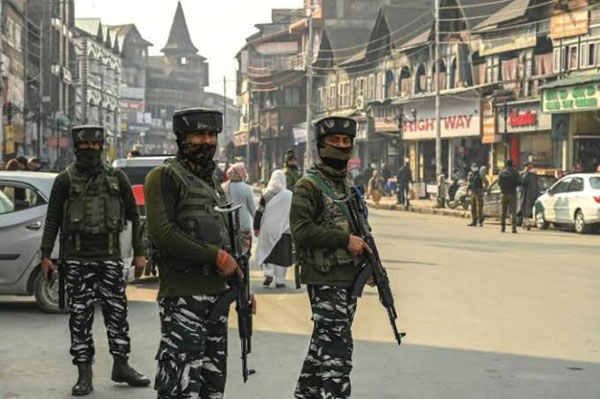
Meanwhile, security arrangements are being tightened in Islamabad and Rawalpindi ahead of various political and protest marches expected over the coming days. Police sources say preparations have been made to deploy more than 22,000 security personnel in the federal capital, while containers have also been placed at various locations around Rawalpindi and Islamabad. Plans have also been prepared to monitor entry points and deploy additional personnel to deal with any potential protest situation.
Jamaat-e-Islami has announced that it will continue its protest movement over its demand for the abolition of the petroleum levy and relief for the public, saying that the government’s requests for more time will not change its protest program. JI Deputy Emir Liaquat Baloch said the long march and protests would continue until the government formally announces the abolition of the petroleum levy.