In September, New York City
becomes the center of global diplomacy as heads of state and government and
senior officials from around the world gather at the United Nations
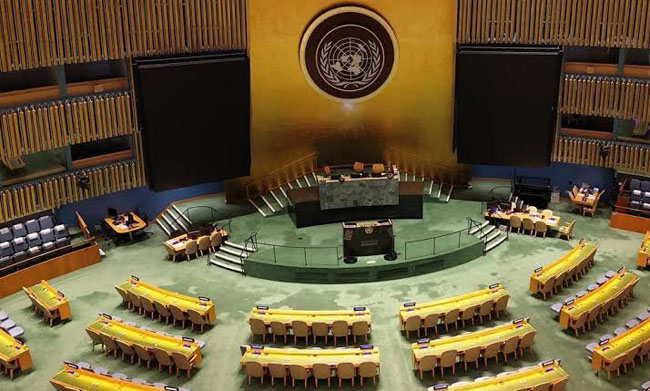
headquarters to attend the General Assembly’s annual high-level general debate. This year, amid growing geopolitical tensions
and interconnected crises, world leaders will address a wide-ranging agenda at
the gathering. The agenda includes international conflicts and security,
climate change, preparedness for future pandemics, rising sea levels, the fight
against racism, and the Sustainable Development Goals. The high-level week of the 81st session of
the General Assembly is taking place at a time when disagreements among countries
are deepening in several parts of the world and pressure on the multilateral
system is increasing. The new session,
which began earlier this month, is being presided over by Khalilur Rahman of
Bangladesh. “Restoring Trust, Managing
the Transformation: Delivering for All” is the central theme of the session.
The Largest Diplomatic Gathering
The general debate of the
General Assembly will begin on September 22 and is considered the most
important event of the high-level week. For
several days, heads of state and government and senior representatives from the
United Nations’ 193 member states will address the world from the General
Assembly’s iconic green-marble podium. Their
speeches will provide the world with an indication of the priorities and concerns
of different countries. Conflicts, economic challenges, humanitarian crises,
climate change, development, and emerging technologies are expected to be among
the main topics of the addresses. A
significant portion of the diplomatic activity will take place behind closed
doors, where hundreds of bilateral and multilateral meetings will give world
leaders a rare opportunity to meet allies, partners, and even leaders of rival
countries in the same location.
The 2030 Deadline
A Warming Planet and Climate Action
Before the start of the general debate, world leaders will participate on September 18 in the annual “SDG Moment,” a gathering that will review progress toward achieving the Sustainable Development Goals. Less than five years now remain before the 2030 deadline set for achieving these goals. Therefore, development-focused meetings during the high-level week will also present practical solutions to challenges that can be adopted on a large scale and implemented in other countries and regions.
On September 23, UN
Secretary-General António Guterres will convene a high-level meeting of world
leaders to discuss climate action and the process of ensuring a just transition
toward environmentally friendly energy. Against
the backdrop of continued global warming, key topics will include accelerating
the transition to renewable energy, moving away from fossil fuels such as oil,
increasing climate finance for developing countries, and ensuring better
support for populations already affected by climate change. The following day, September 24, world
leaders will focus on the issue of rising sea levels, one of the most serious
consequences of global warming. For many
people living in small island developing states and low-lying coastal areas,
rising sea levels have become a serious threat to homes, infrastructure, and
freshwater resources. The meeting aims to promote international cooperation and
mobilize global support and resources for the countries most severely affected.
Preparing for Future Pandemics
On September 25, heads of
state and government will review the experiences and lessons learned from the
COVID-19 pandemic. The pandemic demonstrated how quickly a disease outbreak in
one region can develop into a global emergency.
It also exposed significant inequalities in access to vaccines,
medicines, and other essential medical resources. At the meeting, world leaders will consider
ways to strengthen health systems, improve preparedness for emergencies, and
ensure a more equitable global response to future health crises.
Rights, Equality and Inclusion
Another important meeting
will be held on September 23 to mark the 40th anniversary of the Declaration on
the Right to Development, adopted by the General Assembly. The declaration
established the principle that development is not merely about economic growth,
but also places fundamental importance on public participation, equal
opportunities, equality, and justice. On
September 28, the United Nations will mark the 25th anniversary of the Durban
Declaration and Programme of Action. It is an important global framework for
combating racism, racial discrimination, xenophobia, and other forms of
prejudice. The occasion will provide an opportunity to review the progress made
so far and consider why discrimination against people continues to persist in
different parts of the world.
Nuclear Disarmament
The series of activities will
conclude on September 29 with a high-level meeting held on the International
Day for the Total Elimination of Nuclear Weapons. Nuclear disarmament has been among the most
important issues on the United Nations agenda since the organization’s early
years. However, nearly eight decades later, nuclear weapons continue to pose a
threat to global security. The United
Nations considers the total elimination of nuclear weapons its highest priority
in the field of disarmament.
“We the Peoples”
This year’s high-level week
of the General Assembly is taking place at a time when international
cooperation is under severe pressure. From armed conflicts and climate change
to growing economic and social inequalities, the world faces numerous
challenges that no single country can resolve alone. In recent days, UN Secretary-General António
Guterres drew attention to the opening words of the organization’s Charter,
noting that it does not begin with “We the Powerful” or “We the Victors,” but
with “We the Peoples”—meaning all of us, united by the shared belief that when
we stand together, we are safer, stronger, and more humane.
Change in Leadership
The 81st session of the
General Assembly will also be the final session for current UN
Secretary-General António Guterres. His second and final five-year term will
end on December 31 this year. The
process of selecting his successor has already begun. The new Secretary-General
will take office on January 1, 2027, and will inherit a United Nations facing
numerous complex challenges. These same issues will be at the center of the
attention of world leaders during the General Assembly’s high-level meetings.