Kabul: Afghanistan’s education
crisis is worsening, with millions of children out of school and millions of
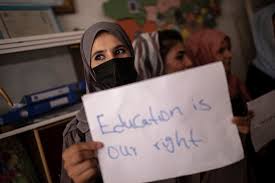
Afghan girls deprived of their right to continue secondary education because of
restrictions imposed by the Taliban government. A lack of basic facilities in
educational institutions, a shortage of trained teachers and declining
education standards have also placed the future of the younger generation at
risk. According to a joint report released by UNICEF and UNESCO in October
2025, more than 2.13 million primary school-age children in Afghanistan are
deprived of education. Meanwhile, a large number of children enrolled in
schools are also struggling to acquire basic learning skills.
The report states that restrictions imposed by
the Taliban government on girls’ secondary education have resulted in
approximately 2.2 million Afghan girls being excluded from schools. Afghanistan
is currently the only country in the world where girls and women are officially
barred from accessing secondary and higher education. The education crisis is
not limited to girls, as boys’ education is also being affected. According to
the report, male enrolment in higher education declined by approximately 40
percent between 2019 and 2024, while enrolment in secondary education has also
stagnated. One particularly alarming finding is that more than 90 percent of
10-year-old children in Afghanistan cannot read and understand a simple text.
This situation indicates that the problem is not merely that children are
unable to enrol in schools, but also that those attending educational
institutions are not receiving quality education.
Afghanistan’s educational institutions are facing
a severe shortage of basic facilities. According to the report, nearly half of
the country’s schools lack access to clean drinking water, adequate sanitation
facilities or proper heating systems to protect students from cold weather.
Meanwhile, more than 1,000 schools remain closed because of the impact of
conflicts and natural disasters. A shortage of trained teachers, particularly
the declining number of female teachers, has become another major challenge for
the education system. Inadequate educational resources, uncertainty surrounding
the curriculum and weak monitoring mechanisms have also adversely affected children’s
learning.
UNICEF and UNESCO have warned that if
restrictions on girls’ secondary education remain in place, approximately four
million girls could be deprived of the opportunity to receive secondary
education by 2030. Both organizations have urged Afghan authorities to
immediately reopen secondary and higher education institutions for girls and
women and make long-term investments in the education sector. The consequences
of the education crisis will extend beyond the current generation. In the future,
Afghanistan could face a severe shortage of female teachers, doctors, nurses
and other trained professionals.
According to a separate UNICEF study released in
April 2026, if restrictions on girls’ education and women's employment
continue, Afghanistan could face a shortage of 20,000 female teachers and 5,400
female healthcare workers by 2030. Experts say education is fundamental to the
development of any country. However, limiting educational opportunities for
millions of Afghan children, particularly girls, threatens the country’s
social, economic and human development. United Nations agencies maintain that
ensuring access to quality and equal education for every child is essential to
securing Afghanistan’s future.