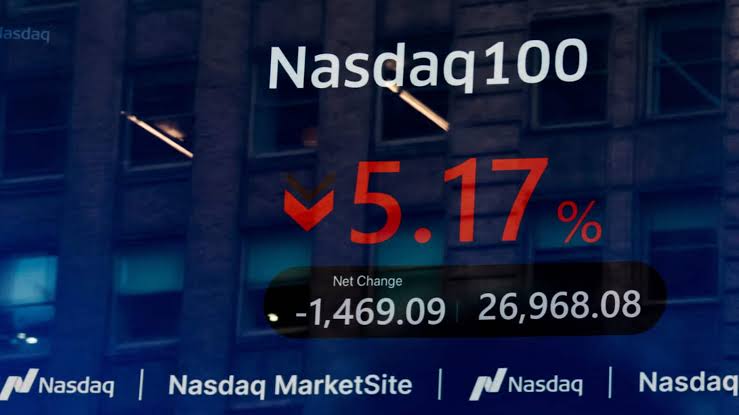
The U.S. stock market recorded a steep
decline amid a sell-off in technology shares, causing the total market value of
the Nasdaq 100 Index to fall by $2.5 trillion. According to Reuters,
the Nasdaq Composite fell by more than 5.5%, marking its biggest one-day
decline since President Donald Trump announced his so-called “Liberation Day”
tariffs in April 2025. Following the decline, the index stood nearly 12% below
its record high reached on October 6, officially entering correction territory.
A market decline of 10% or more from a recent peak is generally defined as a
correction.
According to the report, investors are concerned
that the Democrats’ major gains in the U.S. midterm elections could affect the
construction of data centres and the expansion of AI infrastructure. These
concerns triggered a sell-off in AI-related stocks for a second consecutive
day. Chipmakers and companies providing computing services to data centres
suffered the steepest losses. The Philadelphia Semiconductor Index plunged 12%,
reaching its lowest level in more than six months. Nvidia shares fell 9%, while
Advanced Micro Devices (AMD) shares dropped 17%.
Meanwhile, U.S. President Donald Trump blamed the
Democrats for the sharp decline on Wall Street following the midterm elections.
He said the election results had contributed to one of the worst days in stock
market history. He also warned that the market downturn had affected Americans’
retirement savings. In several posts on his social media platform, Truth
Social, Trump expressed disappointment over the market situation. In one post,
he wrote that the stock market had crashed because the Democrats had achieved a
major victory on Tuesday, adding that it was unfortunate and that they were
responsible. Shares of Amazon and Alphabet each fell 2.2%, while the Nasdaq
100, which comprises major companies, dropped 6.4%, wiping out $2.5 trillion in
its total market value.
One of the major factors behind the market
decline is believed to be the possibility of local opposition to the
construction of data centers. Analysts say these facilities are placing
increasing pressure on electricity grids and water resources, making it more
difficult to secure approval for such projects in various areas. Analysts at
Swiss bank UBS estimate that around 30% of the new data center capacity
expected to be built in the United States by 2028 could be affected by
potential decisions to halt construction projects. The report also notes
growing questions about the returns on heavy investment in AI technology.
Investors fear that if companies fail to generate the expected financial
benefits despite spending billions of dollars in the sector, their valuations
and investment decisions could be affected. The U.S. VIX index, which measures
expectations of stock market volatility, also recorded its largest increase
since December 2024.