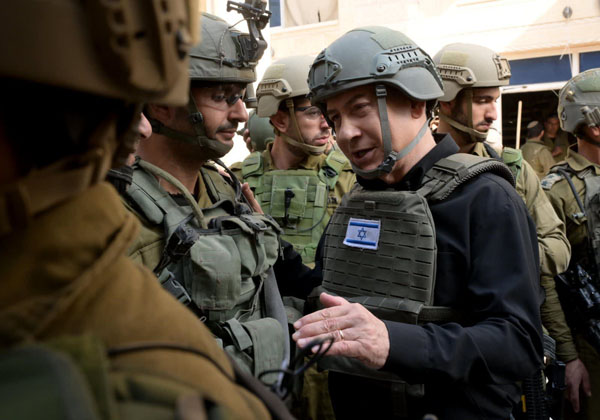
Israeli Prime Minister Benjamin Netanyahu said on Wednesday that Israeli forces would not withdraw from their current positions in the Gaza Strip, during a visit to Israeli military positions in the area. According to AFP, a statement issued by the Prime Minister’s Office quoted Netanyahu as saying near the so-called Yellow Line: “We control this area. We are not withdrawing. We will remain on this line.” The Yellow Line marks the boundary between areas controlled by Hamas and those under Israeli military control.
Netanyahu’s visit came as the United States called for a ceasefire in Gaza and urged both sides to end hostilities and return to negotiations. Statements from U.S. Secretary of State Antony Blinken and the U.S. State Department said the U.S.-backed ceasefire proposal had also received international support. U.S. officials said the proposal was aimed at reducing civilian casualties and facilitating the delivery of humanitarian aid to Gaza.
Israel, Hamas and the International Position on Military Operations in Gaza
Netanyahu’s remarks reflect Israel’s position that military operations in Gaza will continue until the objectives announced by the government are achieved. Israeli authorities have repeatedly cited security concerns and the need to prevent attacks from Gaza as justification for maintaining a military presence in the territory. Hamas, which controls the Gaza Strip, has rejected an ongoing Israeli military presence and has called for the complete withdrawal of Israeli forces as a prerequisite for a permanent ceasefire. A Hamas spokesperson condemned the continued presence of Israeli forces in Gaza. The United Nations, through spokesperson Stéphane Dujarric, has urged restraint and called for efforts to resume negotiations aimed at reaching an agreement, while expressing concern over the humanitarian consequences of the war. Egypt’s Foreign Ministry has also urged both sides to accept an immediate ceasefire and stressed the need to comply with international humanitarian law.
Gaza’s Legal Status
According to positions expressed by the United Nations and the International Committee of the Red Cross under international law, Gaza is considered occupied territory because Israel maintains extensive control over its borders, airspace and maritime access, despite withdrawing its permanent ground forces from Gaza in 2005. However, Gaza’s legal status remains a subject of ongoing debate in diplomatic forums. Independent verification of the situation on the ground in Gaza remains limited, as journalists and international observers continue to face restrictions on access to the territory.