Renewed heavy fighting in
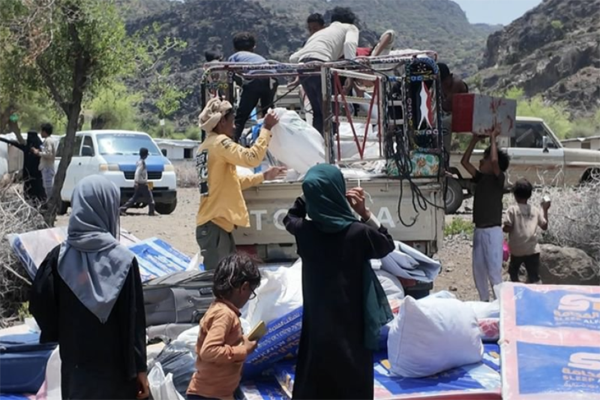
Yemen has displaced large numbers of people. Aid agencies have warned that
humanitarian needs are rising dramatically in Yemen and neighboring Djibouti,
where thousands of people have been forced to seek refuge. Abdul Sattar Isa
Yuf, head of the International Organization for Migration (IOM) in Yemen, said
the agency needs additional resources to assist displaced people, as its
current supplies are extremely limited and will soon run out. Two weeks after
clashes began between Saudi-backed Yemeni government forces and Iran-backed
Houthi militias, more than 112,000 people have been displaced from the areas of
Aden, Hudaydah, Abyan and Taiz.
According to the United
Nations High Commissioner for Refugees (UNHCR), around 4.8 million Yemenis were
already living as displaced people due to years of war, economic devastation
and natural disasters. The rapidly escalating fighting in Yemen’s western
coastal areas has forced more than 3,000 people to undertake dangerous sea
journeys. They crossed the Bab al-Mandab Strait and reached Djibouti in search
of safety, raising concerns that local resources could come under severe
pressure.
Alessandra Vellucci, UN News
Director in Geneva, said that delivering humanitarian assistance through the
United Nations to Houthi-controlled areas has now become virtually impossible.
UN personnel have been detained, while the organization’s buildings have also
been taken over by the Houthis. She said that 73 UN personnel are being held in
detention by the Houthis, some of whom have been detained since 2021. Five
former UN staff members, along with dozens of people affiliated with
non-governmental organizations, civil society groups and diplomatic missions,
are also being detained. Isa Yuf has
urged the international community to step forward and support Yemen. He called
for immediate assistance to meet the basic needs of people displaced by the
violence, including food, shelter, healthcare, water and sanitation.
Even before the latest
escalation in Yemen, nearly half of the country’s population of more than 40
million people was already in need of humanitarian assistance. According to the
Integrated Food Security Phase Classification (IPC), half of the population in
government-controlled areas is facing food shortages. The United Nations
Population Fund (UNFPA) has expressed growing concern about households headed
by women. The emergency has also further
increased health needs in the country. The World Health Organization (WHO) has
warned that Yemen is already facing several health threats, including cholera,
measles, dengue, diphtheria and food shortages. WHO spokesperson Tarik
Jasarevic told journalists in Geneva that, according to an assessment conducted
before the recent escalation in fighting, only 60 of more than 5,000 medical
centers and healthcare facilities were fully operational.
In addition to people
displaced within Yemen, thousands have crossed the Bab al-Mandab Strait and
sought refuge in Djibouti. Sandrine Dezamour, UNHCR’s representative in the
country, said people arrived with very few belongings, while some came without
family members. Some had fled Yemen for a second time, having also left the
country during the 2015 crisis. In some cases, the Djibouti Coast Guard
provided fuel to boats stranded at sea, while other vessels were towed to
safety. Alexander Quessk, head of the IOM mission in Djibouti, said the arrival
of 3,000 refugees from Yemen is a major challenge for a country that is already
hosting a large number of refugees.