U.S.
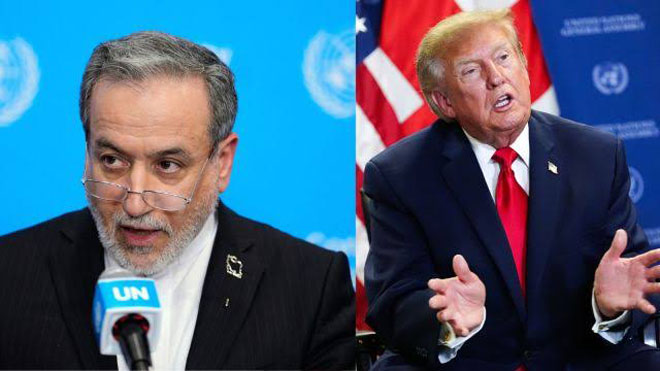
President Donald Trump has rejected a peace proposal from Iran to reopen the
Strait of Hormuz and end the fighting, while U.S. officials say there is a
possibility of renewed U.S. bombing of Iran after the November midterm
elections. According to reports by Reuters and The Wall Street Journal, Iran
conveyed its proposal to the United States through Qatar. The proposal included
conditions such as ending the U.S. naval blockade in exchange for reopening the
Strait of Hormuz, releasing some frozen Iranian assets, and easing restrictions
on Iranian oil exports.
Iranian
Foreign Minister Abbas Araghchi said that the decision to reopen the Strait of
Hormuz depends on Iran’s conditions being met and that the only way to resolve
the current deadlock is through negotiations. He said mediators have not yet
formally conveyed to Iran that the United States has rejected the proposal, and
Tehran is therefore waiting to be informed of the mediators’ final position.
According to Reuters, Iran presented the peace proposal last week on the
sidelines of the United Nations General Assembly. Araghchi said that if the
United States agrees, a seven-day process could begin to reopen the Strait of
Hormuz and halt the regional fighting, after which the two sides could enter
broader negotiations by mutual agreement.
Meanwhile,
The Wall Street Journal reported, citing U.S. officials, that Trump suspects Iran
will agree to U.S. demands and has told his aides that there is a possibility
of renewed bombing of Iran after the November midterm elections. However,
officials said the U.S. president’s position could change while negotiations
continue, and the nature of any renewed attacks remains unclear. Iranian
officials have given no indication of flexibility over the country’s nuclear
program. A senior Iranian official told Reuters that even if the United States
accepts the peace proposal, Iran would not compromise on its rights, including
uranium enrichment or sending enriched uranium out of the country.
Iranian
President Masoud Pezeshkian said Iran is prepared to negotiate on its nuclear
program and other issues, but will not accept pressure or threats. He said Iran
does not want war but will defend itself against pressure, threats, and
attacks. According to Reuters, oil shipments have been disrupted during the war
that began on February 28, causing damage to the global economy, while tensions
in the region have escalated and operations by Iran and its allies have
continued.