Russia and China
Veto U.S. Draft Resolution on Extending Iran Sanctions Monitoring Mechanism at
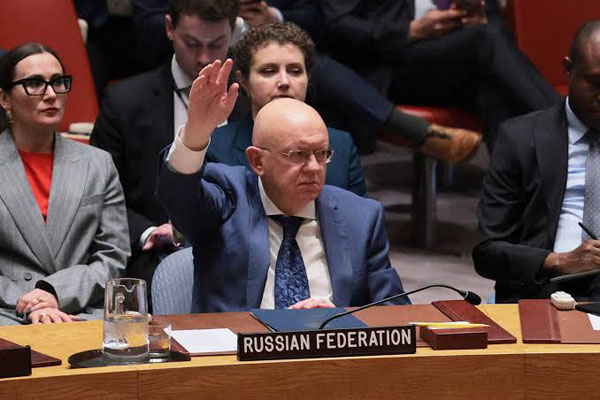
UN۔Russia and China have
vetoed a U.S. draft resolution at the United Nations concerning the extension
of the mandate of the committee overseeing sanctions on Iran. Russia and China argued that the so-called
“snapback mechanism” has become ineffective because the Joint Comprehensive
Plan of Action (JCPOA) and UN Security Council Resolution 2231 expired at the
end of last year. According
to a UN Security Council report, the two permanent members of the council had
already opposed the draft when its text was presented in late August. Both
countries had expressed strong reservations and opposition to the so-called
“snapback mechanism” for reimposing international sanctions on Iran. It is worth noting that
the mechanism was established under the 2015 Iran nuclear agreement, formally
known as the Joint Comprehensive Plan of Action (JCPOA). It allows any party to
the agreement to trigger the restoration of sanctions if it believes that Iran
is violating one of the provisions of the deal.
Meanwhile, Iranian
Parliament Speaker Mohammad Bagher Ghalibaf has welcomed the Chinese and Russian
veto of the resolution concerning U.S. sanctions on Iran. According to
foreign media reports, Iranian Parliament Speaker Bagher Ghalibaf said the
vetoes by the two countries rejected the political use of the UN Security
Council and reaffirmed the rule of law.
Reports quoted him as saying
that the era of a unipolar system, in which one side uses power and pressure to
extract concessions from another, has now come to an end. The Iranian parliamentary speaker stressed the
need to defend a multilateral system, saying that unilateralism is in no one’s
interest. It may be recalled that the United States has once again imposed
sanctions on Iran, while China and Russia have rejected the resolution
presented at the United Nations in connection with the sanctions.
Meanwhile, U.S. Issues Visas to Iranian
President and Foreign Minister
The resolution included the restoration of an
independent panel of experts tasked with monitoring violations, reporting to
the 15-member Security Council, and recommending further action.