Business
China wants its 28 billion loan back from Pakistan
If the loan is not repaid, Pakistan will have to hand over its mineral resources, airports, and ports to China.
- Reading time
- 2 min read
- Published
- 6 Sept 2026, 17:20

Business
If the loan is not repaid, Pakistan will have to hand over its mineral resources, airports, and ports to China.
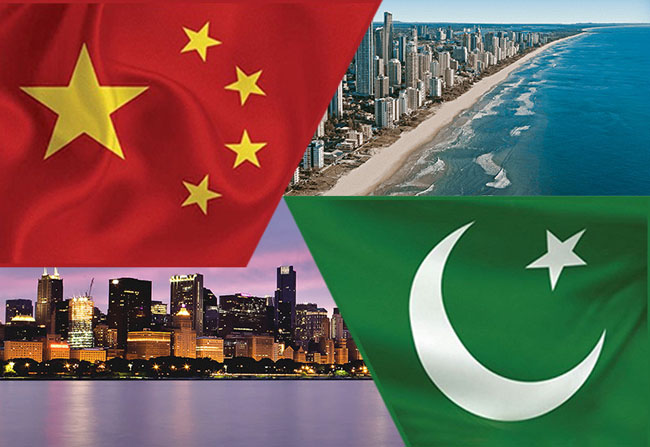
If Pakistan is unable to repay its loans to China, will it be legally required to hand over its mineral resources, airports, or ports to China? Our government institutions have borrowed $28.1 billion from Chinese commercial banks. These loans will not simply be rolled over; they will have to be repaid. If Pakistan is unable to repay the debt, it may have to hand over mineral resources, or possibly an airport or a port, to China.
However, Pakistan’s agreements under the China-Pakistan Economic Corridor (CPEC) involve different forms of financing, including loans, investments, and grants. It would therefore be inaccurate to treat all of them as a single category of debt. The Pakistani government has also clarified that the debt associated with several energy projects is the responsibility of the relevant private companies.
The case of Gwadar Port is not a matter of transferring ownership to China in exchange for unpaid debt. According to the government’s explanation, the project operates under a BOT (Build-Operate-Transfer) model. Similarly, I have not found any credible agreement or official document stating that, in the event of a debt default, Pakistan’s mineral resources, airports, or ports would automatically become the property of China.
That said, it is important to distinguish between Pakistan’s overall external debt and its Chinese debt, including the specific terms of the loans, guarantees, and rights to revenues generated by individual projects. In the event of financial difficulties, arrangements such as debt restructuring, repayment extensions, or commercial rights over specific assets or revenue streams may be possible. However, these arrangements should not automatically be interpreted as the transfer of national ownership to China.