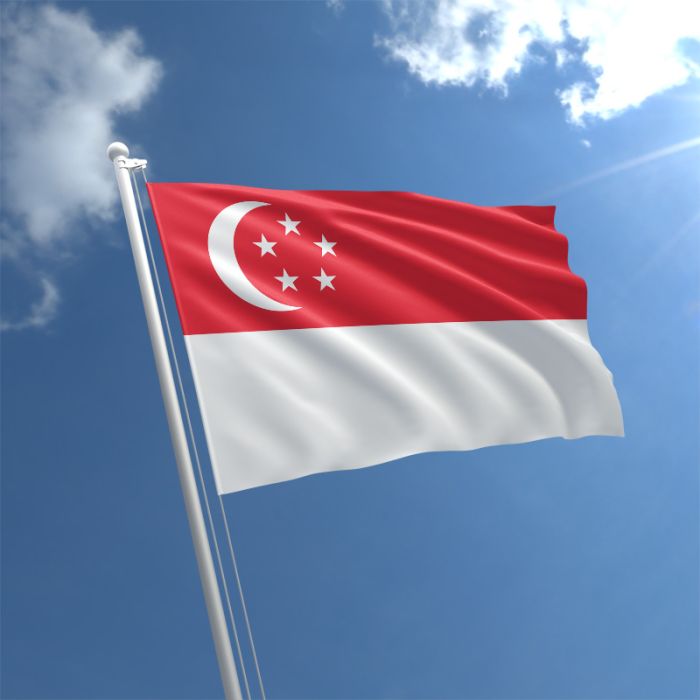
It is true that when Singapore became independent on
August 9, 1965, following its separation from Malaysia, its founding leader and
first Prime Minister, Lee Kuan Yew, and the people did not
celebrate. Instead, they mourned.
Reasons for the Mourning
- Forced
Separation: Singapore had not sought independence itself.
Due to political and racial tensions, the Malaysian Parliament voted to
expel Singapore from the federation.
- Lack of
Resources: At the time, Singapore was a small island that
depended on Malaysia even for drinking water and other basic necessities.
- A Crisis of
Survival: The country had neither a military nor any clear
prospect of defense or economic stability, making its future appear
extremely uncertain.
The Journey of Development
Despite the disappointment
and mourning, Singapore did not give up. Under the leadership of Lee Kuan Yew,
the country implemented strict reforms based on integrity, the rule of law and
sound economic policies. Within just 30 years, the small territory had
transformed itself into one of the world’s most developed and prosperous
countries. It had peace, prosperity, employment, investment and a future.
Singapore became an example to the
world that countries do not necessarily need abundant natural resources; they
need determination and the will to progress. Countries do not necessarily need
a huge population, a large territory, abundant skilled labor or oil. What they
need is the determination to move forward. Lee Kuan Yew was like a university
in himself. Within two decades, he transformed an entire nation. How did he do
it?
He took five major steps.
First, Prime Minister Lee
established peace in the country. He made religion a personal matter. Whether
you were Muslim, Sikh, Christian, Buddhist or Hindu was nobody else’s concern.
Mosques, churches, temples and other places of worship existed alongside one
another. The government made it clear that no one would question another person
about their religion, and followers of one religion could visit places of
worship belonging to another without objection or proselytizing. Everyone was
made equal before the law. There was no class-based culture in the country. No
one was considered superior to anyone else. Everyone was equal and remains so. The
government also imposed restrictions on various forms of protest and made it a
priority to keep roads, streets and markets open. No individual would be
allowed to become a security risk to others.
Second, Lee Kuan Yew
carefully selected capable and honest people for important positions and gave
them full authority to perform their duties. Some officials have remained in
their positions for decades and continued to serve. The emphasis on integrity
was so strong that, according to this account, around a dozen ministers and
senior bureaucrats associated with Lee Kuan Yew’s government died by suicide
after facing corruption allegations. The government also recruited capable
people from other countries when necessary.
Former Pakistani President
Mamnoon Hussain once told me that when he was governor of Sindh in 1999, Lee
Kuan Yew visited Pakistan. He invited him to dinner and told him that Pakistan
wanted to develop Karachi Port along the lines of Singapore Port. When asked for
advice, Lee Kuan Yew reportedly laughed for a long time before saying, “Contact
Captain Saeed. He is Pakistani and a resident of Karachi. We developed
Singapore Port with his help.” According to the account, Mamnoon Hussain was
embarrassed by the response and remained silent for some time.
Third, Lee Kuan Yew opened
Singapore to businessmen from around the world. Anyone could come to the
country and do business, provided they had the necessary capital and
experience. For example, an Indian Muslim named Mushtaq Ahmad established the
Al-Mustafa Store in Singapore in 1971. It has since grown into a large
commercial complex. Mushtaq Ahmad is described as a sincere businessman who
believes in lower profits and higher quality. According to the account, he
eventually became extremely wealthy, and no one interfered with his business.
He is not the only example; there are hundreds of similar cases in Singapore.
Many people developed successful businesses and became examples for others.
Fourth, Lee Kuan Yew gave
special attention to education and skills.
Singapore’s educational
institutions were not merely places of academic learning. They were
laboratories for developing skills and capabilities. As a result, while around
96 percent of the population became literate, people also acquired practical
skills. They were able to earn for themselves while contributing to the
country’s economy. Lee Kuan Yew also sought to teach the entire nation the
importance of civic discipline. This began with personal hygiene. People were taught
how to use toilets properly. Bidet showers and toilet paper were promoted, and
hand hygiene was strictly enforced.
Spitting was prohibited.
Singapore became known for
strict rules against spitting and littering in public places. Anyone caught
spitting or leaving substances such as betel-nut spit in public could face
legal penalties. As a result, public spitting became extremely uncommon. Lee
Kuan Yew also believed that cigarettes, betel nut and chewing gum created
litter and other problems, so strict restrictions were imposed on them.
Cigarettes are expensive in Singapore, and smoking is permitted only in
designated areas. Chewing gum has also been subject to strict restrictions,
although the rules have exceptions for certain medical and dental purposes.
Fifth, Lee Kuan Yew developed
infrastructure throughout the country.
Highways, metro systems and
bridges were built at a time when such infrastructure was still uncommon in
much of Asia. The government provides clean drinking water throughout the country,
and tap water is safe to drink. I once attended an International Labour
Organization conference where delegations from 48 countries were present. There
were no bottled-water containers on the tables. Instead, there were water jugs
filled by staff from taps. Hotels also provide tap water, and even airport
business lounges do not necessarily rely on bottled water. Singapore has also
maintained highly reliable supplies of electricity and gas, while emphasizing
conservation. Wasting electricity or leaving a stove burning unnecessarily is
strongly discouraged.
Lessons for Pakistan
We Pakistanis are Muslims,
and one characteristic often associated with Pakistani society is that we are
reluctant to accept criticism. The writer Mushtaq Ahmed Yousufi once made a famous
humorous observation about Pakistani Muslims. I am modifying his words slightly
to make the point easier to digest. Yousufi wrote that an Arab once told him,
“Brother, we are Muslims too, but you people have gone a little too far.”
There is considerable truth
in this observation.
We have, in many ways, harmed
both ourselves and our country through our actions. I have traveled to 105
countries, and I can say that I have rarely seen the kind of dysfunction I have
witnessed in Pakistan. I have not seen another nation appear to undermine
itself to such an extent. We are a nuclear power and yet remain dependent on
external financial assistance. We have one of the world’s largest militaries,
yet we continue to struggle with governance and economic management. We are
Muslims, yet even fake Zamzam water is sold in our markets. I therefore say
openly that if we do not change course, our situation could become even more
difficult. We are hypocritical as a nation, and sometimes even in religious
matters. We may invoke the name of Allah and the Prophet Muhammad ﷺ while committing violence against others,
yet fail to follow the teachings and commands of Islam ourselves.
My first suggestion,
therefore, is to make religion a personal matter. Restrictions should be
imposed on objecting to other people’s beliefs or blocking roads during
religious festivals. Loudspeakers should be regulated. Prayer and the call to
prayer should be organized in an orderly manner, as in some other
Muslim-majority countries. The Quran should be published with translations, and
sermons should focus on ethical and social issues. Mosques may be established
by anyone, but they should operate under appropriate government oversight.
Instead of focusing on disputes over beliefs, mosques should also teach the
cultural, ethical and moral dimensions of religion.
My second suggestion is to
open the country to trade, industry and investment of all kinds.
Like Dubai, Singapore and
Turkey, Pakistan should welcome investors from around the world and allow them
to operate. Investors should be treated according to clear and transparent laws
rather than being subjected to unnecessary obstacles. It should also be
remembered that tourism is one of the world’s largest industries. Pakistan
should pay greater attention to it. There is a coastal belt stretching roughly
1,500 kilometers from Karachi toward the Iranian border. This area could be
developed through international investment and tourism. Pakistan could invite
European and other international companies to develop special tourism and
commercial zones, while the government ensures that unnecessary obstacles do
not stand in the way.
The fourth suggestion is to
create stability in the country.
The political leadership and
state institutions should develop a long-term 30-year national development plan
and ensure that successive governments follow consistent national policies.
Those who violate the law or undermine the constitutional order should be held
accountable through due legal process. Pakistan needs long-term continuity and
institutional stability if it is to achieve sustained development. It is
remarkable that Singapore, with an area of only about 683 square
kilometers, has built enormous financial reserves, while Pakistan,
despite being a nuclear power, continues to seek billions of dollars in
external financing.
Why?
Because we remain consumed by
internal conflict and political confrontation we have reached a point where
self-destructive behavior can become almost habitual. We need to fear the
consequences of our actions open our eyes and recognize the seriousness of our
situation. If Pakistan is to move forward, it must learn from successful
examples of governance, stability, economic openness, education and
institutional discipline.