Amid escalating tensions
between Iran and the United States, Washington has announced further measures
to intensify economic and aviation pressure on Tehran, while U.S. President
Donald Trump has indicated that he is currently in the decision-making stage regarding
future actions against Iran. U.S.
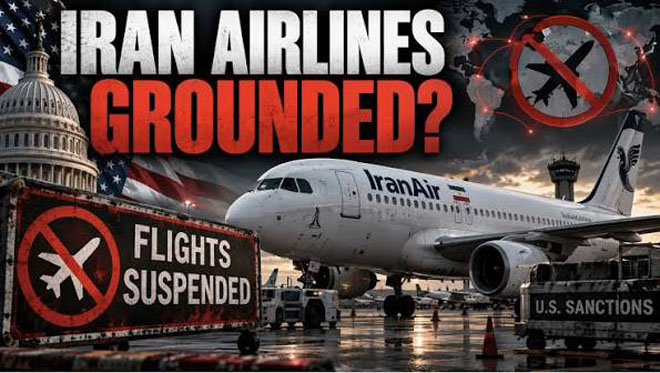
Treasury Secretary Scott Bessent said that from September 23, Iranian airlines
will face severe difficulties in accessing aviation services worldwide.
According to him, if an airport allows Iranian aircraft to land or provides
them with fuel, or if an entity sells tickets for Iranian airlines, the
organization concerned could face sanctions that would exclude it from the U.S.
dollar financial system.
Under the measure, Iranian
airlines are likely to face restrictions on various facilities and services
required to continue international flight operations. The U.S. government has
already imposed sanctions on several entities linked to Iran’s aviation sector,
raising concerns that Iranian airlines’ activities abroad could be further
affected. Meanwhile, U.S. President
Donald Trump said that he is currently in the decision-making stage regarding
Iran and that major developments could occur in the near future. He said
various options are under consideration, including continuing economic
pressure, reaching an agreement with Iran, or taking tougher action. Trump warned Iran that Tehran would have to
change its behavior, while also not completely ruling out the possibility of
meeting the Iranian president.
As tensions between Iran and
the United States continue, the situation is also changing rapidly regarding
the Strait of Hormuz, military activities in the region, and the possibility of
negotiations. Iranian officials have also warned of retaliation in the event of
another U.S. attack, while diplomatic channels have not been completely closed.
Meanwhile, senior Iranian security
official Mohsen Rezaei said that Iran had conveyed its peace conditions to the
United States through Qatari mediators. He said that accepting these conditions
would be in the United States’ own interest.
The 60-day period set for
negotiations on a settlement under the U.S.-Iran Memorandum of Understanding
expired last month without an agreement, while disruptions to maritime trade in
the Strait of Hormuz have contributed to rising energy prices. Rezaei wrote on
X on Saturday that Iran’s seven conditions for starting negotiations had been
conveyed to the U.S. administration. He said Tehran’s message was clear and
unequivocal: if Washington wants to escape the crisis it created and avoid
becoming further entangled, it has no choice but to recognize Iran’s rights and
accept its conditions.
In an interview with Al
Jazeera, Rezaei, Secretary of Iran’s Supreme National Security Council, said
the conditions included ending the war on all fronts, unfreezing Iran’s frozen
funds, and ending the naval blockade. Iranian officials have previously said
they are also demanding the withdrawal of U.S. forces from the region and
compensation for the U.S. and Israeli attacks carried out on February 28. Rezaei further said that Trump’s threats would
produce no results and that Iran was prepared for a decisive war.
On Wednesday, U.S. President
Donald Trump said he hoped the war was moving toward an end and indicated that
Iran wanted to reach an agreement. However, the following day, he again
threatened that if the conflict did not end on his terms, he would “wipe out”
the Iranian leadership. On Friday, the
U.S. military revealed that the cost of the nearly seven-month-old conflict had
reached $43.6 billion, with approximately two-thirds of the amount spent on
replenishing depleted munitions. According to Bloomberg, widely reported
ammunition shortages could delay the supply of weapons to U.S. allies by
several years. Trump and Defense
Secretary Pete Hegseth have denied that the conflict has caused the United
States to run short of missiles and bombs.