Politics
Trump faces the wrath of the Irish people
Protesters taking to the streets of Dublin were portraying Trump not as a “savior of the global order” but as a cause of war and crises.
- Reading time
- 4 min read
- Published
- 16 Sept 2026, 02:43

Politics
Protesters taking to the streets of Dublin were portraying Trump not as a “savior of the global order” but as a cause of war and crises.
Protesters taking to the streets of Dublin were portraying Trump not as a “savior of the global order” but as a cause of war and crises. Various political and social groups took part in the demonstration, with protesters criticizing the US role in wars and crises unfolding across the region, including in Palestine and Iran. The protest had been announced even before Trump’s visit, with organizers making it clear that its purpose was to protest against the US president and America’s war-driven policies. Above all, the burning of the American flag reflected the extent of public anger in Ireland toward Trump and US policies.
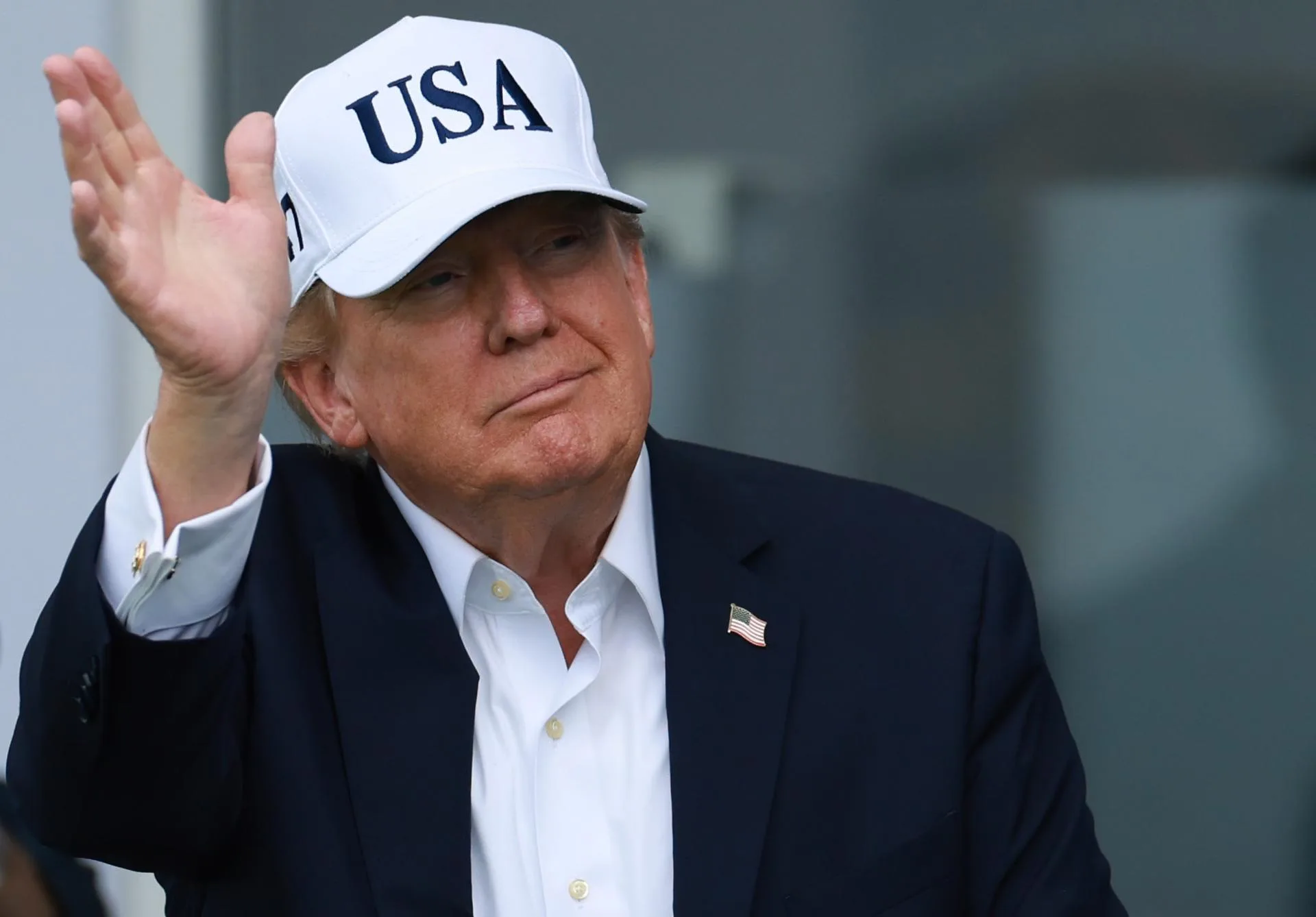
US President Donald Trump is currently visiting Ireland. He has arrived in the country at a time when the Irish public is not only refusing to welcome his visit, but thousands of protesters have also taken to the streets of Dublin to send a clear message of opposition to him. People in Ireland have stressed that normalizing war and genocide cannot be acceptable under any circumstances. Protesters staged an anti-American demonstration in the Irish capital and openly expressed their opposition to US policies regarding Palestine and Iran. The American flag was also set on fire during the protest. Trump’s visit to one of America’s closest allies in Europe is therefore highlighting the deep divide between global public opinion and American power.
Donald Trump’s visit to Ireland took place at a time when Washington continues to portray itself as a decisive global power and a central player in resolving international conflicts. However, what unfolded in Dublin during the US president’s visit presented a very different picture to the world. Trump held meetings with Irish officials in the capital at a time when thousands of protesters were taking to the streets of Dublin, chanting slogans against his visit and US policies. The position taken by Ireland’s president was also particularly significant. Following her meeting with Trump, President Catherine Connelly said that the Irish people strongly oppose the normalization of war and genocide.
Although she did not refer to any particular country or war in her remarks, her intention becomes clear from her previous positions and statements regarding wars in West Asia and support for Palestine. The official website of President Catherine Connelly has also published the same position, stating that the normalization of war and genocide is unacceptable. What makes these protests significant for the United States is not merely the demonstration itself, but the changing image of America that it represents. For decades, the United States has sought to project itself in Europe as a powerful nation and as a guarantor of security, democracy and the international order.
The Irish people protesting in the streets of Dublin were portraying Trump not as the “savior of the global order,” but as a cause of war and crises. Various political and social groups took part in the protest, with demonstrators criticizing the US role in wars and crises unfolding across the region, including in Palestine and Iran. The protest had already been called before Trump’s visit, with organizers making it clear that its purpose was to oppose the US president and America’s war-driven policies. Above all, the burning of the American flag reflected the extent of anger among the Irish public toward Trump and US policies.
Moreover, the Irish president’s statement that “the normalization of war and genocide is unacceptable at any cost” carries particular significance because she made the remarks publicly during her meeting with US President Donald Trump. This means that, rather than limiting the discussion to “mutual cooperation” and “friendly relations,” the president of a European country has presented war and genocide as a moral red line. The protest in Dublin was not solely about Palestine; it also included strong opposition to US policies toward Iran. This becomes even more significant when viewed in the context of Trump’s foreign policy, in which confrontation with Iran remains a major issue, and Trump himself addressed the matter during his visit.
Another important aspect of the visit was Trump’s statement regarding Irish unity. The US president said he would welcome the unification of the Republic of Ireland and Northern Ireland. The issue of Northern Ireland is highly sensitive from both historical and political perspectives, and his remarks have therefore drawn a range of reactions. The statement also suggests that Washington is seeking to portray itself as a power capable of resolving various regional conflicts. However, as has been seen in West Asia, such external intervention is not accepted everywhere. Trump spoke about Northern Ireland at a time when the United States has long emphasized the sovereignty of nations and their right to self-determination. These contradictions have contributed to a loss of credibility and standing for the United States in the eyes of global public opinion.