Pakistan
Tehreek-e-Insaf (PTI) is the largest opposition party in Punjab. However,
whenever the party calls for a major protest or long march, the biggest
questions are raised about Punjab: Why do the party’s provincial assembly
members and other key leaders fail to participate actively in protests and long
marches? More than 100 PTI members are currently part of the Punjab Assembly.
Despite the party issuing calls for protests several times, these lawmakers
have not been able to mobilize large numbers of people from the province for
demonstrations.
A
majority of these lawmakers contested the February 8 elections as independents,
without the PTI’s electoral symbol, and won largely on the basis of Imran
Khan’s popularity. In addition, hundreds of former ticket holders and district
office-bearers remain associated with the party. However, after the new date of
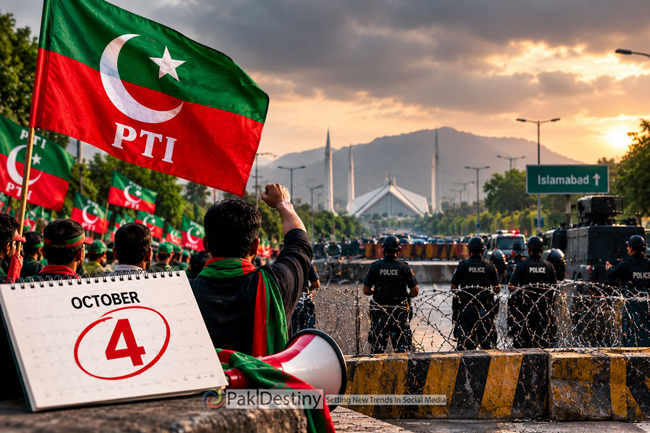
October 4 was announced for the long march from Peshawar to Islamabad, reports
emerged that several lawmakers had gone into hiding. The initial call for the
long march was for September 27. However, on September 25, Khyber Pakhtunkhwa
Chief Minister Sohail Afridi announced at a press conference in Peshawar that,
following a unanimous decision by the political committee, the long march would
now depart from Peshawar on October 4.
Earlier,
in mid-September, a separate protest plan had also been outlined for Punjab.
Under the plan, Lahore’s Mall Road and Faisalabad were designated as the main
gathering points for September 27. PTI members from Lahore, Kasur, Sialkot,
Gujranwala, Sheikhupura, Okara, Sahiwal and Pakpattan were expected to gather
at these locations, while workers from southern Punjab were proposed to travel
to the Khyber Pakhtunkhwa House. However, no clear plan has now emerged
regarding a protest or long march in Punjab. According to party sources, the
reason workers have not come out in large numbers from Punjab is not cowardice
but administrative pressure. The Punjab government has imposed Section 144
across the province ahead of the march, restricting rallies, processions and
large gatherings. Sources also say that Rangers have been deployed in Islamabad
and several districts of Punjab, with security measures particularly tightened
in Rawalpindi, Attock, Jhelum and Mianwali. Containers have also been placed on
the Attock Bridge, the GT Road and motorways.
In
the second week of September, lists containing the names of hundreds of workers
from northern Punjab also emerged. Dozens of people were arrested in Rawalpindi
and transferred to Adiala Jail, while orders were also issued for their 30-day
detention under the Maintenance of Public Order (3-MPO). Imran Khan’s sisters,
Aleema Khan, Nooreen Niazi and Dr. Uzma, were also detained in Lahore under
3-MPO and are being held at Kot Lakhpat Jail for 30 days.
According
to PTI sources, the party’s lawmakers in Punjab are currently facing
significant pressure. Sources say lawmakers also lack the financial resources
required to bring workers to the protests, while there are concerns about
possible arrests. According to the sources, following the November 26 protest,
Punjab’s leaders and workers are unwilling to become part of any long march or
protest movement. Cases of various kinds have been registered against several
workers and leaders, leading them to fear that police could arrest them if they
leave their homes.
PTI
sources say there appears to be little likelihood that lawmakers, workers and
leaders from Punjab will travel to participate in the October 4 long march. The
party had instructed each leader to bring 30 workers to Islamabad. However,
under the current circumstances, the instruction does not appear likely to be
implemented. Meanwhile, the Lahore High Court heard a petition filed by PTI Punjab
Assembly members Sheikh Imtiaz Mahmood and Chaudhry Ijaz Shafi, challenging the
Punjab Maintenance of Public Order Ordinance. The petitioners’ lawyer, Azhar
Siddique, argued that provisions of the law violate fundamental rights to
freedom and freedom of movement and that the law is being used for political
detention. According to PTI sources, unless the Lahore High Court provides
clear relief, it will not be possible for elected members to openly participate
in protest activities.
PTI
sources also say that there are various groups within the party, resulting in
the leadership and lawmakers not appearing to be on the same page. Sources say
that when the long march was announced for September 27, Punjab’s leaders and
lawmakers had also raised various questions about the march. However, instead
of addressing their concerns, the party leadership simply informed them of its
predetermined plan. According to the sources, Punjab lawmakers also remain
unconvinced about the new October 4 date for the long march, and concerns over
the decision continue to exist within the party.