The Israeli Election Commission has officially
certified the results of last week’s general election, rejecting allegations
made by Prime Minister Benjamin Netanyahu and his allies after finding no
evidence of electoral fraud or irregularities. According to Al Jazeera, the
Israeli Election Commission has submitted the election results to President
Isaac Herzog, who will hold consultations with the leaders of various political
parties and parliamentary blocs over the next two days to facilitate the
formation of a new government. Following these consultations, the president
will invite the candidate considered most likely to secure parliamentary
support to form a government.
In the Israeli elections held on October 27,
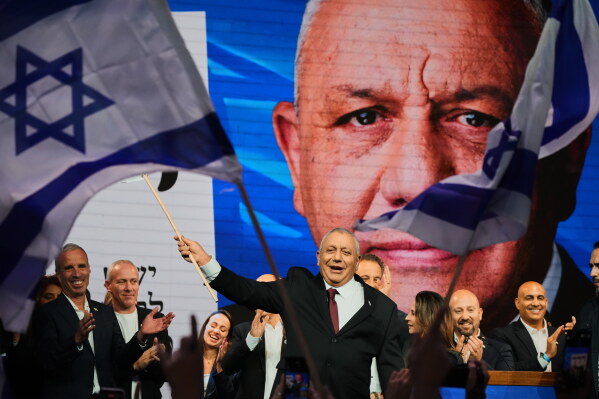
Netanyahu’s supporting bloc secured 53 seats, while the opposition bloc led by
Gadi Eisenkot won 48 seats. Arab parties Ra’am and the Joint List achieved a
record result, securing a combined 19 seats. A majority of 61 members is
required to form a government in Israel’s 120-seat Knesset, but neither bloc
managed to secure a clear majority. President Isaac Herzog urged political
parties to demonstrate flexibility and reach political compromises to establish
a new government and avoid another election. The head of the Election
Commission and Supreme Court Justice Noam Sohlberg said that casting doubt on
the election results poses a genuine threat to Israeli democracy. He added that
an examination of 9,069 polling stations had found no irregularities capable of
undermining the transparency of the electoral process or affecting the results.
The Election Commission’s acting
director-general, Dan Levin, also said that every complaint concerning the
electoral process had been examined individually and that the results reflected
the genuine will of voters. It is worth noting that Netanyahu and his allies
have accused Arab parties of stealing the election and receiving foreign
assistance. Israel’s National Security Minister Itamar Ben-Gvir also demanded
that certification of the results be halted and Arab party leaders be arrested.
His party, Otzma Yehudit, announced that it would vote against approving the
election results. According to the report, representatives of Yesh Atid and
Blue and White on the Election Commission’s five-member panel voted in favour of
certifying the results, while representatives of Likud and Shas did not
participate in the vote. Justice Noam Sohlberg cast the deciding vote, formally
approving the results.
As part of the government-formation process,
President Isaac Herzog will first meet the leaders of smaller parties,
including Religious Zionism, Shas and Yisrael Beiteinu. Consultations with the
leaders of other parties are expected on Thursday, concluding with meetings
with Gadi Eisenkot and, finally, Likud representatives. After the consultations
are completed, the president will give the designated candidate 28 days to form
a government, with a possible extension of another 14 days if necessary. If no
candidate succeeds in forming a government, Israel could hold another election early
next year. Israel has already held five elections between 2019 and 2022 amid
prolonged political deadlock. Following the 2022 election, Netanyahu took 58
days to form a government. Election Commission head Justice Noam Sohlberg made
clear that investigations into alleged electoral irregularities could continue,
but legally certified results are binding and must be accepted by all parties.
No political party or leader has the authority to prevent the publication of
the election results.
Trump Announces Plan to End $4 Billion in Annual
Aid to Israel
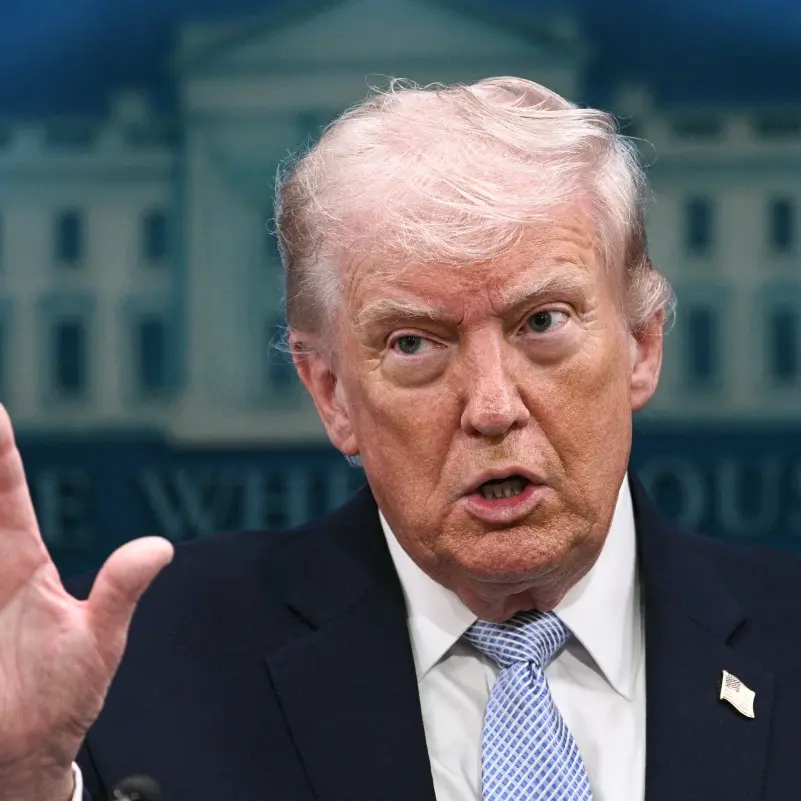
Meanwhile, U.S. President Donald Trump has
announced during the American midterm election period that the United States
will stop providing Israel with $4 billion in annual assistance after the end
of this year. According to Trump, an agreement has been reached with Israeli
Prime Minister Benjamin Netanyahu to end the annual $4 billion in aid. However,
Trump clarified that the United States would continue selling weapons to Israel
and would still provide assistance if needed. Trump made the announcement amid
the midterm elections. He explicitly stated that Israel no longer needed
financial assistance from the United States. He also suggested that the
decision could weaken arguments made by left-wing Democrats who criticize the
Republican Party over American aid to Israel.
Speaking on Fox News’ Fox & Friends,
Trump said the United States would stop providing financial assistance to
Israel by the end of this year. However, he added that Washington would
continue to help Israel if the need arose. Trump did not explain how the
funding would be discontinued by December. The existing agreement between the
United States and Israel remains in effect until September 2028. Under its
terms, the United States provides Israel with $3.8 billion in annual military
assistance. The announcement comes at a time of growing criticism of Israel in
the United States. Democrats have repeatedly criticized Israel’s military
operations in Gaza. Polls indicate that support for Israel among American
citizens is relatively low, while many believe that the United States provides
Israel with excessive assistance in the Middle East.