The Democratic Party has dealt a major electoral
blow to President Donald Trump's Republican Party by securing majorities in
both chambers of the U.S. Congress in the midterm elections. According to the
results announced following the November 3 voting, Democrats not only crossed
the required threshold of 218 seats in the House of Representatives but also
won several Senate races in states where Republican candidates had enjoyed
long-standing electoral success. As a result, the balance of power in the U.S.
government has shifted for the remaining two years of Trump's second
presidential term.
The results are particularly significant because
Republicans controlled both chambers of Congress before the elections. In the
100-member Senate, Republicans held 53 seats, while Democrats and their allied
independent members collectively held 47. In the 435-member House of
Representatives, Republicans had 219 seats compared with 214 held by Democrats.
This time, elections were held for 35 Senate seats and all 435 seats in the
House of Representatives.
Opinion polls conducted before the elections
showed Democrats enjoying a nationwide advantage. According to the average of
RealClearPolling surveys through October 30, Democratic candidates had the
support of 52 percent of voters for the House of Representatives, compared with
43.1 percent for Republican candidates, giving Democrats an 8.9-point lead. A
poll conducted by NPR, PBS News and Marist on October 19 and 20 also showed Democrats
leading among likely voters with 52 percent support, compared with 44 percent
for Republicans. However, these nationwide figures did not guarantee results in
individual districts, as the outcome of each seat depended on local candidates
and state-specific electoral conditions.
Democrats also secured several significant
victories in the Senate races. In Texas, James Talarico defeated Republican
candidate Ken Paxton. The state had voted for Trump by nearly 14 percentage
points in the 2024 presidential election, and no Democrat had won a statewide
election there for 32 years. In Kansas, Adam Hamilton defeated Republican
Senator Roger Marshall. Democrats had last won a Senate seat in the state in
1934. Victories by Josh Turek in Iowa, Annie Andrews in South Carolina and Roy
Cooper in North Carolina further strengthened the Democratic position in the
Senate.
In Maine, Democrat Troy Jackson defeated
long-serving Republican Senator Susan Collins, while former Democratic Senator
Sherrod Brown also secured victory in Ohio. In Michigan, Abdul El-Sayed claimed
victory over Republican Mike Rogers, although vote counting and final
certification of results were still underway in some states at the time of
initial reporting.
Inflation, the rising cost of everyday necessities,
Trump's tariff policies and the war with Iran were among the major issues
during the election campaign. Democrats argued that tariffs imposed on imports
and the war against Iran had driven up the prices of fuel and other goods.
Republicans, meanwhile, portrayed Democratic candidates as extremists and
brought cultural and social issues into the electoral debate. However, opinion
polls showed that a large number of voters considered the economy and the
rising cost of living their primary concerns.
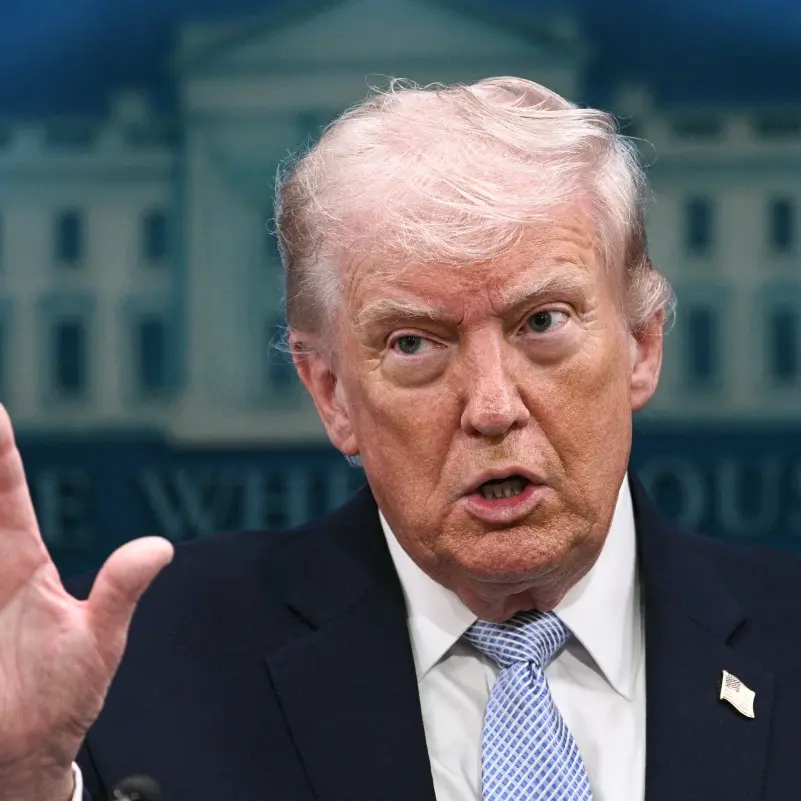
During the election campaign, Trump had urged his
supporters to imagine that he himself was on the ballot when casting their
votes. After the results went against Republicans, he wrote on social media
that if he had personally been on the ballot, his party would have won by a
landslide. However, he later acknowledged the election results, congratulated
Democrats and said he was willing to work with them on certain issues,
including immigration. At the same time, he warned that he would veto any
legislation passed by Democrats that he considered unreasonable.
With majorities in both chambers of Congress,
Democrats will gain greater authority to oversee and investigate the policies
of the Trump administration. Their Senate majority will also give them the
power to block presidential nominations for key positions, including Cabinet
members, ambassadors and federal judges. Congressional committees can request
government documents, summon witnesses for questioning and investigate various
actions taken by the administration. Democratic leaders have already made clear
that they intend to use these powers to scrutinize the Trump administration's
decisions.
However, controlling both chambers of Congress
does not mean Democrats will be able to pass every law they want. Any
legislation must secure approval from both the House of Representatives and the
Senate, while the president retains the power to veto approved bills.
Overriding a presidential veto requires a two-thirds majority in both chambers,
meaning Democrats would also need support from Republican lawmakers. Thus,
although the elections have changed the balance of political power in
Washington, disagreements between the White House and Congress over
legislation, oversight and government policies are likely to intensify over the
next two years.