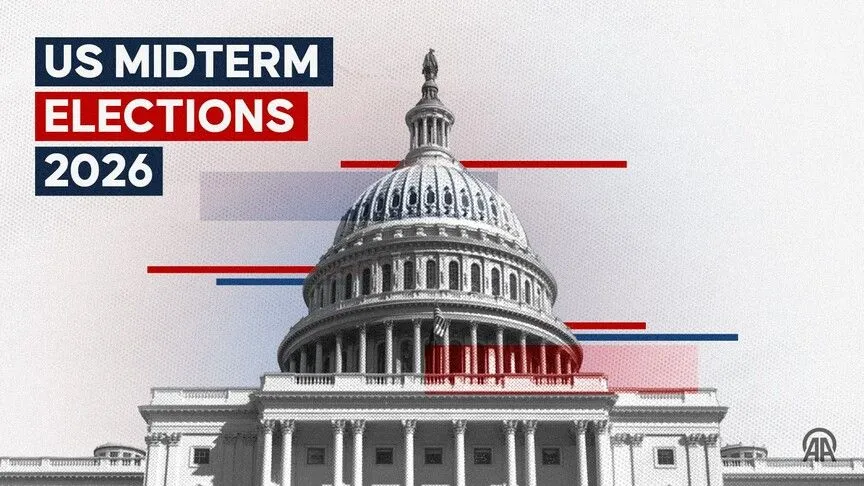
In the November 3, 2026, U.S. midterm elections,
the Democratic Party achieved an unprecedented victory, taking control of both
the House of Representatives and the Senate from the Republicans. Democrats
also secured significant victories in traditionally Republican strongholds,
including Texas, Kansas, Iowa and South Carolina. In Kansas, a Democratic
candidate won a Senate seat for the first time in nearly a century, while in
Texas, Democrats not only captured a Senate seat but also defeated Governor
Greg Abbott, with Gina Hinojosa becoming the state's first Latina woman
governor. The election results are widely being interpreted as a public
reaction to President Donald Trump's policies, with the war against Iran,
inflation, rising prices, tariffs and dissatisfaction with the administration playing
major roles in the Republicans' electoral difficulties. The new Congress will
assume office in January 2027, after which Trump will face Democratic
majorities in both chambers for the remainder of his presidency.
Rising Tensions between the White House and
Congress
President Donald Trump is scheduled to remain in
office until 2028. However, with Democrats controlling both the House of
Representatives and the Senate, tensions between the White House and Congress
are likely to increase. Congressional scrutiny of the administration could
intensify over the budget, appointments, foreign policy and executive
decisions. Following the Republican defeat and the Democrats' takeover of both
chambers, the political and constitutional landscape for the remainder of
Trump's presidency has changed. The White House will now face a Congress that
is no longer controlled by the president's own party when it comes to
legislation, budgetary matters, major government appointments and oversight of
administrative actions. This does not mean that all presidential powers will be
abolished or suspended, but their exercise could face greater congressional
scrutiny and political resistance.
Will the President Still Be Able to Exercise
Executive Powers?
Despite the Republican defeat in Congress,
Trump's presidential powers will remain intact. He can continue issuing
executive orders, making numerous foreign policy decisions, exercising his
constitutional authority as commander-in-chief of the armed forces and issuing
directives to the federal administration. The Republican defeat does not
automatically deprive him of these powers. Even before the election results,
the White House had reportedly prepared to advance policies concerning
immigration, tariffs, housing and federal spending through executive orders,
anticipating the possibility of losing control of Congress. This suggests that
the administration may continue pursuing its agenda through presidential
authority in certain areas despite Democratic control of both chambers. However,
such actions could face legal challenges and congressional oversight.
Democrats to Take Control of Congressional
Committees and Oversight
With a majority in the House of Representatives,
Democrats will be able to take over the leadership of congressional committees,
request records from government agencies, summon officials to hearings and
launch investigations into administration decisions. These powers could be used
to examine the Trump administration's immigration policies, the war against
Iran, tariffs, government spending and the business dealings of the president
or members of his inner circle. According to reports following the U.S.
elections, Democrats have already indicated their intention to expand
investigations and oversight across several areas.
Will Democrats Be Able to Pass Their Own
Legislation?
Despite gaining control of Congress, Democrats
will not find it easy to pass legislation entirely on their own terms. Most
major legislation in the Senate generally requires 60 votes to overcome procedural
hurdles, while the president also retains the authority to veto bills approved
by Congress. Overriding a presidential veto requires a two-thirds majority in
both the House of Representatives and the Senate. Consequently, Democrats will
be in a position to block or obstruct Trump's legislative agenda, but they will
not necessarily be able to implement all their own policies.
Democrats Could Block Key Presidential
Nominations
The Democratic majority in the Senate will also
give the party significant influence over presidential nominations to important
government positions. Under the U.S. Constitution, Senate approval is required
for appointments to federal judgeships, the Supreme Court, ambassadorships and
numerous senior government positions. As a result, Trump could face
difficulties securing confirmation for his preferred candidates. However, the
president will retain the authority to dismiss members of his Cabinet. A
congressional majority cannot directly take this power away from him.
Greater Pressure on Foreign Policy and the War
Against Iran
A change in the congressional majority alone does
not automatically bring about an immediate or complete shift in the Trump
administration's foreign policy. The president retains significant authority
over diplomatic affairs and the armed forces as commander-in-chief.
Nevertheless, Congress plays an important role in funding military operations,
approving defense spending, imposing sanctions and shaping relevant
legislation. Democrats could demand explanations from the administration
regarding the war against Iran, introduce resolutions concerning war powers and
attempt to impose conditions on funds allocated for continuing military
operations.
Pressure could be particularly significant
regarding Iran. Following the election, U.S. media reports identified the war
with Iran and its economic consequences as major factors behind voter
dissatisfaction. Democrats could question the costs of the conflict, its
economic burden on American citizens and Washington's broader strategy in the
Middle East. However, it would be premature to conclude that the new Democratic
congressional majority will necessarily force the United States to end its war
with Iran. The outcome will depend on presidential decisions, developments on
the battlefield and legislation passed by Congress.
What Are the Democrats' Differences Over
Tariffs, Immigration and Domestic Policies?
Democrats have argued that Trump's heavy tariffs
on imported goods place an additional financial burden on American consumers,
businesses and farmers while contributing to inflation. Senate Democratic
Leader Chuck Schumer also sought to reverse these tariffs through the "End
Trump Tariff Taxes Act." Following the midterm elections, Democrats could
pursue further hearings and legislative efforts in Congress against this
policy. However, repealing the tariffs will not be easy because the president
retains veto authority. Similarly, Democrats have raised objections to the
Trump administration's tough measures against undocumented immigrants, mass
deportations and the practices of Immigration and Customs Enforcement (ICE).
They argue that immigration laws should be enforced in accordance with human
rights, legal requirements and appropriate judicial oversight. However, Democrats
themselves remain divided over whether ICE should be abolished or its powers
and procedures should be reformed. In the new Congress, they could exercise
stricter oversight over the agency's budget and authority.
Could Trump Face Impeachment?
One of the most significant questions following
the elections is whether Democrats could initiate impeachment proceedings
against President Trump. Constitutionally, this is possible because the U.S.
House of Representatives has the authority to impeach the president. If a
simple majority of House members approves articles of impeachment, the matter
proceeds to the Senate for a trial, where the allegations against the president
are considered. However, impeachment and removal from office are two separate
stages. Removing a president requires the support of two-thirds of the senators
present. Therefore, even with majorities in both chambers, Democrats would face
considerable difficulty in removing Trump from the presidency. If they fail to
secure the required two-thirds majority in the Senate, the president could
remain in office despite being impeached by the House.
Nevertheless, impeachment proceedings could carry
significant political consequences. During investigations into the
administration, Democrats could seek to uncover evidence that they believe
establishes constitutional violations, abuse of power or other serious
allegations. At this stage, the possibility of impeachment exists, but it would
be incorrect to regard it as a certain or immediate outcome. Its likelihood
will depend on the findings of investigations, the Democrats' political
strategy and the level of potential support in the Senate.
The Real Political Battle Will Begin in January
2027
Despite the election results, the new Congress
will not immediately begin exercising its full authority. Newly elected members
will be sworn in on January 3, 2027, after which the process of establishing
new leadership and congressional committees in both chambers will be completed.
Until then, the current Congress will remain in operation. During this
transitional period, issues such as approval of federal government spending and
funding will also be important, as a failure to reach an agreement on the
budget could disrupt the operations of government agencies. After the new
Congress is established, political confrontation in Washington is likely to
intensify. Democrats will focus on investigating administration actions,
blocking key appointments and attempting to pass legislation against
controversial policies. Trump, meanwhile, could use his veto and executive
powers to counter these efforts. Compromises may also become necessary on
several issues.
Potential Implications for Global Politics and
Pakistan
The shift in American domestic politics could
also affect the country's foreign relations. On major international issues
involving Iran, Israel, Ukraine, China and other countries, the Trump
administration could face greater questioning and political pressure from
Congress. However, rather than undergoing a complete transformation, U.S.
foreign policy could face increased debate, oversight and internal political
disagreements in certain areas. This development is also important for
Pakistan, as Congress plays a significant role in American policymaking
alongside the president. Congressional members and relevant committees could
influence issues concerning Pakistan, including defense cooperation, trade,
foreign assistance, human rights and regional security. Therefore, Islamabad
will need to place importance not only on maintaining relations with the White
House but also on strengthening its engagement with both political parties in
the U.S. Congress. Nevertheless, predicting an immediate change in
U.S.-Pakistan relations solely on the basis of the election results would be premature.