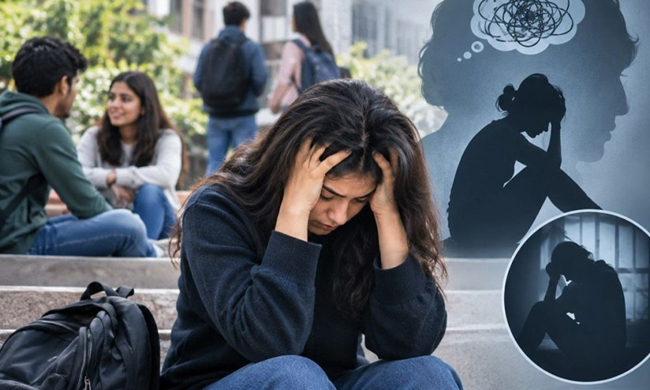
A survey conducted by a panel
appointed by the Supreme Court of India to examine the mental health of
students in the country’s higher education institutions found that 9 percent of
students reported experiencing suicidal thoughts frequently or very often
during the past year. The nationwide survey by the National Task Force included
responses from more than 243,000 students, 67 percent of whom belonged to
Scheduled Caste (SC), Scheduled Tribe (ST), and Other Backward Classes (OBC)
communities. According to the survey, 15 percent of students said they had
experienced severe mental stress or anxiety for several weeks during the past
six months. Around 34 percent also reported that they had felt isolated or like
outsiders on campus to some extent.
Students also expressed mixed
views about the support available at their institutions. While 56 percent said
they were confident that the administration would handle serious issues fairly,
around 32 percent reported that their institutions did not have counseling
facilities. According to officials, students also showed persistent concerns
about academic choices and future employment prospects. The findings come at a
time when student suicides at higher education institutions in India are once
again receiving significant attention. Serious concern was also raised
following the deaths of two students at IIT Delhi and IIT Bombay.
The Supreme Court-appointed
panel also highlighted social and institutional problems faced by students
during higher education. According to the report, students raised concerns
about deep-rooted social discrimination, sexual harassment at medical and
engineering colleges, and gender discrimination by faculty members at some
universities. Students also reported alleged caste-based humiliation and
discrimination in admissions, grading, language differences, and the attention
given by teachers. The issue of identifying students’ caste based on their
NEET-UG and JEE ranks were also included in the report.
However, a senior National
Task Force official told the Press Trust of India (PTI) that these observations
should be considered preliminary and tentative because the current survey
sample is not representative. According to the official, the initial trends
indicate a need for standardized support systems for students, better faculty
training, efforts to reduce the stigma surrounding mental health, clear
procedures for handling crises, and regular monitoring of students’ mental
well-being.
In addition to the survey,
the task force visited various educational institutions and consulted relevant
stakeholders. So far, 30 meetings have been held at 19 institutions in Delhi
and the National Capital Region (NCR), Tamil Nadu, Karnataka, Assam, and West
Bengal. At various institutions, students identified strict attendance
policies, heavy academic schedules, additional workloads in medical and
clinical fields, and long on-call hours for medical students as major concerns.
Students at engineering colleges also raised concerns about intense competition
resulting from strict grading and employment standards, while students at state
universities reported shortages of faculty members and inadequate academic
support.
Students in some fields, including
dentistry and nursing, said that a lack of practical training left them feeling
inadequately prepared for professional work. PhD students also reported
concerns about negligence, excessive control, and exploitation by some
supervisors. The National Task Force was established by the Supreme Court in
March 2025 to examine the growing number of student suicides and issues related
to mental health and well-being at higher education institutions. The panel’s
final report is expected to be submitted by October 31.