The International News MagazineTOKYO-SEOUL-MANILA-HK
Technology · Worldwide
International astronomical observatories release comprehensive multi-messenger survey of early galaxies
Combining infrared data from the James Webb Telescope with radio millimeter arrays reveals unprecedented star formation dynamics within the first billion years.
International astronomical observatories release comprehensive multi-messenger survey of early galaxies — Weekly Newstime
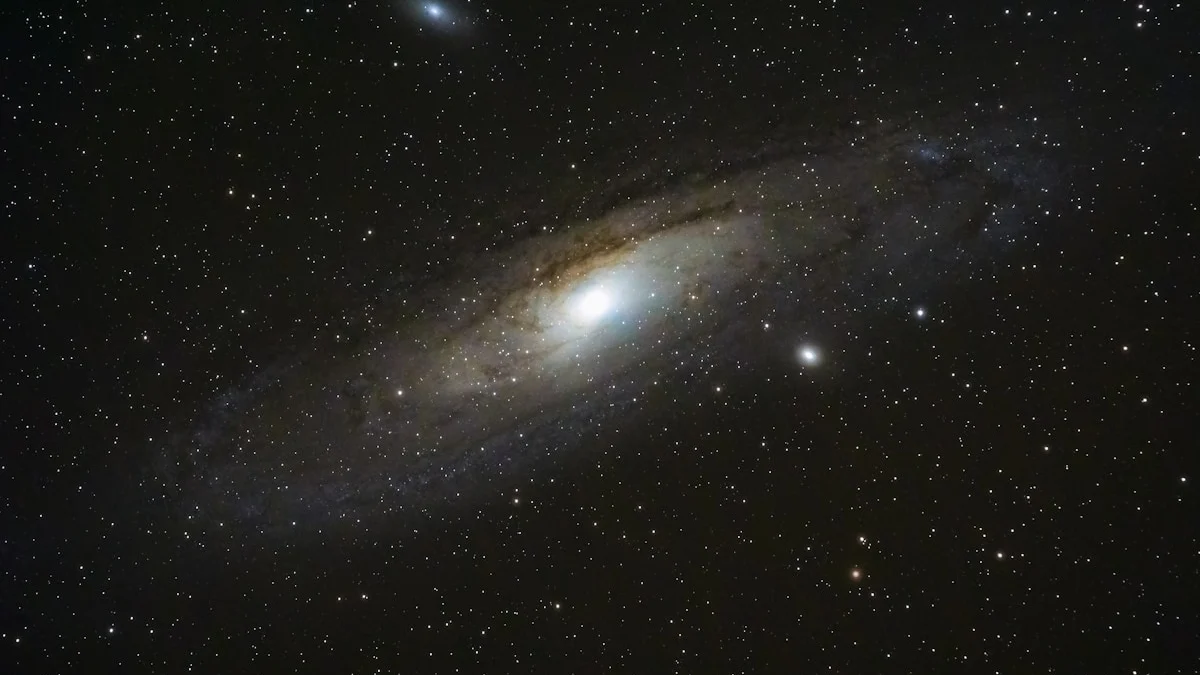
In a groundbreaking astrophysics announcement, an international consortium of space agencies and ground-based astronomical observatories released the most detailed multi-wavelength survey of the early universe ever compiled. The survey combines deep infrared imaging from the James Webb Space Telescope with high-resolution submillimeter radio data from the Atacama Large Millimeter Array (ALMA) in Chile, opening a revolutionary chapter in observational cosmology for researchers worldwide.
Spanning a deep sky region containing over 100,000 primeval galaxies, the survey captures cosmic light that traveled across space for more than 13 billion years to reach Earth detectors. The dataset provides scientists with an unprecedented view of galaxy assembly, cosmic dust synthesis, and stellar nursery formation within the first 800 million years following the Big Bang, revealing how the first complex structures formed in the infant cosmos.
Multi-messenger space telescope dataset integration
Lead astrophysicists presented findings demonstrating that early galaxies grew far faster and formed stars at significantly higher rates than previously predicted by classical theoretical cosmological models. High-resolution spectrographic analysis revealed dense clusters of massive blue stars producing heavy elements like carbon, nitrogen, and oxygen at an accelerated cosmic pace, reshaping our fundamental understanding of cosmic element enrichment.
A key discovery within the survey data was the identification of unexpectedly massive supermassive black holes embedded at the cores of juvenile galaxies. The presence of black holes exceeding one billion solar masses at such early cosmic epochs challenges existing models regarding how cosmic structures originated and evolved, suggesting that black hole seeds formed through direct gravitational collapse in the very early universe.
High-altitude radio interferometers captured neutral hydrogen emissions from ancient cosmic web filaments.
Early galaxy assembly dynamics and supermassive black holes
The survey dataset represents over 2,000 hours of combined telescope observation time across orbiting space platforms and high-altitude ground observatories. Advanced machine-learning algorithms were utilized to process petabytes of raw astronomical imagery, stripping away foreground starlight interference to expose faint primordial structures that were previously invisible to conventional optical instruments.
International science teams emphasized that combining space-based optical and infrared instruments with ground-based radio interferometry was critical to the project's success. While infrared sensors pierce through cosmic dust clouds to image stellar starlight, millimeter radio arrays detect cold gas reservoirs that fuel future star formation, providing a complete physical picture of galaxy evolution across cosmic time.
To maximize global scientific discovery, the entire 50-terabyte processed survey dataset was made freely available through an open-access cloud astrophysics repository. Astronomical researchers, university departments, and independent theorists globally can inspect high-resolution spectral maps without restriction, democratizing access to cutting-edge scientific data across developing nations.
Open astronomical repository and high-performance computing
Educational institutions have already integrated the interactive deep-sky survey into university curricula and planetarium displays. High school science programs can explore 3D renderings of ancient galaxy collisions in immersive virtual reality formats, inspiring the next generation of astronomers, physicists, and space exploration scientists.
Astrophysicists combined infrared, optical, and submillimeter data to compute star formation rates in distant galaxies.
Plans are currently underway to complement the survey with upcoming observations from the Nancy Grace Roman Space Telescope and the Square Kilometre Array radio observatory. Astronomers anticipate that combining these instruments will trace the exact moment of cosmic reionization when the first stars illuminated the universe and transformed the intergalactic medium.
The release of the multi-messenger survey marks a triumphant milestone for international scientific collaboration. By pooling observational resources across continents and space platforms, humanity has opened a breathtaking new window onto the origin of cosmic structure and our place within the evolving universe.