The International News MagazineTOKYO-SEOUL-MANILA-HK
Major international container ports launch unified digital Just-In-Time vessel arrival protocol — Weekly Newstime
Business · Worldwide
Major international container ports launch unified digital Just-In-Time vessel arrival protocol
Port authorities across Rotterdam, Singapore, Shanghai, and Los Angeles adopt shared API data standards to cut oceanic fuel burn and berth waiting times.
In a decisive move to modernize global maritime trade and eliminate supply chain bottlenecks, a consortium of 20 world-leading container port authorities has signed the International Digital Port Protocol. Convened at the International Maritime Organization headquarters, the accord establishes standardized open-API data protocols for real-time Just-In-Time (JIT) vessel arrival scheduling, transforming legacy ocean shipping practices into lean, sustainable global networks for the modern era.
Historically, international container ships sailed at maximum operational speeds across oceans, only to drop anchor outside destination ports and idle for days awaiting open berthing slots. This traditional practice wasted millions of metric tons of heavy bunker fuel annually and generated unnecessary coastal air pollution around dense port cities, exacerbating maritime industry carbon footprints and driving up global freight costs.
Shared digital arrival data standards and API integration
Under the new unified digital framework, port dispatch control systems transmit live berthing availability, channel depth, and crane scheduling metrics directly to vessel navigation computers while ships are still thousands of nautical miles at sea. Ships adjust their transit speeds dynamically to match precise arrival windows, eliminating useless anchorages outside harbour entry channels and streamlining overall port concourse operations.
Maritime logistics engineers calculated that adjusting ocean transit speeds to match exact berthing readiness reduces vessel fuel consumption by an average of 18 percent per transoceanic voyage. Across global shipping lanes, the fuel savings equate to a reduction of over 12 million metric tons of carbon dioxide per year, providing substantial momentum toward net-zero ocean shipping goals.
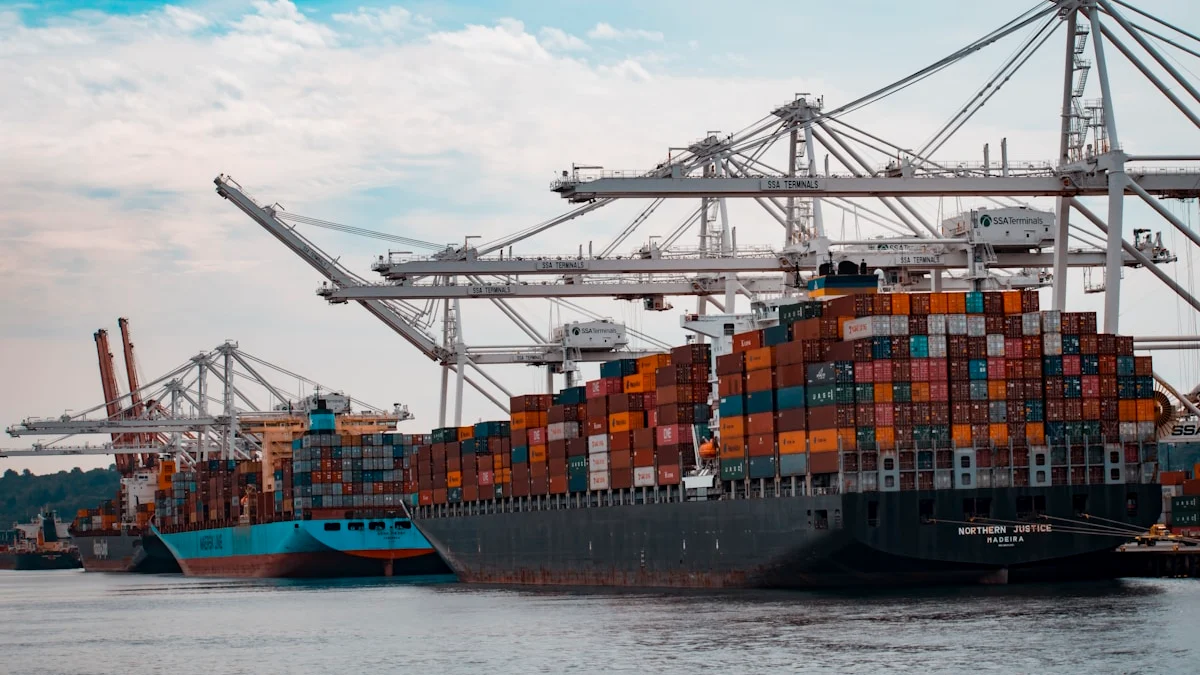
Pre-cleared vessel manifests allow automated cranes to stage unloading sequences prior to berthing.
Oceanic fuel burn reduction and carbon emission savings
The digital infrastructure relies on encrypted blockchain-verified vessel manifests and standardized ISO data formats. By automating customs pre-clearance and agricultural inspection documentation, container ships proceed directly from harbour pilot points to assigned loading cranes upon arrival, enabling continuous 24-hour cargo handling without administrative delays or paperwork backlogs.
Port operational managers in Singapore and Rotterdam reported that the elimination of anchorages outside harbour entry channels improved marine traffic safety. Navigational collisions and anchor drag incidents during severe coastal storms dropped to near zero during pilot testing, protecting coastal marine infrastructure and underwater ecosystems from damage.
Global shipping lines, including major container carriers, expressed enthusiastic backing for the protocol. Fleet operators highlighted that reduced fuel burn significantly lowers operating costs while helping carriers meet stringent international decarbonization targets imposed by international maritime regulatory bodies and climate compliance codes.
Port berth optimization and supply chain reliability
Cargo owners and supply chain logistics managers have also reaped major benefits. Predictable vessel arrival times allow drayage trucking fleets and freight rail operators to schedule container pick-ups with pinpoint accuracy, eliminating warehouse congestion and lowering inventory holding costs for retail businesses worldwide.
Port dispatchers coordinate bunkering, piloting, and tug assistance in a single shared digital interface.
The International Maritime Organization announced plans to make the Digital Port Protocol a global mandatory standard for all commercial container terminals by 2028. Technical working groups are assisting smaller regional ports in adopting the required digital API software to ensure complete international logistics interoperability across all maritime trade corridors.
As global trade volume continues to expand, the digital unification of port arrival protocols demonstrates how data transparency can transform legacy industrial supply chains into lean, sustainable networks. Ocean logistics experts predict the protocol will become the universal foundation for global maritime trade in coming decades.